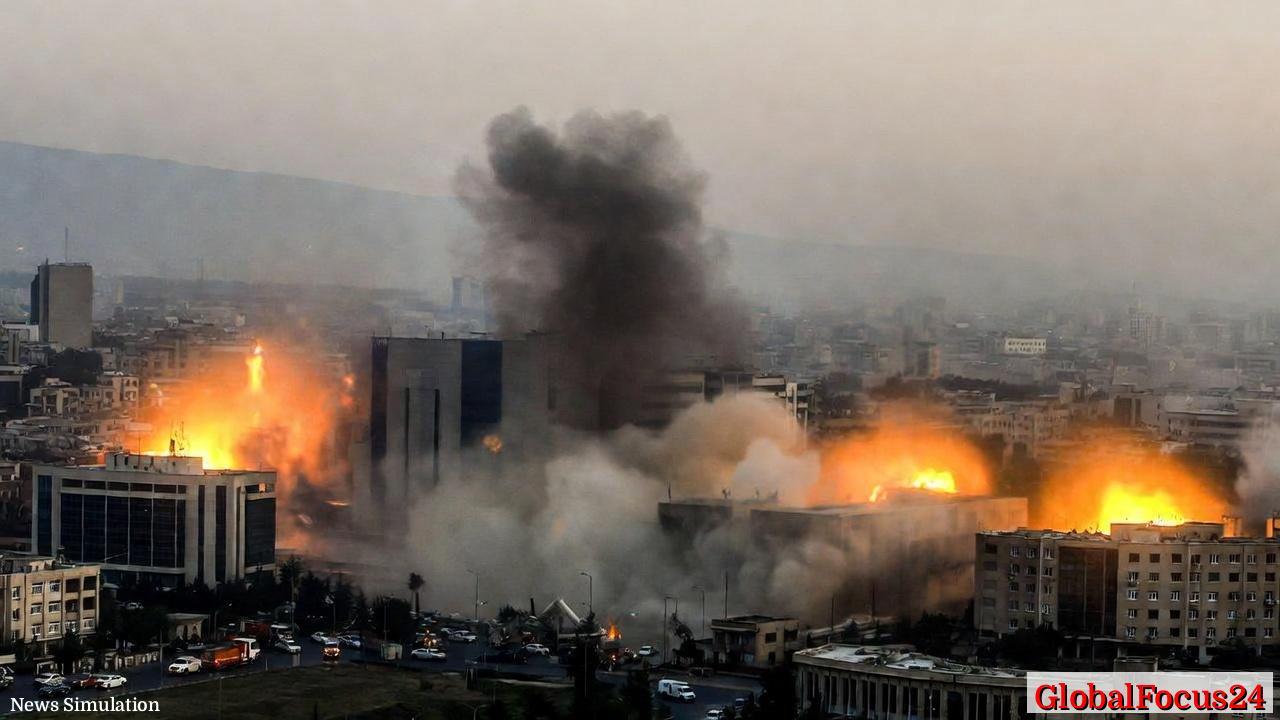
U.S. and Israel Launch Coordinated Strikes on Iran, Marking Escalation in Middle East Tensions
Historical context and escalation In a development that reshapes the regional security landscape, the United States and Israel announced a coordinated attack against Iran, signaling a marked escalation in a long-running sequence of tensions that trace back decades. The announcement framed the operation as a joint action aimed at disrupting critical Iranian security and governance infrastructure. Early reports describe multiple explosions in Tehran, with Israeli media indicating assassination strikes targeting key political and military facilities. The two waves of attacks, if confirmed, suggest a level of planning and joint intelligence coordination that extends beyond past incidents. While this event stands in a continuum of broader strategic contest in the region, its scale and the explicit participation of both Washington and Jerusalem heighten expectations about immediate and longer-term consequences for Iran’s domestic stability, regional influence, and international alignments.
Economic implications and market reactions The immediate economic reverberations of heightened conflict in the Persian Gulf and the broader Middle East are likely to be pronounced. Global energy markets historically respond to perceived risks to supply routes and production capacity. If infrastructure in Iran, a country with significant energy and petrochemical assets, becomes a focal point of disruption, prices for crude oil and refined products could exhibit volatility in the near term. Insurance costs for shipping through critical corridors, including routes nearby the Strait of Hormuz, may rise as traders reassess risk premiums. Over the longer horizon, the perceived risk of sustained conflict can influence foreign direct investment, currency stability, and the risk tolerance of multinational corporations with exposure to the region. Importantly, regional economies that depend on energy trade or import critical goods through neighboring gateways may experience shifts in trade balances and inflationary pressures, even as governments implement stabilization measures and diversify energy sources.
Regional comparisons and strategic implications The current events situate the region within a broader pattern of security competition among state and non-state actors in the Middle East. Historically, Iran’s strategic posture has emphasized deterrence through a combination of regional proxies, ballistic capabilities, and cyber and conventional forces. In neighboring states, policymakers have long balanced security concerns with the need to maintain economic growth, energy resilience, and social stability. Countries with closer security ties to the United States and Israel may face increased pressure to recalibrate defense postures, including intelligence sharing, missile defense readiness, and public communication strategies designed to manage domestic risk perceptions. Conversely, some neighbors have pursued calibrated approaches to avoid direct confrontation while strengthening regional multilateral mechanisms for crisis management and humanitarian relief. The evolving dynamic requires careful navigation of alliance politics, supply chain resilience, and public diplomacy to prevent miscalculation amid rapid developments.
Security and humanitarian considerations A conflict of this scope carries significant humanitarian dimensions alongside geopolitical calculations. Civilian infrastructure, healthcare facilities, and essential services risk disruption during hostilities. International humanitarian organizations and neighboring governments will likely monitor displacement patterns, supply chain interruptions, and access to critical resources such as food and medical supplies. Mitigation efforts—ranging from contingency planning for civilian protection to rapid-response logistics—are essential to reducing the human cost of any extended operation. The international community often seeks de-escalation channels, even amid sharp political disagreements, to prevent spillover effects that could intensify regional instability and undermine relief efforts for vulnerable populations.
Domestic reception and public sentiment Public reactions in the United States, Israel, Iran, and allied nations are expected to reflect a spectrum of concern, skepticism, or urgency. In the immediate aftermath of such announcements, ordinary citizens may seek reliable information about safety, travel advisories, and potential disruptions to daily life. Governments typically respond with official briefings aimed at providing clarity while avoiding the inadvertent spread of misinformation. The information landscape—comprising official channels, independent journalism, and social media—shapes how communities perceive risk, resilience, and national security priorities. In the United States and allied capitals, policymakers may face intensified scrutiny over foreign policy choices, defense spending, and the balance between deterrence and diplomacy.
Historical parallels and policy pathways Looking back, past episodes of rapid cross-border military action in the region have demonstrated that durability of outcomes hinges on a combination of strategic communication, coalition-building, and credible signaling. Deterrence frameworks often rely on a mix of punitive measures and negotiations designed to constrain escalation while preventing unintended consequences. In parallel, regional security architectures—such as multilateral dialogues, security forums, and confidence-building measures—have historically offered pathways to reduce the risk of miscalculation. The path forward will likely involve a mix of continuing coordination with international partners, reassessment of sanctions and economic tools, and efforts to preserve civilian safety and humanitarian access while addressing broader regional security concerns.
Industry and infrastructure resilience Critical infrastructure, including energy facilities, port facilities, and telecommunications networks, face heightened vulnerability during periods of elevated conflict. Industry stakeholders are likely to accelerate contingency planning, diversify supply chains, and bolster cyber and physical security measures. Financial institutions with exposure to Middle East markets may implement heightened monitoring of payment flows, currency exposure, and cross-border settlement risks. In the energy sector, producers and buyers may reassess term contracts, storage capabilities, and contingency supply arrangements to withstand potential disruption. Public-private partnerships and emergency management agencies are expected to coordinate on resilience measures, ensuring that essential services maintain continuity for communities.
Diplomatic avenues and international response While the initial reports emphasize military action, the broader international response will shape the contours of the ongoing crisis. Diplomatic engagement, back-channel discussions, and UN-led humanitarian corridors have historically played pivotal roles in managing escalations and preventing catastrophic outcomes. Regional powers, allied governments, and international organizations may seek to establish de-escalation mechanisms, reaffirm commitments to international law, and coordinate sanctions or targeted measures designed to constrain adversaries while preserving civilian safety. The balance between signaling resolve and pursuing negotiation is delicate, with the potential to influence not only immediate outcomes but long-term regional stability and the global balance of power.
Public communication and information integrity Accurate, timely information during volatile events is essential for public safety and informed decision-making. Authorities typically provide ongoing updates about risk assessments, shelter-in-place advisories, travel warnings, and evacuation protocols where applicable. Independent journalism and verification efforts remain crucial for preventing the spread of rumors and misinformation. Communities often rely on a combination of official statements, vetted press briefings, and trusted local networks to navigate uncertainty. Maintaining clear, consistent messaging helps reduce confusion and supports coordinated responses among citizens, businesses, and institutions.
Conclusion and what to watch next The announced joint strikes by the United States and Israel against Iran represent a pivotal moment with wide-reaching implications. As the situation unfolds, observers will monitor key indicators: the status of Iranian government facilities and their functional capacity, potential secondary targets, the trajectory of regional security alignments, and the impact on global energy markets. Analysts will also assess whether diplomatic channels remain open and what measures, if any, are introduced to mitigate humanitarian risk and stabilize regional trade networks. The coming days and weeks will be critical in determining whether this action leads to a recalibration of deterrence dynamics, a shift in alliance configurations, or a renewed emphasis on diplomatic pathways aimed at preventing broader confrontation. For businesses, policymakers, and communities, the focus will be on resilience, situational awareness, and prudent planning in the face of heightened geopolitical uncertainty.