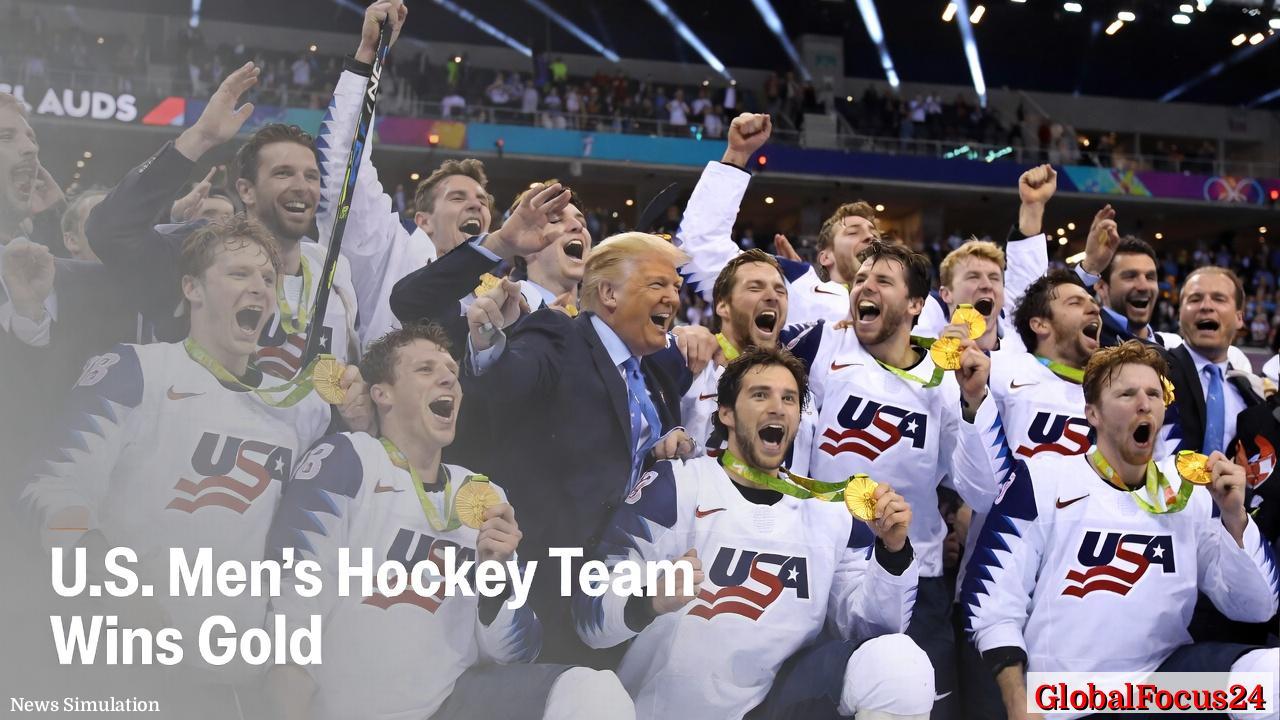
U.S. Olympic Hockey Triumph Rewrites a Nation’s Narrative Amid Shifting Political Realities
In a moment that echoed the adrenaline of the Miracle on Ice era, the United States men’s hockey team captured Olympic gold for the first time since that iconic 1980 victory, a win that instantly became part of American sporting lore. But as the cheers faded from the arena and resonated across cities, a more complicated chorus took shape outside the rink: how a single sporting achievement can intersect with a volatile political landscape, shaping conversations and public sentiment in unexpected ways. This article examines the historical significance of the win, its immediate and enduring economic impacts, and how regional comparisons illuminate the broader picture of American hockey’s place in a changing national conversation.
Historical context: a legacy framed by unlikely champions and national stories
From its earliest days, Olympic hockey has been a stage where national identity and athletic prowess collide. The United States’ breakthrough in 1980, often remembered for a small-team miracle against formidable odds, established a template: sports as a unifying moment, capable of transcending regional differences and partisan divides. The 2026 gold medal, while rooted in a different era of competition and training, rekindles that connective thread. It arrives at a time when American audiences crave both excellence and uplifting narratives, but also grapple with the complexities of a polarized public square.
The team’s journey to the podium was marked by disciplined preparation, advanced analytics, and a regional infusion of talent from hockey-rich markets in the Northeast and Midwest, along with standout players emerging from the West Coast youth systems. Historically, such a blend has underscored the sport’s growth in nontraditional hubs and helped broaden the fan base beyond the traditional cold-weather states. The victory’s appeal, therefore, extends beyond the ice, symbolizing a broader American storyline: a country investing in a sport that has gradually diversified its talent pipeline and fan demographics.
Economic impact: desde the rink to regional markets and beyond
A gold-medal run has tangible, near-term economic repercussions that ripple through sponsor ecosystems, local clubs, and tourism-driven activity in host cities. First, the victory sharpens marketability for the sport at all levels. Youth leagues and amateur programs typically see a surge in participation following a marquee Olympic win, as families respond to heightened visibility and the aspirational pull of the national team. This uptick can drive equipment sales, regional sponsorship deals, and increased attendance at games during the following seasons. Local businesses around arenas—hotels, restaurants, and transportation services—often report short-term revenue boosts tied to fan travel, media coverage, and tourism traffic.
Longer-term economic effects revolve around infrastructure investment, youth development programs, and the cultivation of a professional pipeline. National federations may accelerate investments in high-performance centers, coaching education, and facilities in underserved regions to sustain momentum. The return on such investments can be measured in player development metrics, national team depth, and the ability to compete consistently with other hockey powerhouses on the world stage. Additionally, a championship profile can elevate a league’s broadcasting appeal, expanding national and international viewership, which translates into stronger media rights valuations and sponsorship portfolios.
Regional comparisons: hockey’s economic geography and audience dynamics
The United States’ hockey footprint is unevenly distributed, with stronger activity in states such as Minnesota, Michigan, and Massachusetts, where community programs are deeply embedded in local culture. The 2026 victory underscores the sport’s potential to strengthen the sport’s economic ecosystem in nontraditional markets as well. Regions that have developed robust youth pipelines or invested in winter sports tourism can leverage the momentum to attract new fans, sponsors, and even related events—think outdoor showcases, collegiate tournaments, and cross-sport collaborations that tie hockey to broader athletic tourism.
By contrast, some markets with historically strong hockey cultures have faced secular shifts: attendance patterns reflect adult participation levels, competition from other entertainment forms, and demographic changes. The gold medal win, in this context, can serve as a catalyst to reinvigorate interest in the sport, encouraging municipal and private funding for rink improvements, coaching education, and after-school hockey programs. The broader regional dynamic suggests that the sport’s economic revival—not just national glory—depends on a sustainable strategy that connects school-age participation with professional pathways and accessible community programs.
Public reaction and social dimensions: a moment of shared emotion, then nuanced debates
Public sentiment around the victory has been a blend of jubilation and critical reflection. For many fans, the win is a unifying moment, a source of pride that transcends partisan labels and domestic concerns, much like past Olympic triumphs. Yet public discourse quickly shifts to questions about what the victory means in a complex political moment. As observers and analysts noted, the same event can become a prism through which broader national conversations are refracted. The interplay between sports and politics is not new, but it is particularly pronounced in an era of rapid information exchange and heightened media scrutiny. The result is a public mood that oscillates between celebration, cautious optimism, and a desire to see athletic success translated into inclusive community benefits.
Media coverage and framing: an evolving narrative landscape
Media narratives around the win reflect a broader shift in how athletic achievement is contextualized. While the on-ice performance is celebrated for its technical excellence and teamwork, adjacent coverage frequently examines the social and political environment in which such triumph occurs. This dual framing—athletic excellence alongside societal context—helps audiences understand not only what happened on the rink, but why it matters to everyday life. In this moment, the story extends beyond the scoreboard to questions about youth participation, sports infrastructure, and the role of national teams in shaping a shared cultural experience.
Sustainability and the path forward: turning glory into lasting impact
A single championship is a powerful moment, but sustained impact requires deliberate, long-term action. For the sport to capitalize on the momentum, stakeholders across the spectrum—teams, leagues, sponsors, and government entities—should pursue several strategic avenues:
- Invest in grassroots development: Expand access to ice time and coaching, particularly in regions with growing interest but limited infrastructure.
- Strengthen the talent pipeline: Support elite training programs and university-level hockey to create a more continuous route from amateur to professional ranks.
- Enhance fan engagement: Leverage digital platforms, interactive content, and family-oriented events to broaden the sport’s appeal and inclusivity.
- Coordinate with regional tourism and events strategies: Host exhibitions, youth camps, and inter-state showcases that drive regional economic activity while exposing more people to the sport.
- Ensure equitable access: Focus on affordability and inclusivity to ensure that participation is not limited by socioeconomic status or geographic location.
Conclusion: a milestone that binds history, economy, and community
The United States’ 2026 Olympic hockey gold medal marks a milestone that resonates beyond the arena walls. It ties together a storied past, a dynamic present, and a set of possibilities for the future. The win serves as a beacon for regional development, a catalyst for economic activity tied to sports, and a reminder of the power of collective effort in a nation where athletic achievement is often celebrated as a shared national achievement. As communities digest the victory, the conversations surrounding investment in youth sports, infrastructure, and inclusive access will determine how lasting the benefits of this triumph prove to be.
In the end, the gold is more than a trophy—it is a catalyst for renewed interest in hockey across the country, a signal of potential economic gains for communities with strong skating cultures, and a historical chapter that adds texture to the ongoing narrative of American athletic ambition. The next seasons will reveal how this momentum translates into sustained participation, greater regional parity, and a deeper cultural embrace of a sport that continues to grow and evolve with the country itself.