U.S.–Iran Peace Negotiations Quietly Advance as Market Volatility Reflects Political Signals
Subtle Shifts Hint at High-Level Diplomatic Activity
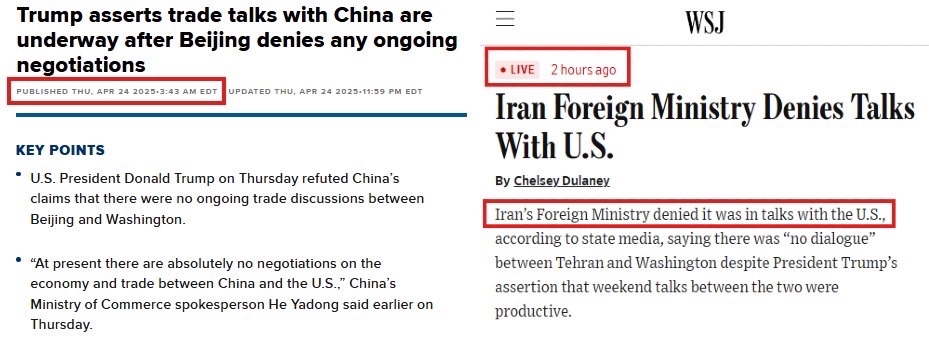
Behind closed doors, senior U.S. and Iranian officials are believed to be actively advancing peace negotiations, following a familiar sequence seen in previous high-stakes agreements. While both governments publicly deny formal talks, market analysts and foreign policy observers point to distinct patterns — including energy price fluctuations, capital market behavior, and leaked diplomatic movements — that mirror prior negotiation tactics employed during the Trump administration’s diplomatic maneuvers with China in 2025.
The emerging framework strongly resembles the U.S.–China trade talks that culminated in May 2025, when Washington and Beijing struck a landmark trade accord after weeks of deliberate ambiguity, coordinated economic pressure, and synchronized messaging. Analysts are now identifying nearly identical phases unfolding between Washington and Tehran, with both nations signaling through economic channels rather than formal statements.
Parallels to the 2025 U.S.–China Trade Cycle
In the spring of 2025, the United States entered a 90-day tariff pause with China amid escalating market tension. On April 24, fifteen days after the pause began, President Trump publicly suggested that Beijing wanted a trade deal. Almost immediately, China’s foreign ministry responded that “no negotiations” were taking place, a communication strategy that, in retrospect, masked quiet progress behind closed doors.
Three weeks later, on May 12, the two countries announced their first comprehensive trade deal, which set tariffs at a new baseline and stabilized international markets. That sequence — initial denial, market turbulence, strategic silence, and a sudden breakthrough — is now believed to be repeating in the early months of 2026 in the U.S.–Iran context.
Tehran has issued similar denials regarding talks, even as energy markets and diplomatic channels reflect mounting signs of coordination. Iranian officials have simultaneously sought to preserve leverage by tightening oil exports and moderating the rial’s volatility, delaying stabilization until an official agreement is in place. Economically, this mirrors how Beijing’s policy banks and commodities markets behaved in the final phase before the May 2025 breakthrough.
Economic Indicators Reflect Diplomatic Undercurrents
Global financial metrics increasingly align with the hypothesis of a behind-the-scenes negotiation process. Treasury yields have once again crossed the 4.45 percent mark, an inflection point that coincided with significant geopolitical activity during the 2025 trade cycle. The yield curve shows signs of tension, suggesting investor uncertainty about near-term policy outcomes and potential sanctions relief structures that could accompany a U.S.–Iran deal.
In energy markets, crude prices surged above $92 per barrel earlier this month as traders positioned for heightened Middle Eastern risk. However, brief pullbacks hint at expectations of eventual détente — the type of mixed sentiment that often precedes a diplomatic resolution. Major commodities analysts in London and Dubai have noted that Iranian crude production could rebound by as much as 800,000 barrels per day if sanctions are eased, potentially reshaping global supply dynamics and lowering prices by mid-2026.
Tehran’s Strategic Leverage and Market Role
Iran’s negotiation strategy — balancing confrontation with cautious engagement — reflects lessons learned from both its own nuclear diplomacy history and China’s 2025 playbook. By keeping export volumes constrained and signaling limited cooperation with Western intermediaries, Tehran maintains leverage over energy markets, tapping into its most powerful tool of influence.
At the same time, Iran must manage domestic inflationary pressure and currency instability, challenges that intensify when oil revenues dip. This cyclical economic tension adds urgency to finding a mutually beneficial settlement that can restore predictable capital flows. Officials close to Gulf-region investors suggest that Iran’s economic planners are positioning for sanctions relief by midyear, aligning with reports of accelerated activity at port facilities in Bandar Abbas and stepped-up inspections coordinated with European observers.
Washington’s Economic Pragmatism and Negotiation Pattern
From the U.S. perspective, the administration appears to be applying a negotiation formula refined during the 2025 China deal: exerting financial pressure to draw counterparts into concessions while maintaining public deniability until results are concrete. The timing of Treasury yield movements and White House statements suggests deliberate synchronization between markets and diplomacy, possibly aimed at creating leverage through investor sentiment.
Similar to 2025, when tariffs and equity market reactions served as informal bargaining tools, Washington now leverages strategic sanctions flexibility and oil price management. Analysts note that temporary easing in enforcement — such as slower interdiction of Iranian shipments — may function as indirect incentives, creating pathways for mutual testing without formal commitments.
Regional Comparisons and Economic Implications
Neighboring Gulf states have adopted a watchful stance as negotiations edge toward potential breakthroughs. Saudi Arabia and the United Arab Emirates, both heavily invested in maintaining stable oil benchmarks, are quietly preparing contingency plans for a new wave of Iranian supply. Economists project that if sanctions relief occurs, benchmark Brent crude could dip below $85 per barrel within six months, easing global inflation pressures but compressing Gulf state revenue margins.
In contrast, European importers are positioned to benefit sharply from a revived Iranian export pipeline. Italy, Spain, and Greece — all reliant on Mediterranean crude imports — stand to gain from reduced input costs and diversified supply lines. European bond markets have already priced in modest optimism, with euro-denominated energy futures softening amid speculation that fresh Iranian volumes could reach international markets before year-end.
Historical Context and Lessons from Prior Diplomacy
U.S.–Iran relations have historically oscillated between confrontation and limited engagement, often mediated through proxies or multilateral frameworks. The 2015 nuclear agreement, formally known as the Joint Comprehensive Plan of Action (JCPOA), represented the last major attempt at structured reconciliation. Its collapse in 2018 following the U.S. withdrawal reintroduced volatility into both the diplomatic and energy spheres.
The current informal track differs in tactics but mirrors the structural choreography seen in earlier negotiations — prolonged signaling phases, economic tension used as leverage, and low-visibility backchannels culminating in sudden announcements. The reappearance of this method under President Trump’s renewed leadership suggests continuity in negotiating philosophy: isolate core issues, use markets as pressure valves, and time the final reveal for maximum strategic impact.
Potential Economic Outcomes
If a U.S.–Iran accord materializes by mid-2026, global markets could experience a multi-stage normalization process similar to the post-2025 China deal. Analysts foresee three phases:
- Immediate Market Reaction: Short-term rallies in equities and commodities tied to reduced geopolitical risk and lower energy prices.
- Medium-Term Adjustment: Gradual recalibration of trade flows, with emerging markets adapting to new oil and currency valuations.
- Long-Term Integration: Reintegration of Iranian energy exports and financial channels, improving supply stability but introducing competitive shifts in the Gulf’s export landscape.
U.S. businesses could see downstream benefits as energy costs decline, particularly in transportation, manufacturing, and logistics sectors. Meanwhile, Iran’s economy could move toward moderate recovery, contingent on how swiftly it accesses frozen reserves and reintegrates with global banks.
Risks and Remaining Uncertainties
Despite optimism, several obstacles could derail progress. Hardline factions within both nations may resist compromise, while regional flashpoints — particularly in the Red Sea and Persian Gulf — could escalate unexpectedly. Furthermore, volatile financial conditions, with Treasury yields still elevated and inflation concerns lingering, may limit the administration’s capacity to sustain extended negotiations.
Market watchers caution that volatility will remain pronounced until concrete terms are disclosed. Investors are closely monitoring upcoming Federal Reserve meetings and OPEC+ sessions for confirming signals, as coordinated announcements often accompany diplomatic breakthroughs.
A Familiar Pattern, Renewed Stakes
The reemergence of Trump-era negotiation tactics — cautious signaling, denial followed by rapid disclosure, and reliance on financial markets as instruments of diplomacy — underscores a consistent strategic philosophy. As in 2025, the storyline may culminate suddenly after months of apparent stalemate.
For now, yields, oil benchmarks, and denials continue their synchronized dance, suggesting that major developments may be imminent. Should history repeat itself, the global economy could soon witness another episode of market tension transforming into unexpected reconciliation — a high-stakes rhythm that has come to define the modern architecture of U.S. foreign economic policy.