US-Greenland Agreement: New Frontiers in Arctic Cooperation, Security, and Resource Development
In a developing framework that could reshape Arctic dynamics, early details of a United States–Greenland accord have emerged, outlining a multifaceted approach to land access, mineral rights, defense architecture, and infrastructure investment. The evolving agreement, still subject to final negotiations and ratification processes, signals a deliberate effort by Washington to strengthen its strategic footprint in the High North while anchoring Greenland’s economic development within a broader, security-conscious framework. Analysts describe the proposal as a milestone that blends sovereignty considerations with ambitious economic and defense objectives, all set against a backdrop of growing regional interest from international partners.
Historical context: a long arc toward Arctic engagement
Arctic cooperation has long oscillated between scientific collaboration, economic exploitation, and strategic signaling. For decades, Greenland has balanced its autonomous status within the Kingdom of Denmark with a pragmatic pivot toward sovereignty-enhancing partnerships. The United States has historical ties to Greenland, including Cold War-era ties and ongoing military and research presence. In recent years, shifting climate patterns, new shipping lanes, and expanding mineral prospectivity have elevated the Arctic from a remote periphery to a crucible of geopolitical and economic activity. The proposed agreement sits within this continuum, aiming to formalize a more active US role in parallel with Greenland’s own development priorities and regional governance frameworks.
Key provisions: land access, minerals, defense, and investment
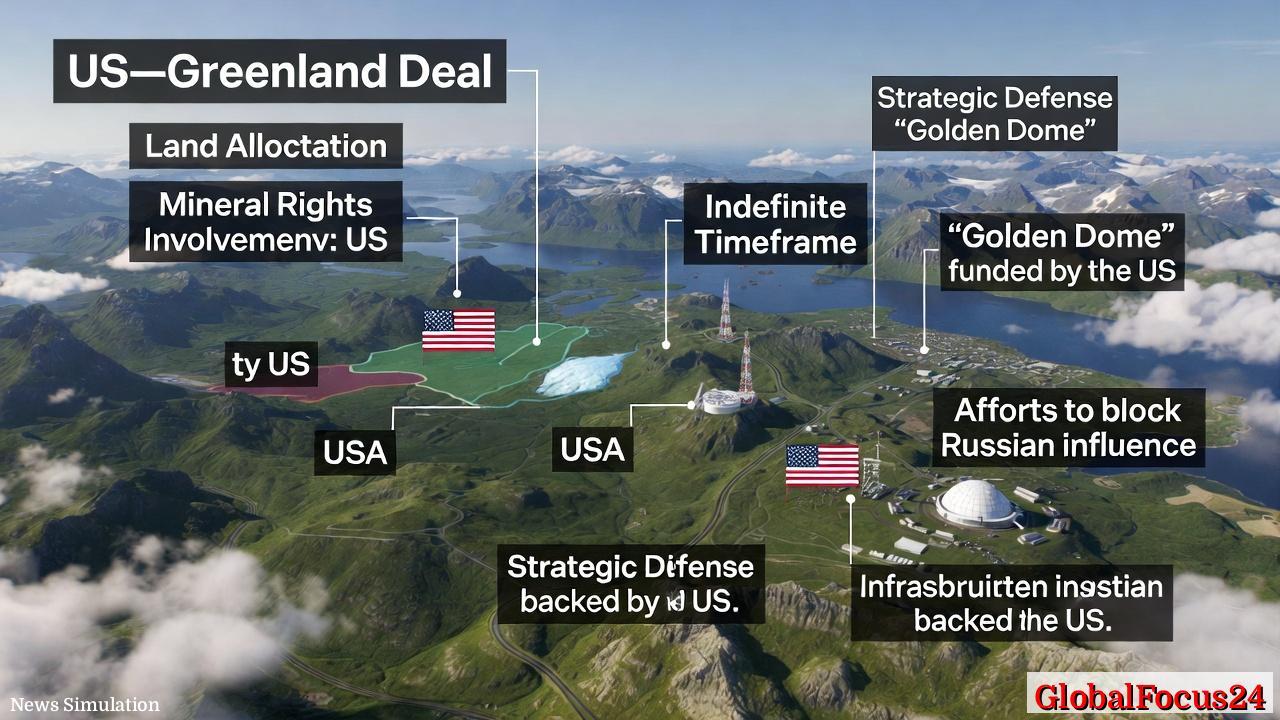
- Land allocation and sovereignty considerations The proposed deal contemplates the allocation of limited land parcels to the United States, framed within Greenland’s sovereignty and domestic legal processes. The arrangement envisions a framework that respects Greenlandic governance while enabling U.S. presence for strategic aims. The exact size, location, and administrative oversight of these parcels remain subject to detailed negotiations and domestic approval in Greenland’s political landscape. Observers emphasize the importance of transparent operations, environmental safeguards, and community engagement in any land-use plan.
- Mineral rights and resource development A central feature of the accord is enhanced American involvement in Greenland’s mineral sector. Greenland sits atop vast mineral potential, including deposits of rare earth elements, base metals, and hydrocarbons that are of global interest. The framework would facilitate collaboration on exploration and development, subject to Greenlandic licensing regimes, joint governance mechanisms, and environmental protections. Industry analysts note that successful cooperation would rely on stable regulatory environments, competitive fiscal terms, and robust risk-sharing arrangements that align with Greenland’s sustainable development goals.
- Defense architecture and regional security The agreement incorporates elements associated with defense infrastructure, including what has been described as a “Golden Dome” defense concept. While specifics remain forthcoming, such a component would likely entail enhanced defense communications, early warning capabilities, and logistical coordination to support Arctic security postures. Advocates argue that a predictable, rules-based security arrangement could deter destabilizing maneuvers and bolster continuity of operations in the region. Critics urge careful consideration of consent, sovereignty, and the implications for local communities and civil liberties.
- Infrastructure and investment opportunities A broader economic pillar centers on US-backed infrastructure investments designed to spark economic activity, improve connectivity, and support energy and resource projects. Public-private partnerships, financing mechanisms, and technology transfer arrangements would be part of this facet. The emphasis on infrastructure aligns with Greenland’s development aims—boosting job creation, improving service delivery in remote communities, and integrating Greenland more fully into Arctic trade corridors. Sound project governance and rigorous environmental review will be critical to ensuring sustainable outcomes.
Regional comparisons: Arctic peers and benchmarking
- Canada and Alaska In adjacent Arctic regions, Canada and Alaska have pursued varied models of resource development, Indigenous partnership, and strategic infrastructure investment. The proposed U.S.–Greenland framework could mirror elements of Canada’s northern development programs and Alaska’s emphasis on resource-led growth, while incorporating a distinct defense dimension that reflects Greenland’s unique governance status and its role within the Kingdom of Denmark.
- Norway and Iceland Norway’s Arctic governance combines sovereign wealth fund stewardship with careful environmental regulation and a mature minerals sector, offering a contrast to Greenland’s evolving regulatory environment. Iceland, with its strategic location and clean-energy focus, provides a case study in balancing economic activity with environmental safeguards and local community interests. The Greenland deal, if realized, would need to harmonize with these regional models to ensure coherence across Arctic policy.
- European Union and allied partners The broader European interest in Arctic resources and security underscores the importance of predictable investment climates, transparent licensing, and adherence to international norms. As Washington engages Greenland, coordination with European partners, Denmark, and regional institutions will likely influence the strategy, including considerations around export controls, environmental standards, and Indigenous rights.
Economic impact: stimulating growth while balancing risk
- Short-term implications In the near term, the agreement could unlock investment confidence, particularly in mining exploration, infrastructure development, and defense-related logistics. The commitment to joint ventures and funding initiatives may attract private capital, spur job creation in coastal communities, and accelerate the development of critical supply chains for Arctic operations. The inflow of investment could also stimulate ancillary sectors, such as port facilities, energy services, and logistics hubs.
- Long-term prospects Over the longer horizon, Greenland’s resource sector could experience heightened activity, catalyzed by stable governance and collaborative international engagement. A well-structured framework would aim to maximize value for Greenland’s citizens while ensuring environmental stewardship and social license to operate. The interplay between mineral development, infrastructure, and climate resilience could position Greenland as a regional hub for Arctic commerce and innovation.
- Risks and mitigations Potential risks include environmental degradation, disruption to local livelihoods, and geopolitical frictions among external actors. Mitigation strategies emphasize robust environmental standards, meaningful Indigenous participation, transparent tax and royalty regimes, and robust dispute resolution mechanisms. A careful balance between security interests and civil liberties will be essential to maintain public trust and social cohesion.
Public reaction and civil society perspectives
Public sentiment in Greenland and within the broader Arctic community is likely to be shaped by perceived benefits, governance transparency, and environmental safeguards. Local communities may welcome investment that improves infrastructure and job opportunities, provided that land use respects traditional livelihoods and cultural heritage. Conversely, concerns about sovereignty, potential overreach, or unequal benefit-sharing could generate debates among political actors and civil society groups. International observers will be watching how the agreement aligns with international law, human rights norms, and regional stability.
Operational considerations: governance, transparency, and implementation
- Regulatory alignment Successful implementation will require clear alignment with Greenlandic law, the Kingdom of Denmark’s legal framework, and international trade and investment standards. Establishing a transparent licensing process, environmental review protocols, and clear sunset or renewal provisions will be critical to sustaining legitimacy and public confidence.
- Oversight and accountability Mechanisms for oversight—potentially including independent watchdogs, parliamentary oversight in Greenland, and joint U.S.–Greenland governance bodies—will help ensure that activities remain within agreed-upon parameters. Regular reporting, third-party audits, and opportunities for community input can bolster trust and accountability.
- Environmental and social governance The priority on environmental safeguards must be central to any development plan. This includes impact assessments, habitat protection for sensitive Arctic ecosystems, and robust management of waste, water, and emissions. Social considerations involve consultation with Indigenous groups, fair benefit-sharing, and programs that support education and local entrepreneurship.
Global and regional stability: signaling in a changing world
Arctic geopolitics are increasingly dynamic, with climate-driven changes altering navigation routes, resource prospectivity, and security calculations. The evolving U.S.–Greenland framework could signal a broader shift toward more active Arctic engagement by major powers, reinforcing the need for multilateral cooperation and adherence to established norms. The balance between proactive investment and prudent risk management will be essential to prevent escalation and to sustain a stable environment for development and research.
Conclusion: a pivotal moment for Arctic policy
If realized in full, the United States–Greenland accord would mark a significant milestone in Arctic policy, linking land access, mineral development, defense readiness, and infrastructure investment within a coherent, mutually beneficial framework. The arrangement would reflect a calculated approach to regional security and economic diversification, while reaffirming Greenland’s strategic importance to regional stability and global supply chains. As negotiations continue, stakeholders—from policymakers and industry leaders to communities and Indigenous organizations—will weigh benefits against responsibilities, ensuring that the Arctic’s transition toward greater development is matched by vigilance, transparency, and respect for the region’s unique ecological and cultural landscape.