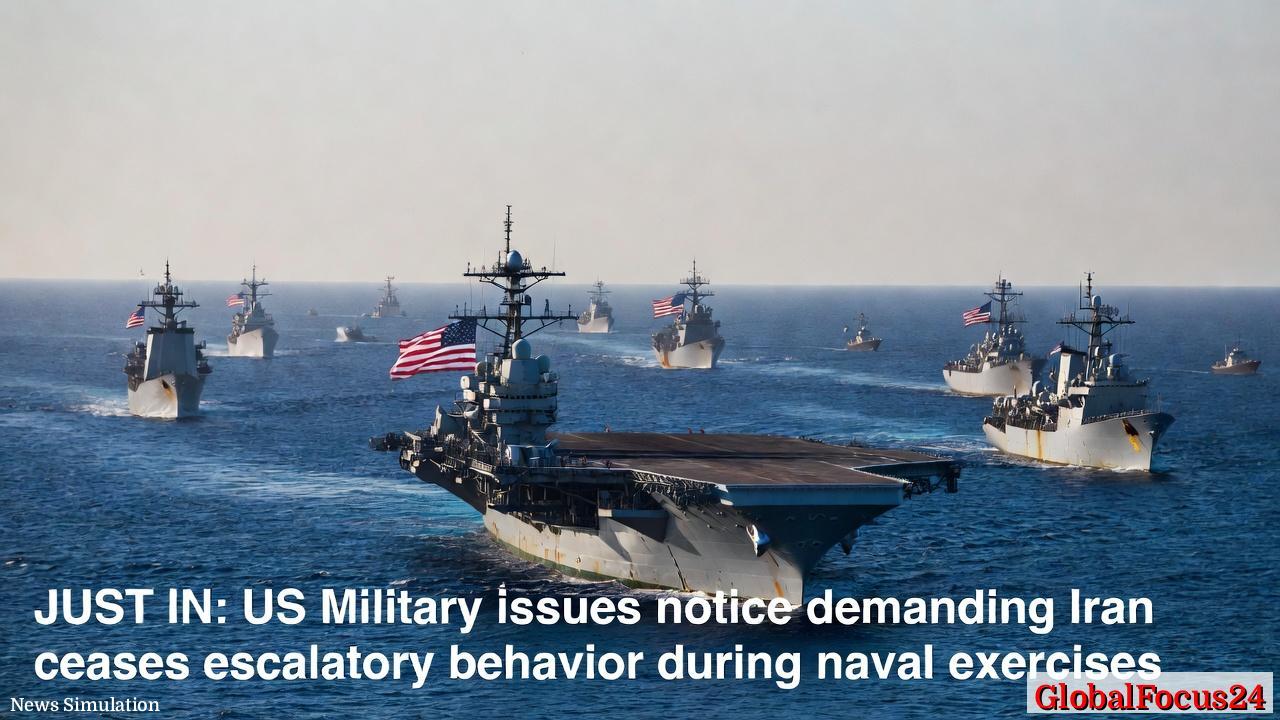
U.S. Navy Warns Iran Over Escalatory Naval Tactics During Regional Exercises
A high-stakes confrontation aboard the world’s oceans is unfolding as the United States military formally cautioned Iran to curb what it described as escalatory behavior during ongoing naval exercises in regional waters. The notice, delivered amid a flurry of maneuvers and overflights, underscores the fragile balance of power in a critical maritime corridor that has long served as a artery for international trade and military posture alike.
Historical context: decades of maritime rivalry and strategic chokepoints
The tension between Washington and Tehran over naval activity in the Persian Gulf, the Strait of Hormuz, and adjacent sea lanes is not new. Since the late 20th century, Iran’s Revolutionary Guard Corps has used asymmetric strategies—ranging from small-boat swarms to high-speed intercepts—to challenge larger, more capable naval forces from the United States and its allies. The Straits of Hormuz, a narrow waterway through which a significant share of the world’s oil travels, has repeatedly been a flashpoint for both diplomacy and brinkmanship. The latest warning from the U.S. follows a pattern of periodic escalations that have tested communication channels and raised concerns about miscalculation in crowded sea lanes.
Economic impact: regional stability, energy markets, and supply chain resilience
Naval posturing in this region has tangible economic consequences beyond the immediate theater. Market participants monitor risk premia, insurance costs, and shipping diversions that can influence energy prices and global trade flows. Even a temporary disruption in Hormuz-bound traffic can translate into wider price volatility for crude and refined products, given the gulf’s central role in energy supply chains. Traders also assess the potential ripple effects on regional economies, including beneficiaries such as port operators and logistics firms that support international commerce. A sustained pattern of confrontational signaling could prompt insurers and shipping companies to reevaluate routes, leading to longer transit times and higher costs that ultimately reach consumer markets.
Regional comparisons: how this episode stacks up against historical incidents
In past episodes, similar maritime standoffs have prompted coordinated responses among Western navies, regional partners, and international organizations seeking de-escalation. For example, during periods of heightened activity in the late 1990s and early 2000s, naval vessels from multiple countries conducted routine freedom-of-navigation patrols and joint exercises intended to deter miscalculation while reassuring global trade interests. The present moment features a broader information environment, with real-time satellite surveillance, social media scrutiny, and rapid military communications that amplify both transparency and misinterpretation. The United States emphasizes a doctrine of deterrence and rule-based behavior, while Iran positions its exercises as exercises in defense and national sovereignty. The balance between these narratives shapes how allies, adversaries, and nonaligned maritime actors interpret risk at sea.
What the notice signals about protocol and safety at sea
The U.S. statement centers on safety and the prohibition of dangerous, unpredictable actions that could lead to misidentification or collision. Overflights of U.S. vessels during flight operations—activities already subject to strict procedural norms—are highlighted as unacceptable, potentially raising the odds of inadvertent escalation. Observers note that the emphasis on flight safety reflects a broader maritime security framework in which clear communications, established airspace procedures, and predictable behavior are treated as essential to preventing accidents that could escalate quickly in a crowded theater.
Operational dynamics: what’s happening on the water and in the air
In practice, a naval theater of operations such as this involves a layered choreography of ships, aircraft, and command-and-control nodes. Carrier strike groups lead formations across open ocean, with destroyers, cruisers, and support vessels providing ballistic protection, anti-submarine warfare capability, and logistical sustainment. Aircraft operate from carriers and shore facilities, conducting patrols, reconnaissance, and air-defense exercises. In parallel, Iranian naval units—ranging from fast attack craft to larger surface vessels—conduct surveillance, intercepts, and defensive maneuvers designed to safeguard territorial claims and deter external interference. The dynamic is inherently complex: both sides seek to project resolve while avoiding actions that could spark a crisis beyond the immediate maritime zone.
Public reaction and regional sentiment: weighing deterrence against economic stakes
Public reaction to such standoffs often oscillates between concern for safety and recognition of the strategic necessity of secure shipping lanes. In regions adjacent to the Persian Gulf, communities connected to energy logistics, port operations, and fishing industries maintain a cautious watch, aware that any disruption can ripple through local economies and households. International markets tend to respond to the perception of credibility in deterrence—whether leaders convey unwavering resolve or a commitment to de-escalation through diplomacy. The balance between firmness and diplomacy influences public confidence in global supply chains, especially for energy-intensive economies that rely on consistent crude and refined product flows.
Diplomacy and potential pathways toward de-escalation
While the immediate notice centers on safety and escalatory behavior, many experts emphasize that long-term seaborne stability hinges on channels of dialogue. Multilateral engagement, confidence-building measures, and transparent incident reporting are often cited as crucial tools to reduce the likelihood of misinterpretation that could lead to miscalculation. In practice, this might involve hotlines between naval commands, agreed-upon procedures for incident reporting, and routine exercises conducted with international observers to build familiarity and predictability among navigational practices.
Technological and strategic implications for the future of naval operations
Advances in surveillance, sensor fusion, and unmanned systems continue to reshape how navies operate in high-tension environments. The ability to monitor movements with greater precision, share situational awareness in near real time, and execute coordinated responses with reduced risk of human error creates new opportunities for deterrence without necessarily resorting to force. At the same time, the proliferation of autonomous and remotely piloted platforms introduces new considerations for how rules of engagement are interpreted, how aggressive postures are moderated, and how proportional responses are calibrated under international law and customary norms.
Historical lessons for today’s maritime calculus
Looking back, several themes emerge as relevant to the present episode. First, consistent, credible signaling that avoids provocative maneuvers tends to reduce the probability of escalation, even when underlying strategic rivalries persist. Second, robust communication channels between involved parties help prevent incidents from spiraling into accidents or misinterpretations. Third, international institutions and alliances can provide a stabilizing framework that reassures global markets and supports the uninterrupted flow of commerce, even amid disagreements over sovereignty and security strategies. These lessons underscore the importance of maintaining open lines of contact and prioritizing safety protocols during times of heightened naval activity.
Impact on supply chains and global markets
Beyond regional dynamics, global supply chains remain sensitive to shifts in maritime risk perception. Insurance premiums for shipping through high-risk corridors often reflect both the probability of disruption and the potential severity of an incident. Even small changes in perceived risk can alter vessel routing decisions, fuel consumption, and port-call strategies, with cascading effects on berth availability and freight rates. In a broader sense, the episode serves as a reminder that geopolitical frictions in one strategic waterway can echo through markets that are geographically distant, influencing investment decisions, commodity markets, and consumer prices.
Regional infrastructure and resilience: adapting to a tense maritime environment
Ports and logistics hubs along adjacent coasts have long invested in resilience measures to weather disruptions caused by geopolitical volatility. Enhanced security protocols, diversified routing, and digital monitoring capabilities help mitigate risk and maintain throughput during periods of heightened tension. Public-private collaboration, including partnerships between port authorities, shipping lines, and national security agencies, plays a crucial role in sustaining the reliability of critical supply chains. While such measures cannot fully prevent disruptions, they contribute to a more robust strategic posture that can absorb shocks and maintain economic momentum.
Forward-looking considerations for policymakers and industry
As this situation develops, policymakers and industry stakeholders may focus on several priorities. These include reaffirming commitments to international maritime law and freedom of navigation, supporting transparent incident reporting to reduce uncertainty, and investing in technologies that improve situational awareness and response times. For industry, the emphasis is on contingency planning, diversified vessel routing, and strengthened insurance and risk management practices. These actions help ensure that global trade continues with minimal interruption, even as strategic tensions persist behind the scenes.
Conclusion: a fragile balance in a vital sea corridor
The current exchange between the United States and Iran over naval conduct highlights the enduring fragility of a sea corridor that underpins global energy security and international commerce. The emphasis on safety and calculated restraint signals a desire to avoid missteps that could escalate into a broader confrontation. As ships maneuver and skies hum with overflights, the maritime world watches closely, weighing the imperative of steadfast defense against the equally important objective of maintaining open, predictable, and lawful navigation for the many economies that rely on the uninterrupted flow of goods across this pivotal region.