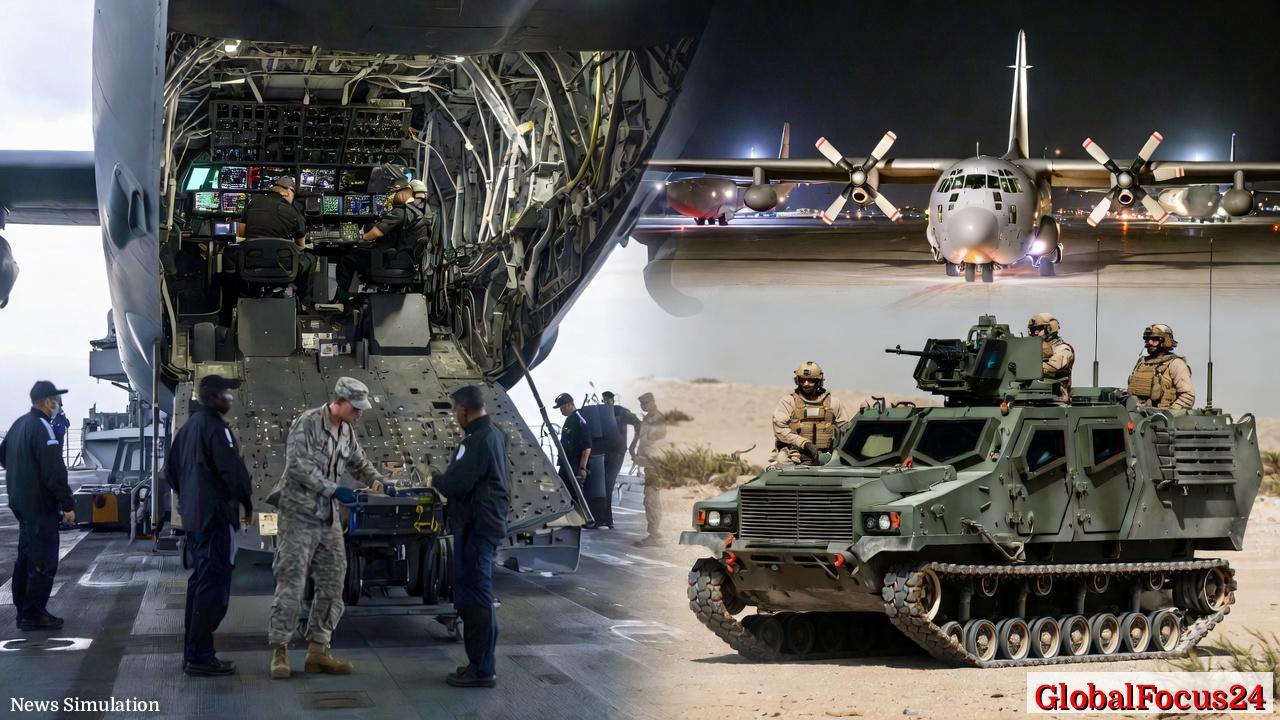
Global Logistics Backbone: How U.S. Military Sustainment Shapes Global Operations
In an era defined by rapid global mobility and complex conflict landscapes, the United States military’s sustainment and logistics apparatus stands as a pivotal force behind national security and international stability. U.S. Central Command’s recent emphasis on the unparalleled scale of American sustainment operations underscores a enduring truth: without a robust logistics ecosystem, even the most advanced combat capabilities cannot translate into strategic outcomes. From airlift and shipboard maintenance to supply chain management and theater resupply, logistics functions knit together the United States’ global reach with the needs of partners, allies, and humanitarian missions alike.
Historical Context: Evolution of Modern Military Logistics
The trajectory of modern military logistics traces a continuous arc from supply lines stretched across continent and sea to highly integrated, technology-enabled networks that span the globe. During World War II, the Allied logistics machine demonstrated how critical maternal lines of supply, transport hubs, and medical evacuation corridors could determine the pace and success of campaigns. The Cold War era heightened the emphasis on redundancy, rapid mobilization, and inter-service cooperation, prompting investments in air and sea superiority, enduring stockpiles, and sophisticated inventory management. The Gulf War of 1990–1991 then showcased the importance of precision in logistics planning, just-in-time resupply, and adaptive maintenance strategies to sustain a technologically advanced force in hostile environments. In the 21st century, the fusion of digital tracking, predictive maintenance, and global airlift capacity has transformed military logistics into a continuous, data-driven operation that can respond to crises within hours rather than days.
Key components of sustainment and logistics
- Supply chain resilience: A resilient, diversified network ensures critical items—from fuel and munitions to spare parts and medical supplies—remain available even when traditional routes are disrupted.
- Maintenance and depot support: Routine and predictive maintenance keeps aircraft, ships, and ground platforms mission-ready, reducing downtime and extending asset lifecycles.
- Transportation and global reach: Airlift, sealift, and overland transport enable rapid movement across theaters, sustaining combat operations or delivering humanitarian assistance.
- Fuel and energy management: Efficient fuel logistics are essential for maintaining readiness, with innovations in alternative energy and efficiency reducing logistical burden over time.
- Medical and welfare services: Readiness hinges on medical supply chains, evacuation capabilities, and field survivability resources that protect personnel and sustain morale.
- Information systems: Modern logistics rely on integrated software for inventory, maintenance scheduling, and real-time situational awareness across fleets and theaters.
The Economic Impact: How Sustainment Drives Regional and Global Economies
Sustainment operations generate ripple effects across domestic and international economies. On the military side, efficient logistics drive readiness and lower lifecycle costs by preventing equipment failures and shortening downtime. This translates into fewer expensive downtime missions and a longer asset lifespan, which, in turn, reduces procurement pressure on defense budgets and broadens the fiscal space for modernization programs.
Beyond the defense budget, sustainment activities stimulate a wide range of suppliers, manufacturers, and service providers. The need for advanced avionics, propulsion systems, wear-resistant materials, and diagnostic tools sustains high-value industrial sectors. Ports, airfields, and maintenance depots become hubs of activity, creating jobs, training opportunities, and knowledge transfer that spill over into civilian sectors. In regions where allied bases operate, local economies often experience increased commerce, construction, and maintenance-related employment, reinforcing broader economic resilience.
Regional Comparisons: Global Logistics Capabilities in Context
Several regional players maintain sophisticated logistics ecosystems in defense and security contexts, but the scale and integration of U.S. defense logistics remain distinctive. For example:
- Europe: Alliance bases and joint logistics hubs enable interoperability with continental partners, emphasizing shared supply chains, common maintenance practices, and standardized parts inventories. The European theater benefits from mature airlift networks and dense road and rail corridors that support rapid movement.
- The Indo-Pacific: The emphasis here is on distributed maritime logistics, multi-domain operations, and the ability to project power across vast oceanic distances. Forward-deployed squadrons, maintenance facilities, and prepositioned equipment are critical to sustaining operations across contested sea lanes.
- the Middle East and Africa: Regional sustainment often focuses on redundancy, local procurement, and rapid medical and humanitarian response capabilities to support stability operations and post-crisis reconstruction.
In each region, the ability to sustain operations is not merely about moving materiel; it is about maintaining a tempo of readiness that shapes deterrence, alliance confidence, and humanitarian effectiveness. The comparative advantage of the United States lies in an integrated, technologically advanced logistics network that links air, sea, land, and cyber domains with a robust industrial base and strategic reserves.
Operational Realities: Illustrative Scenarios of Sustainment in Action
- Aircraft carrier readiness: Maintaining aircraft carrier decks and air wings requires continuous maintenance cycles, parts inventory management, and fuel, munitions, and oxygen supply chains. Night missions, carrier propulsion systems, and complex avionics demand coordinated logistics to ensure mission planning aligns with on-time air sorties.
- Ground maneuver sustainment: Armored forces rely on continuous resupply of fuel, ammunition, spare components, and maintenance personnel to keep armored brigades ready for sustained operations in diverse terrains. The efficiency of these supply lines often dictates the speed at which brigades can maneuver and hold or retake key ground.
- Airlift and aeromedical evacuation: Rapid transport of personnel and equipment between theaters hinges on secure air corridors, refueling options, and battlefield medical care. Timely resupply of critical medical items, blood products, and trauma equipment is essential to preserve life and maintain morale.
- Prepositioned assets: Stockpiled equipment in strategic locations reduces turnaround time for response. Prepositioning enables faster deployment for disaster relief, humanitarian missions, and crisis-response operations, often shaping regional stability dynamics.
Public Reaction and the Human Dimension
The public perception of sustainment logistics often lags behind tactical battlefield achievements. Yet, observers frequently recognize that behind every dramatic airstrike or armored breakthrough lies a carefully choreographed network of supply lines, maintenance crews, and procurement specialists who make those feats possible. Communities hosting bases feel the ripple effects—from job creation to local procurement opportunities—while households in supply chain corridors experience the indirect benefits of a more predictable national security posture. In times of regional tension or natural disasters, the visibility of logistics operations increases as civilians see relief efforts, medical shipments, and relief supplies move through ports and airfields, reinforcing trust in national capabilities.
Technological Enablers: What Keeps the System Modern
- Digital twins and predictive maintenance: Simulated models of equipment behavior help forecast failures before they occur, reducing unexpected downtime and extending asset lifespans.
- Real-time inventory management: Barcodes, RFID tagging, and cloud-based platforms enable near-instant visibility into parts availability and spare-parts usage across theaters.
- Autonomous and semi-autonomous systems: Drones and ground robotics assist with reconnaissance, resupply of small items, and inspection tasks where human access is risky or time-consuming.
- Data-driven logistics planning: Advanced analytics optimize routing, anticipate demand surges, and improve contingency planning for disrupted routes.
- Energy-aware logistics: Innovations in fuel efficiency, alternative fuels, and electrified platforms reduce the overall logistical burden and environmental footprint, aligning with broader sustainability goals.
Policy and Strategic Implications
A robust sustainment and logistics framework supports strategic priorities by ensuring rapid military response, sustaining allied commitments, and enabling humanitarian interventions. It also informs procurement and modernization decisions, guiding investments toward durable, interoperable platforms that maximize readiness and resilience. As adversaries and non-state actors explore anti-access strategies, the resilience and redundancy of logistics networks become critical deterrents, enabling a credible deterrent posture while reducing the risk to personnel and assets.
Looking Ahead: Sustainability and Future Readiness
The trajectory of military logistics points toward greater integration with civilian supply chains, more resilient infrastructure, and smarter, data-driven decision-making. Investments in modularity, which allows components to be replaced or upgraded without excessive downtime, will enhance adaptability to emerging threats. Expanding prepositioned capabilities and fortifying alliance logistics hubs will further shorten lead times and increase strategic flexibility in rapidly changing environments. As climate change and extreme weather events pose new challenges, contingency planning and flexible sourcing will be essential to maintaining sustainment across theaters.
Conclusion: The Quiet Engine of Global Security
Sustainment and logistics represent the quiet engine propelling global security and operational effectiveness. They ensure that high-tech equipment performs when it matters most, maintain the tempo of alliance operations, and enable rapid humanitarian response in crisis zones. Whiles may highlight battles and frontline actions, the backbone of successful missions rests on a sophisticated, disciplined, and continuously evolving logistics enterprise. The United States’ commitment to sustaining this system across air, sea, and land underscores a strategic model in which readiness and resilience are inseparable from national interests and international responsibility.