US Approves $6.67 Billion Arms Sale to Israel as Middle East Tensions Escalate
In a move that underscores the United States’ continuing security commitments in the Middle East, the administration has approved a $6.67 billion arms sale to Israel. The bulk of the sale is organized into four packages designed to strengthen Israel’s defense capabilities amid rising regional tensions and broader strategic competition in the Middle East. The decision arrives as policymakers weigh regional security dynamics, the threat landscape surrounding Iran, and ongoing international efforts to broker a ceasefire in Gaza.
Historical context: a long arc of U.S.-Israel defense cooperation
Since the establishment of Israel in 1948, bilateral defense cooperation has evolved from close security coordination to one of the most extensive security partnerships in the world. Over the decades, successive U.S. administrations have provided a steady stream of military aid, advanced weapons systems, and joint training. This evolution reflects a strategic calculus: Israel serves as a key regional ally capable of projecting power and maintaining deterrence, while the United States seeks to sustain a stable balance of power in a volatile neighborhood. The current sale continues a pattern that stretches back to postwar reforms in defense procurement, strategic doctrine alignment, and the integration of U.S.-made platforms into Israel’s mature security apparatus.
Economic impact: implications for defense industries and regional markets
The $6.67 billion package has multifaceted economic implications. Within the United States, defense contractors and suppliers aligned to the deal stand to gain revenue through new production contracts, maintenance services, and training programs. The mix of platforms—high-technology helicopters, armored and mobility assets, and small utility assets—creates demand across a broad supply chain, from airframes and avionics to vehicle logistics and after-market support. For Israel, the sale enhances the scale and operational reach of its forces, potentially affecting the logistics of defense procurement, maintenance scheduling, and workforce training. In a regional context, sustained security assistance can influence defense spending dynamics in neighboring countries, shaping how neighbors gauge risk, invest in their own militaries, and pursue deterrence strategies. If regional arms markets respond to this infusion of advanced U.S.-provided capabilities, the broader defense-industrial ecosystem in the region could experience shifts in demand for training, spare parts, and service contracts.
Regional comparisons: how this package stacks up against peers and neighbors
- Jordan and Egypt have long-standing security aid relationships with the United States, but the current package toward Israel emphasizes a different strategic calculus: advanced air defense, mobility, and rapid deployment capabilities aimed at a compact, high-threat environment.
- In other regional theaters, defense partnerships often address asymmetric threats, border security, and counter-terrorism logistics. Israel’s kit list—Apache attack helicopters, armored personnel carrier upgrades, and light utility helicopters—illustrates a preference for high-end, rapid-response platforms that can operate across diverse scenarios, from conventional battlefields to urban and border security operations.
- Comparisons with European defense procurement show a clear divergence: the United States and Israel often emphasize interoperability and forward-deployed readiness, while European buyers may pursue a broader array of mixed platforms, including air defense networks, land systems, and cyber resilience tools. The Israeli case underscores a specialized alignment around high-utility platforms tailored to immediate security challenges.
What the four packages include and what they enable
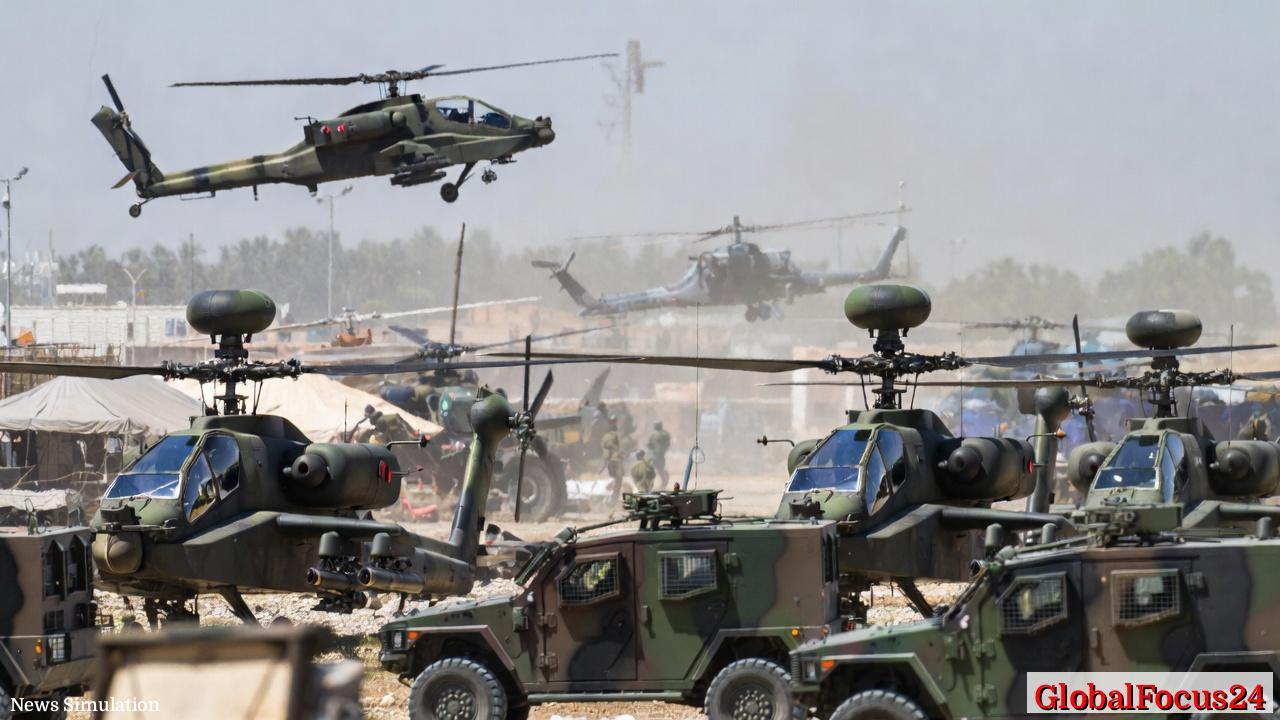
- Apache attack helicopters package: The largest component, valued at approximately $3.8 billion, comprises 30 Apache attack helicopters equipped with rocket launchers, advanced targeting systems, and accompanying weapons. This capability enhances precision strike options, close air support, and sustained battlefield presence. The Apache platform is well-known for its survivability, interoperability with allied air and ground units, and proven performance in contested environments.
- Light tactical vehicles package: At about $1.98 billion, the sale provides 3,250 light tactical vehicles intended for personnel transport and logistical support. These vehicles increase mechanized mobility for infantry and support units, expand operational reach, and improve resilience in varied terrains—from urban corridors to rugged border areas.
- Power packs for armored personnel carriers: Approximately $740 million would fund upgrades to armored personnel carriers in service since 2008. Upgrades typically include propulsion improvements, protection enhancements, and sustainment packages to extend the lifespan and performance of existing fleets.
- Light utility helicopters: A smaller component, priced at around $150 million, covers a limited number of light utility helicopters to complement the current rotorcraft inventory. These platforms can support reconnaissance, transport, medical evacuation, and general versatility in less-demanding missions.
Public reaction and policy considerations
Public and expert reactions to this sale are likely to hinge on several factors:
- Strategic necessity and deterrence: Proponents argue the package strengthens Israel’s deterrence and defense posture in a volatile region, contributes to border security, and provides protective capabilities for civilian infrastructure and populations.
- Interoperability and readiness: Supporters highlight the importance of interoperability with U.S. and allied forces, rapid deployment potential, and the ability to project force where regional contingencies demand it.
- Oversight and policy questions: Critics may raise concerns about the speed and transparency of the approval process, especially given broader policy questions surrounding ongoing conflicts and humanitarian considerations. Debates could focus on how arms sales align with diplomatic objectives, ceasefire efforts, and nonproliferation priorities.
- Regional stability: Analysts often assess whether such an arms package could alter regional risk assessments, influence arms races, or affect the readiness and posture of neighboring states in the Middle East.
Geopolitical dynamics: Iran, Gaza ceasefire, and the broader regional framework
The timing of the sale coincides with heightened attention to Iran’s nuclear program and regional influence. Diplomatic signals emphasize attempts to prevent escalation while preserving space for strategic signaling and deterrence. In parallel, efforts toward a Gaza ceasefire have progressed in some channels, though challenges persist in translating negotiations into durable arrangements that address security guarantees, humanitarian needs, and political constraints on both sides. The arms sale is thus situated within a broader transactional and diplomatic landscape where defense support and diplomatic engagement operate in parallel to shape security outcomes.
Operational implications for Israel’s defense posture
With this arsenal, Israel would be positioned to:
- bolster air defense coordination, integrate advanced targeting with existing platforms, and accelerate response times across frontlines and contested corridors.
- expand mobility for infantry and logistics teams, enabling more flexible force deployment and rapid reinforcement of critical locations.
- modernize aging fleets and sustainment capacity, reducing the risk of platform downtime and enhancing overall readiness in high-tempo operations.
- strengthen deterrence by signaling sustained U.S. commitment to regional security and the capacity to respond to evolving threats.
Compliance, oversight, and long-term considerations
The sale adheres to established U.S. export controls and defense trade frameworks intended to balance security assistance with accountability. Congressional oversight processes, licensing regimes, and post-delivery support commitments shape how the package is implemented and monitored over time. Long-term considerations include:
- maintenance and training demands that accompany advanced systems, ensuring operators can fully leverage capabilities while maintaining safety and reliability.
- potential impacts on regional arms dynamics, including how neighboring states respond in light of enhanced Israeli capabilities.
- alignment with broader foreign policy objectives, including regional diplomacy, ceasefire initiatives, and nonproliferation goals.
Regional economic effects: ripple effects beyond the battlefield
Beyond direct defense spending, the sale’s ripple effects extend to local and regional economies. Suppliers in the defense ecosystem may see near-term demand increases, while research and development activities linked to advanced avionics, propulsion, and command-and-control systems can drive innovation and employment. Regional trade patterns could experience shifts as partner nations adjust procurement plans, training schedules, and maintenance arrangements to synchronize with this new security posture. Additionally, the increased security backdrop can influence investor sentiment, tourism dynamics, and energy sector risk assessments, given the Middle East’s strategic importance in global markets.
Public diplomacy and international perception
From a public diplomacy standpoint, the United States often frames arms sales as a stabilizing element that strengthens allied defenses against existential threats. In parallel, international observers may scrutinize the human impact of ongoing conflicts and stress the importance of proportionality, civilian protection, and humanitarian access. The net effect on perception includes a nuanced balance between acknowledging a military aid package as a tool for deterrence and recognizing the broader necessity of pursuing peaceful resolutions and sustainable security arrangements in the region.
The path forward: monitoring, adaptation, and policy alignment
As the arms package moves from approval to implementation, several steps will shape how effectively these capabilities are integrated and how the broader security environment evolves:
- detailed implementation schedules and training programs to ensure operators maximize safety and effectiveness.
- ongoing assessments of regional threats and potential escalation scenarios to calibrate force posture and readiness.
- continuous diplomatic engagement aimed at sustaining ceasefire efforts, de-escalation channels, and broader regional stability.
- transparent reporting mechanisms to maintain public trust and ensure compliance with international norms and U.S. policy objectives.
Conclusion: security, strategy, and the pursuit of regional balance
The $6.67 billion arms sale to Israel reflects a multi-dimensional approach to security in a region characterized by rapid shifts in threat perception, strategic competition, and humanitarian concerns. By enhancing Israel’s defense toolkit with a mix of advanced attack helicopters, mobility vehicles, and platform upgrades, the package aims to reinforce deterrence, strengthen border and infrastructure protection, and support a credible national defense posture. At the same time, the regional implications—economic, diplomatic, and strategic—underscore the importance of balanced policy execution, vigilant oversight, and sustained efforts to advance ceasefire arrangements and broader regional stability. In this evolving landscape, the United States and its Israeli partner will navigate a complex interplay of defense readiness, diplomatic signaling, and the overarching goal of reducing regional violence while preserving the security guarantees that help maintain a fragile equilibrium.