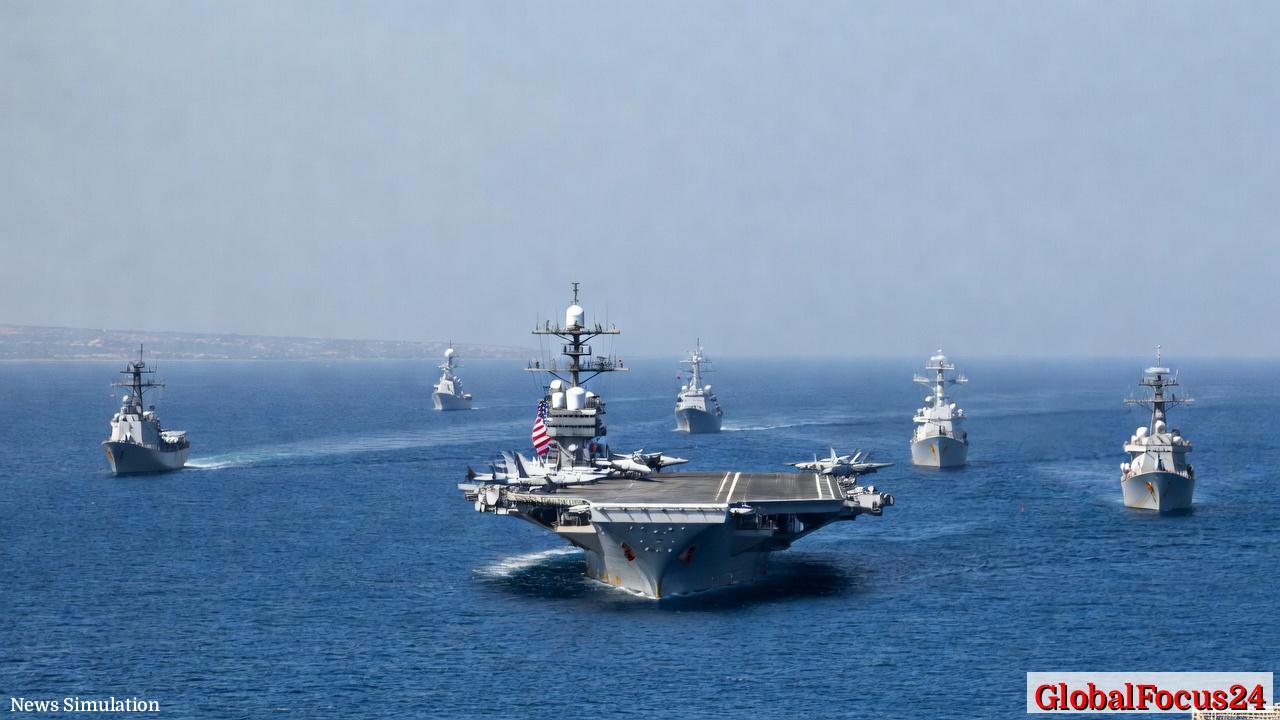
US Carrier Abraham Lincoln Heads to Middle East as Tensions with Iran Escalate
The deployment of the aircraft carrier USS Abraham Lincoln to the Middle East marks a significant moment in the ongoing U.S. posture in a region historically defined by strategic naval presence and volatile security dynamics. By anchoring a powerful airstrike platform in proximity to Iran, Washington signals a recalibrated approach to deterrence, military readiness, and alliance coordination. The move, announced amid broader concerns about rapid developments in regional security, underscores how naval power remains a central element of modern crisis management and crisis signaling.
Context and historical backdrop
Naval power as a tool of statecraft has long shaped the balance of power in the Middle East. Since the end of World War II, carrier groups have functioned as both a show of force and a flexible strike capability that can respond to multiple contingencies across vast maritime theaters. The Abraham Lincoln, a Nimitz-class supercarrier commissioned in the late 2000s, represents a culmination of decades of carrier design, air wing evolution, and command-and-control integration designed to operate in a high-threat environment. Its arrival in the Gulf of Oman, a critical maritime choke point through which a substantial portion of global oil and trade flows, highlights the enduring relevance of carrier strike groups (CSGs) for power projection, maritime security, and alliance signaling.
The historical arc in U.S.-Iran security interactions has been punctuated by high-profile incidents, from the 1980s to the present, where naval forces served as both surveillance mechanisms and rapid-response platforms. The current deployment sits within a tradition of demonstrating capability to deter escalation, reassure regional partners, and maintain freedom of navigation in one of the world’s most sensitive maritime corridors. While official statements emphasize defense and deterrence, observers note that carrier movements also serve as real-time indicators of U.S. commitment to regional stability, an objective pursued through a combination of diplomacy, intelligence-sharing, and, at times, military readiness.
Strategic rationale behind the deployment
Experts describe several overlapping rationales for deploying a carrier such as the Abraham Lincoln to the Persian Gulf region. First, the presence of a large naval force enhances operational flexibility, enabling rapid escalation or de-escalation as events unfold. Carrier-based airpower can project extended deterrence by providing credible striking power while enabling precise operational responses should threats materialize. This is particularly relevant given Iran’s reported investment in unmanned aerial systems, ballistic missiles, and hypersonic capabilities—tools that, if deployed, could complicate regional security calculations.
Second, the carrier’s deployment strengthens alliance interoperability. Multinational naval exercises, joint patrols, and mutual-support arrangements with partners in the region—such as Gulf Cooperation Council members and aligning states—benefit from the carrier’s command-and-control lattice, air superiority potential, and air-to-ground precision strike capabilities. A visible U.S. naval presence reinforces commitments to regional partners and reinforces the expectation of cooperation in maritime security, counterterrorism, and humanitarian operations.
Third, the move serves as a message about redlines and escalation management. In a crisis scenario, the ability to quickly mobilize a robust air, sea, and cyber footprint can deter miscalculation and provide policymakers with more room to negotiate. While public commentary often emphasizes the deterrent dimension, defense planners emphasize resilience, redundancy, and the capacity to sustain operations in the face of ongoing threats to critical infrastructure and shipping lanes.
Economic implications for regional and global markets
The deployment carries notable economic reverberations, both direct and indirect. In the near term, heightened military activity in the Persian Gulf can affect crude oil supply expectations, shipping insurance costs, and the cost of risk for international traders. While the global oil market has become increasingly diversified and resilient, market participants monitor regional tensions closely, with price volatility often spiking in response to perceived threat levels, sanctions risks, or potential disruption to key transit routes.
Beyond energy markets, the deployment influences regional economic confidence. Businesses operating in or trading with Middle Eastern economies may adjust investment and staffing plans during periods of heightened tension, factoring in security considerations, potential disruptions to port operations, and the reliability of commercial corridors. Yet the visible assertion of U.S. military capability can also stabilize expectations for some investors, reinforcing the sense that international partners remain committed to open seas and rule-based commerce.
Regional comparisons and broader security architecture
Comparisons with other major maritime theaters illustrate the distinctive role of carrier operations in the Middle East. In the Western Pacific, carrier groups frequently operate in the context of a broader strategic competition, with peers from allied nations contributing to a dense network of deterrence and freedom-of-navigation operations. In the Middle East, however, carrier deployments often intersect with complex diplomatic dynamics, including a mosaic of regional actors, proxy risks, and volatile political developments. The Abraham Lincoln’s presence complements an existing architecture of security cooperation—ranging from patrols and maritime security initiatives to intelligence-sharing arrangements—that seeks to reduce the likelihood of miscalculation and accidental escalation.
The integration of air power with surface and submarine components further differentiates the Middle East theater. Carrier strike groups can coordinate sorties with land-based air forces from allied nations, enabling multi-domain operations that degrade adversarial capabilities while preserving the initiative for potential de-escalation pathways. This integrated approach reflects a broader trend in modern armed forces: the emphasis on joint operations across domains to maximize strategic effect while preserving civilian infrastructure and minimizing escalation risk.
Public reaction and societal impact
Public sentiment around naval deployments in sensitive regions tends to reflect a mix of concern, reassurance, and curiosity. Local communities, businesses, and diaspora groups often weigh the potential for disruption against the perceived benefits of security guarantees and stable trade routes. In many Gulf states, governments emphasize the importance of security assurances that enable commerce, tourism, and investment. Civil society voices frequently highlight the human cost of regional tensions and the need for ongoing diplomacy to complement military readiness.
In the United States, the deployment is typically framed as part of a broader national security strategy designed to deter aggression, protect allies, and preserve open seaways. Commentary from defense officials emphasizes the role of deterrence, readiness, and the importance of maintaining a credible, adaptable posture in response to evolving threats. Public statements sometimes acknowledge the uncertainty inherent in crisis conditions, while policymakers strive to project calm and a path toward de-escalation through diplomacy and international cooperation.
Technical capabilities and operational readiness
The Lincoln-class carrier teams bring together a diverse array of capabilities, including air wings equipped with precision-guided munitions, electronic warfare assets, unmanned aerial system support, and advanced sensor networks. The ongoing evolution of carrier air wings—balancing octane-level strike capacity with intelligence, surveillance, and reconnaissance functions—enhances the ability to monitor activity at sea and ashore. The carrier’s sophisticated defense-in-depth measures, layered with missile defense and anti-submarine warfare resources, contribute to a more capable deterrent posture in a volatile theatre.
One aspect of modern carrier operations is the integration of allied and partner forces into the broader mission spectrum. Joint exercises and interoperability initiatives help reduce the time required to align command decisions, share situational awareness, and coordinate protective measures for merchant flows. This collaborative approach strengthens regional resilience by distributing risk across a network of allied capabilities, rather than concentrating risk in a single platform.
Geopolitical dynamics and potential scenarios
As tensions persist, several plausible scenarios could unfold in the coming weeks and months. A calibrated response could involve limited strikes or retaliatory measures aimed at specific targets, with the carrier serving as a rapid-response platform that enables scale or restraint depending on evolving circumstances. Diplomatic channels remain critical, and regional stakeholders continue to seek stable, predictable outcomes through negotiations and multilateral forums.
Analysts caution that the presence of a carrier does not automatically precipitate conflict; instead, it can deter miscalculation by signaling credible consequences for aggressive actions. Conversely, misinterpretation or a sudden, unexpected move by any party could escalate tensions quickly, underscoring the importance of clear communication among military leaders, diplomats, and regional partners. In such environments, the carrier’s role is not only military but also symbolic—a constant reminder of the enduring reach and responsibility of a global maritime power.
Environmental considerations and sustainability
Military deployments in sensitive waterways raise questions about environmental stewardship and the potential ecological footprint of naval operations. While security imperatives often take precedence, navies increasingly emphasize responsible operations, including minimizing fuel use where practicable, managing waste responsibly, and engaging with international norms on maritime environmental protection. The public discourse around sustainability in high-stakes theaters reflects a broader belief that responsible stewardship should accompany strategic and humanitarian objectives.
Operational timelines and future outlook
The Abraham Lincoln’s deployment is part of a broader pattern of forward presence and flexible response capabilities that characterized modern naval strategy. As regional dynamics continue to evolve, the carrier group could rotate through the theater, integrate with allied forces in longer-duration exercises, or participate in humanitarian and disaster-relief missions when required. The evolving landscape of unmanned systems, cyber operations, and ballistic-missile defense will shape how carrier groups adapt to emerging threats while maintaining a clear path toward de-escalation and diplomacy.
Conclusion
The deployment of the USS Abraham Lincoln to the Middle East signals a deliberate, multi-faceted approach to regional security in a world where maritime power, diplomacy, and economic stability intersect. While the immediate impact centers on deterrence and readiness, the long-term implications touch on alliance cohesion, global energy market stability, and the ability of regional actors to navigate a complex security environment with less uncertainty than in past decades. As the situation develops, observers will watch not only the tactical movements of ships and aircraft but also the broader strategic signals that shape diplomatic dialogue, investment decisions, and the everyday lives of people who rely on unimpeded access to global trade routes.
Follow-up considerations for readers
- How do carrier deployments influence regional risk assessments for shipping and logistics companies?
- In what ways do allied nations adapt their maritime strategies in response to heightened carrier activity in critical waterways?
- What role do diplomatic channels play alongside military postures in managing escalation risk and maintaining open seas?