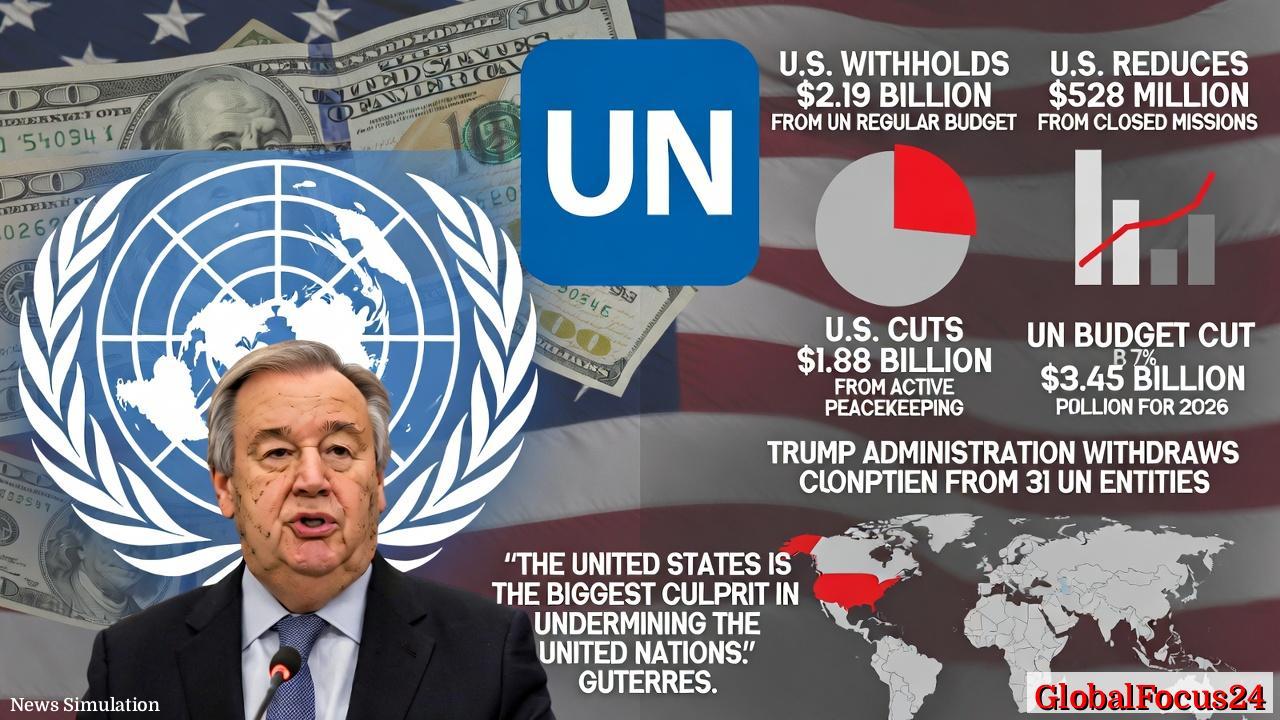
UN Faces Imminent Financial Collapse as Funding Gaps Threaten Global Operations
A liquidity crisis at the United Nations has reached a pivotal moment, raising questions about the future of international aid, peacekeeping, and humanitarian programs amid rising unpaid dues from member states and constrained funding rules. In a stark warning, the UN Secretary-General said cash reserves could be depleted as soon as July, potentially disrupting critical operations across multiple global missions. The developing financial squeeze highlights the delicate balance between international diplomacy and the economics of multilateral institutions in an era of shifting geopolitical priorities and budget pressures.
Historical Context: The UN’s Fiscal Challenge Through the Years Since its founding, the United Nations has been funded through a mix of assessed contributions from member states and voluntary gifts, designed to sustain a broad portfolio of peacekeeping, humanitarian, and development programs. The system relies on timely dues to ensure predictable budgeting and steady delivery of aid and diplomatic initiatives. Yet history shows that multilateral funding cycles are vulnerable to political disputes, election-year dynamics, and competing national priorities. The current liquidity crisis is not solely a numbers problem; it reflects a broader trend in global governance where large contributors reassess their engagement levels, which can ripple across the organization’s ability to plan long-term projects.
The latest data show outstanding dues reached a record high, with total arrears surpassing previous years’ peaks. This situation has intensified calls for financial reform and more reliable funding mechanisms to prevent operational gaps in essential programs. The UN has acknowledged that delayed payments hinder smooth program execution, complicate payrolls, and risk the timely delivery of humanitarian aid and peacekeeping mandates.
Economic Impact: From Budget Cuts to Operational Risk
- Core budget strain: The UN’s core budget is facing a squeeze as member state dues fall behind schedule. A depleted liquidity buffer threatens the organization’s capacity to fund ongoing operations, from field missions to emergency response teams.
- Peacekeeping and humanitarian implications: Delays in funding can disrupt troop rotations, logistical support, and humanitarian corridors. This undermines the ability to respond swiftly to conflicts, natural disasters, and public health emergencies, potentially increasing civilian risk.
- Administrative efficiency versus cash flow: In response to the liquidity problem, the UN has implemented efficiency measures and a modest budget reduction. While these steps improve short-term financial resilience, they also place additional stress on program delivery and procurement cycles, which can slow down operations at a time when speed is essential.
- Ripple effects across the aid ecosystem: International donors, non-governmental organizations, and partner agencies often align their own programs to UN planning and funding timelines. When the UN experiences cash flow issues, downstream partners may face scheduling challenges, grant reflows, and adjusted timelines for major humanitarian initiatives.
- Market confidence and donor dynamics: The credibility of the UN as a stable funding channel influences private sector and philanthropic contributions. Prolonged financial uncertainty could dampen private philanthropy and bilateral funding commitments, complicating long-range planning for global development projects.
Regional Comparisons: How Different Regions Are Affected
- Sub-Saharan Africa: Regions relying heavily on UN-coordinated humanitarian relief and development programs may experience slower aid deployment, impacting food security projects, emergency medical services, and educational initiatives. Hosting governments and local NGOs may need to recalibrate procurement and logistics in the absence of predictable UN support.
- Middle East and North Africa: In conflict-affected zones, where UN missions deliver critical stabilization and humanitarian relief, budget instability can slow ceasefire monitoring, displacement support, and reconstruction efforts, prolonging humanitarian crises for vulnerable populations.
- Asia-Pacific: With diverse development needs and a growing population of displaced persons in some areas, reductions in UN-funded programs could slow vaccination campaigns, climate resilience projects, and disaster risk reduction activities, increasing exposure to natural hazards and health risks.
- Latin America and the Caribbean: Regions facing migration pressures, violence, and climate-related disasters depend on UN-led initiatives for regional coordination, protection services, and capacity-building programs. Budget constraints could hamper cross-border cooperation and crisis response readiness.
- Europe and the Atlantic: While member states in Europe are generally major donors, tightening budgets and political shifts can influence contributions, potentially affecting UN regional programs focused on humanitarian corridors, refugee support, and sustainable development in neighboring regions.
What’s Driving the Crisis: A Complex Web of Dues, Rules, and Priorities
- Unpaid dues and delayed payments: The most visible symptom is the accumulation of arrears. When member states delay, the UN’s ability to forecast cash flow becomes uncertain, forcing contingency planning and prioritization of ongoing programs over new initiatives.
- Budget rule framework: The governance rules governing contributions and spending have come under scrutiny. Calls for reform emphasize the need for clarity on cash reserves, expenditure controls, and flexibility to adapt to fluctuating funding streams without undermining essential services.
- Major contributor dynamics: The United States, as the largest contributor in the core budget, has signaled significant reductions in funding. This shift amplifies financial stress and necessitates new funding models or policy adjustments to sustain critical operations.
- Policy alignment versus operational needs: Balancing national policy objectives with the UN’s universal mandates creates tensions. When national priorities shift, contributions can become more volatile, prompting the UN to explore efficiency over expansion and to reassess mission scope.
UN Reforms and Strategic Responses In response to the liquidity crisis, the UN has pursued targeted reforms aimed at preserving essential operations while preserving fiscal integrity. Key measures include:
- Budget adjustments: A measured reduction to core expenditures has been implemented to align spending with available cash, emphasizing high-impact programs and critical operations.
- Efficiency initiatives: The UN80 task force and other efficiency programs focus on reducing waste, optimizing procurement, and accelerating digital transformations that can deliver savings without compromising program outcomes.
- Cash-flow management: Strengthening cash-flow forecasting and contingency planning to mitigate the impact of late contributions and ensure critical functions remain funded.
- Governance and accountability enhancements: Reforms aim to improve financial transparency, performance metrics, and governance processes, increasing donor confidence and potential future contributions.
Public Reaction and Global Perception News of potential UN liquidity problems has elicited a spectrum of responses from governments, NGOs, and civil society. Some observers emphasize the indispensable role of the UN in coordinating cross-border humanitarian relief, peacekeeping, and development work, arguing that robust funding is essential for global stability. Others frame the situation as a wake-up call for reform, urging streamlined operations, tighter oversight, and more predictable funding mechanisms to strengthen resilience against political volatility. Public opinion often reflects a tension between recognizing the UN’s value and demanding greater accountability and efficiency in the allocation of resources.
Operational Scenarios: What Could Happen If Funding Shortfalls Persist
- Mission scaling: Depending on cash availability, some field operations may face curtailments in personnel, equipment, and supplies, potentially delaying critical stabilization and humanitarian activities.
- Procurement delays: Reduced purchasing power can slow procurement for food, medicine, and emergency shelter materials, affecting delivery timelines to affected communities.
- Human resources constraints: Salary disbursements and contractor payments could be delayed, impacting staff retention and project continuity in high-need locations.
- Delivery of assistance: Food security, water, sanitation, and healthcare programs could experience interruptions or slower rollout, increasing vulnerability among displaced and at-risk populations.
- Long-term development impact: If a prolonged funding gap persists, development milestones—such as education access or climate resilience projects—may slip, potentially undermining years of progress in vulnerable regions.
Strategic Imperatives for Stakeholders
- For member states: Timely and full payment of dues is essential to maintain the UN’s operational capacity. Consideration of budgetary reforms and flexible contribution schedules may help stabilize cash flow and minimize disruption to critical programs.
- For donors and partners: Align funding strategies with the UN’s prioritized programs, while promoting transparency and accountability. Multiyear commitments can provide needed stability for long-term projects.
- For recipient countries and NGOs: Develop contingency plans that accommodate potential funding fluctuations, ensuring continuity of essential services through diversified funding streams and local capacity-building.
- For the global public: Understand that the UN’s financial health directly affects humanitarian access, disaster response, and sustainable development outcomes. Public support for efficient, transparent governance can bolster donor confidence.
Conclusion: Navigating Uncertainty with a Steady Course The UN’s financial challenge underscores the fragility of global coordination mechanisms amid shifting national priorities and a complex budget environment. While reforms and efficiency measures offer a path toward resilience, the organization’s ability to deliver on peacekeeping, humanitarian assistance, and development goals depends on a combination of disciplined budgeting, timely contributions, and adaptive governance. As the liquidity clock ticks, the international community watches closely to see whether reform momentum can restore fiscal stability without compromising the UN’s mission to protect lives, uphold human dignity, and promote global stability across regions.
Note: This article presents a synthesis of public information and commonly reported dynamics around UN funding and humanitarian operations. It is intended to inform readers about the financial context, operational implications, and regional considerations associated with a potential funding shortfall.