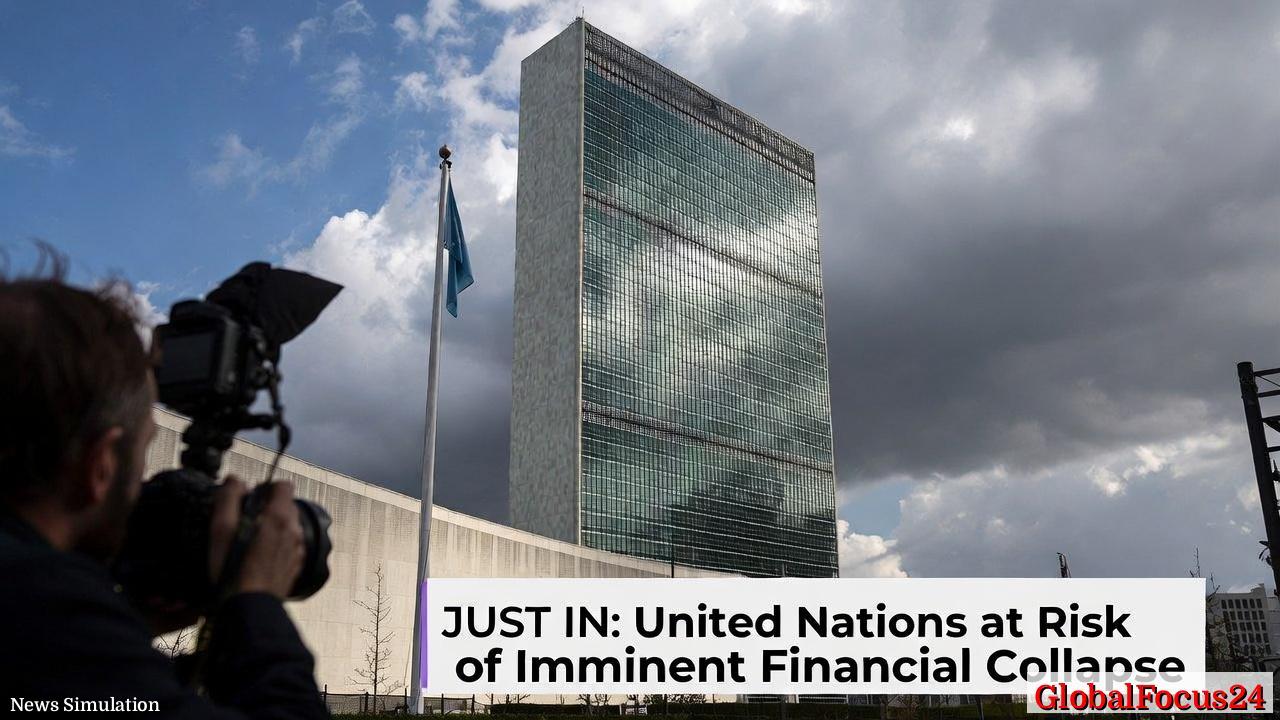
United Nations Faces Critical Funding Crisis as Financial Collapse Looms
The United Nations is confronting one of the most severe financial crises in its nearly eight-decade history. Mounting funding shortfalls, delayed member contributions, and geopolitical tension are pushing the international institution to the brink of operational paralysis. Senior officials warn that unless immediate financial commitments are honored, the UN could face a partial shutdown of programs that support humanitarian aid, peacekeeping, and global health initiatives.
Mounting Debt and Delayed Contributions
The UN’s core operating budget and its peacekeeping missions rely on mandatory contributions from its 193 member states, along with voluntary donations for specialized agencies and humanitarian efforts. However, a growing number of countries have delayed their payments, citing domestic fiscal pressures, competing international priorities, or frustration with bureaucratic inefficiencies within the organization.
As of early 2026, the UN Secretariat reportedly faces a liquidity shortfall amounting to several hundred million dollars. Officials have warned that this deficit has forced the organization to defer payments to vendors, scale back development programs, and consider freezing new hires. The cash crunch has also disrupted mission-critical services—from refugee resettlement efforts to climate adaptation programs—in some of the world’s most vulnerable regions.
Historically, temporary shortfalls have been a recurring challenge for the organization. Yet, this year’s crisis stands out for its scale and persistence, illustrating a growing fragility in the UN’s traditional funding model. The current financial strain is not merely a cyclical budget gap; it reflects deeper geopolitical and structural fractures among the institution’s largest contributors.
Historical Parallels and Lessons From the Past
This is not the first time the United Nations has faced financial distress. In the mid-1990s, the organization experienced a prolonged cash crisis when several major contributors withheld payments in protest over management reforms. Then, as now, peacekeeping operations suffered the most, with missions struggling to sustain logistics and personnel. Reforms at that time eventually restored solvency, but only after extensive negotiations and the introduction of stricter budgetary oversight.
The current crisis differs in critical ways. The global economy is still grappling with the aftershocks of inflationary pressures, debt restructuring in developing nations, and heightened defense spending among major powers. These competing demands make it harder for governments to maintain consistent support for multilateral institutions. Furthermore, new geopolitical alignments have created uncertainty over how much influence, and funding, long-standing members are willing to extend to the UN structure.
The Economic Ripple Effect
The financial instability of the United Nations poses risks far beyond its headquarters in New York. The UN’s annual budget fuels a vast international ecosystem, funding thousands of employees, peacekeepers, contractors, and local suppliers in more than 100 countries. A sudden contraction in funding does not merely slow down humanitarian aid; it can disrupt local economies that depend heavily on the organization’s projects.
In fragile states, UN-run programs often provide critical social safety nets where national institutions remain weak. For instance, in parts of sub-Saharan Africa, UN agencies operate primary health clinics, food distribution networks, and early-warning systems for famine and disease outbreaks. The suspension of these services, even temporarily, could have devastating ripple effects on regional stability and public health.
A sustained reduction in UN defense and peacekeeping expenditures may also weaken security frameworks in conflict zones where international presence helps deter violence. Historically, reduced peacekeeping engagement has correlated with spikes in unrest, as seen in previous UN withdrawals from the Balkans and parts of Central Africa.
Economically, the UN’s financial woes reflect broader donor fatigue within the global financing system. International organizations, from the World Health Organization to the International Monetary Fund, increasingly compete for limited public budgets. The decline in voluntary support further illustrates waning confidence in multilateralism as a cost-effective tool for global governance.
Regional Disparities and Political Undercurrents
While every region participates in the UN system, the burden of its funding crisis is unevenly distributed. Wealthier nations—especially those in North America, Western Europe, and East Asia—contribute the largest shares but are also tightening fiscal policy amid slowing economic growth and rising domestic expenditures. In contrast, developing nations provide smaller contributions but depend disproportionately on UN assistance to support humanitarian, environmental, and infrastructure initiatives.
The delayed flow of financial resources has left missions in Africa, the Middle East, and South Asia particularly vulnerable. Peacekeeping operations in Mali, South Sudan, and Lebanon already face logistical and personnel reductions. Humanitarian agencies such as the World Food Programme and the UN Refugee Agency (UNHCR) have reported unprecedented funding gaps, leading to reduced rations and suspended programs in multiple refugee settlements.
Regional comparisons further underscore the strain: European governments have trimmed foreign aid budgets after major energy and security shocks, while several Asian and Latin American contributors have prioritized domestic recovery efforts. The result is a widening divide between global governance ambitions and fiscal realities.
Institutional Reform and Calls for Accountability
Throughout its history, the UN has periodically faced demands for reform, especially around spending transparency and program effectiveness. Critics often point to overlapping mandates among its agencies and the high administrative costs of running an organization of such vast scale. The current crisis has intensified these calls, with some member states pushing for structural changes to restore trust and efficiency.
Proposed measures include consolidating overlapping programs, reducing non-essential expenditures, and expanding partnerships with regional organizations and private-sector actors. Yet, reform has always been a slow and politically sensitive process within the UN framework. Meaningful change typically requires a two-thirds vote by the General Assembly and consensus among the Security Council’s permanent members—conditions that are rarely easy to achieve.
Some analysts argue that the organization must rethink its funding model entirely, potentially introducing hybrid financing mechanisms such as international transaction levies or carbon taxes earmarked for global governance. Others advocate for greater reliance on philanthropic and corporate contributions to supplement state funding. However, opponents caution that such shifts could undermine the UN’s legitimacy by blurring the line between public diplomacy and private influence.
The Humanitarian Stakes
Beyond the institutional mechanics, the UN’s financial collapse carries a deeply human cost. In conflict zones, peacekeepers may face supply shortages that compromise mission safety. In disaster-prone regions, slower response times could turn manageable crises into large-scale humanitarian disasters. The UN’s specialized agencies, from UNICEF to WHO, rely on predictable funding to deliver vaccines, maintain education programs, and coordinate relief logistics.
In recent months, aid workers in the field have reported growing uncertainty about future operations. The potential loss of funding has already led to staff reductions in major hubs across Geneva, Nairobi, and Bangkok. For many developing nations, this crisis translates into lost access to critical resources, technical expertise, and emergency coordination that no other global institution can provide at comparable scale.
The humanitarian implications underscore the urgency of securing immediate financial relief. Without it, the organization risks a cascade of shutdowns that could reverse decades of progress on poverty reduction, climate adaptation, and human rights enforcement.
International Response and Possible Outcomes
Diplomatic discussions are underway to address the crisis. Several member states have called for emergency donor conferences, while others urge the UN Secretariat to implement immediate cost-saving measures. Although there is broad recognition of the UN’s indispensable role, there is also growing debate over whether its structure remains suited to today’s geopolitical and economic realities.
If the funding logjam continues, the UN may be forced to prioritize its most essential mandates, focusing resources on humanitarian emergencies and conflict mediation while scaling back long-term development goals. Such triage could help stave off immediate collapse but would likely erode the organization’s influence and trust among its member states.
Conversely, a coordinated financial rescue could provide momentum for broader organizational reform. Some observers note that crises have historically served as catalysts for institutional renewal, as seen with the UN’s adaptation after the Cold War and during the global financial crisis of 2008. Whether the current moment leads to similar reinvention—or to prolonged dysfunction—will depend largely on the willingness of governments to act collectively despite rising economic and political constraints.
A Pivotal Moment for Multilateralism
As the United Nations edges toward financial insolvency, the stakes extend far beyond institutional survival. The crisis challenges fundamental questions about the future of global cooperation at a time when transnational challenges—climate change, food security, migration, and cybersecurity—demand unified responses. If the world’s leading multilateral body falters, the consequences could reshape how nations engage on shared threats and collective action.
For now, UN officials continue to sound the alarm, urging members to meet their financial commitments before operations grind to a halt. The coming months will test the resilience of the international system itself—and determine whether the world’s nations still possess the political will to sustain the institution built to uphold global peace and stability.