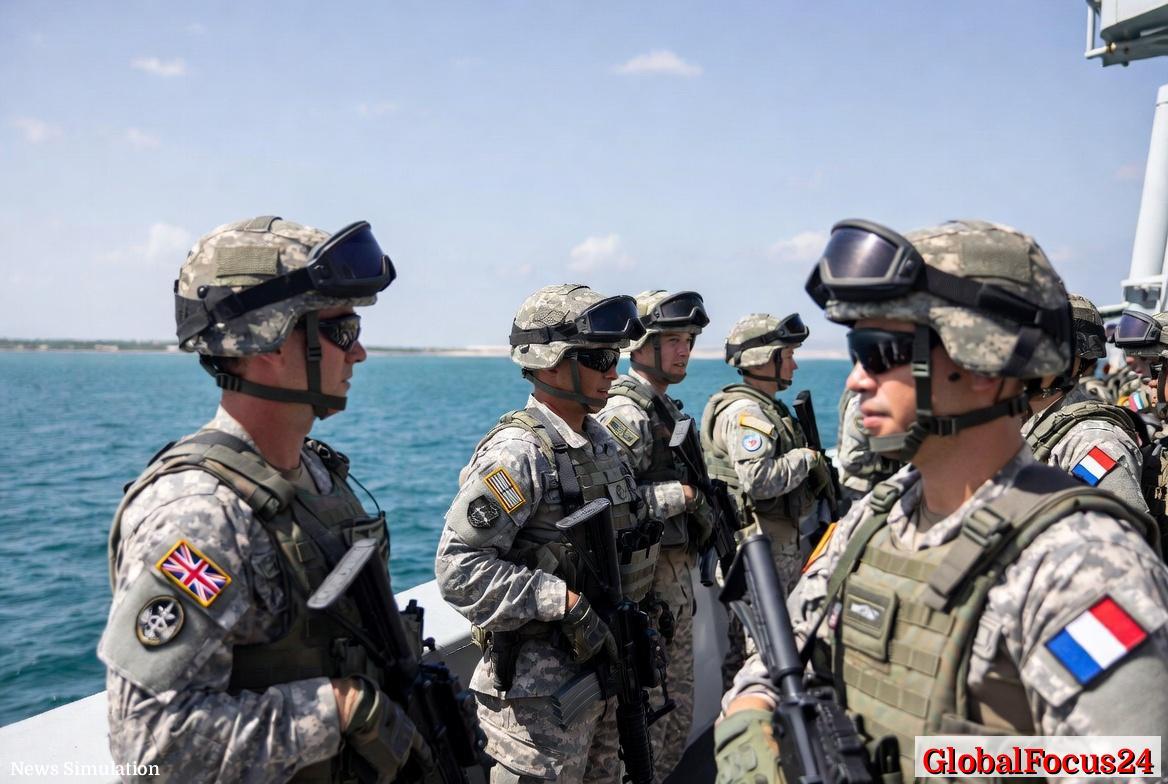
UK and France Lead Multinational Effort to Safeguard Strait of Hormuz Shipping Routes
Strategic Mission Announced After Global Talks
The United Kingdom and France are preparing to lead a multinational maritime mission aimed at protecting commercial shipping through the Strait of Hormuz, a vital artery for global energy trade. The initiative, announced by UK Prime Minister Sir Keir Starmer following high-level talks involving representatives from 51 countries, is designed as a strictly defensive and peace-focused operation.
According to Starmer, the mission will only be deployed once active hostilities in the region have ceased. The operation’s core objectives include ensuring safe passage for commercial vessels and supporting mine-clearing efforts in one of the world’s most strategically sensitive waterways.
French President Emmanuel Macron, appearing alongside Starmer, emphasized the importance of coordinated international action, noting that disruptions in the Strait of Hormuz have far-reaching consequences for global trade and energy stability.
Strait of Hormuz: A Critical Global Chokepoint
The Strait of Hormuz is widely regarded as one of the most important maritime chokepoints in the world. Located between Iran and Oman, the narrow passage connects the Persian Gulf with the Arabian Sea and serves as a transit route for approximately one-fifth of the world’s oil supply.
Any disruption to shipping in this corridor has immediate ripple effects across global energy markets. In recent weeks, tensions escalated sharply after military strikes involving the United States and Israel targeted sites within Iran. In response, Tehran effectively restricted access to the strait, triggering a surge in oil prices and raising concerns over supply chain disruptions.
Although Iranian officials have since declared the waterway “completely open,” maritime tracking data indicates that commercial traffic remains limited, reflecting ongoing uncertainty among shipping operators and insurers.
Economic Impact of Disrupted Shipping
The temporary closure and subsequent instability in the Strait of Hormuz have underscored the fragility of global energy supply chains. Oil prices rose sharply following the disruption, affecting fuel costs, transportation expenses, and inflation rates across multiple regions.
Key economic impacts include:
- Increased crude oil prices due to reduced supply certainty.
- Higher shipping insurance premiums for vessels operating in the Gulf.
- Delays in global supply chains, particularly affecting Asia and Europe.
- Rising costs for consumers as fuel price increases ripple through economies.
Energy-importing nations, particularly in Europe and Asia, have been especially vulnerable. Countries such as Japan, South Korea, and India rely heavily on Gulf oil shipments, making the stability of the strait essential for their economic security.
Multinational Support and Military Planning
The proposed UK-France-led mission has already attracted significant international interest. Starmer confirmed that dozens of countries have expressed willingness to contribute naval assets, logistical support, or surveillance capabilities.
A military planning conference scheduled in London is expected to finalize operational details, including:
- Deployment timelines and command structure.
- Rules of engagement focused on de-escalation.
- Coordination mechanisms among participating nations.
- Integration of mine-clearing and surveillance operations.
German Chancellor Friedrich Merz has indicated that Germany is prepared to support efforts to ensure freedom of navigation, highlighting broad European backing for the initiative. While the United States has maintained a separate naval presence in the region, its direct involvement in the multinational mission remains uncertain.
US Position and NATO Tensions
US President Donald Trump confirmed that American naval operations, including a blockade targeting vessels linked to Iranian ports, will continue independently of the proposed mission. He also expressed skepticism toward NATO’s role, publicly dismissing the alliance’s offer of assistance.
The divergence in approaches reflects broader strategic differences. While European leaders are emphasizing multilateral coordination and defensive positioning, the United States has maintained a more assertive stance focused on pressure tactics against Iran.
Despite these differences, some European leaders have suggested that US participation in the multinational effort would strengthen its effectiveness, particularly given the scale of American naval capabilities in the region.
Historical Context of Maritime Security in the Gulf
Efforts to secure the Strait of Hormuz are not new. The waterway has been a focal point of geopolitical tension for decades, particularly during periods of conflict involving Iran and Western powers.
Notable historical precedents include:
- The “Tanker War” of the 1980s, when Iran and Iraq targeted oil shipments during their prolonged conflict.
- US-led naval escort missions in the late 20th century to protect commercial vessels.
- Increased patrols and coalition operations following incidents of tanker seizures and sabotage in the 2010s.
These historical episodes highlight the recurring importance of international cooperation in maintaining maritime security in the Gulf. They also underscore the risks associated with escalation in a region where economic and strategic interests intersect.
Regional and Global Comparisons
Compared to other global maritime chokepoints, the Strait of Hormuz stands out for both its volume of traffic and its geopolitical sensitivity.
Other key chokepoints include:
- The Strait of Malacca in Southeast Asia, a major route for trade between Asia and Europe.
- The Suez Canal in Egypt, critical for shipping between the Mediterranean and the Red Sea.
- The Panama Canal, essential for trade between the Atlantic and Pacific Oceans.
While each of these routes faces its own risks, disruptions in the Strait of Hormuz tend to have a more immediate impact on global energy markets due to the concentration of oil exports passing through the region.
Public and Industry Reaction
Shipping companies, energy firms, and insurers have responded cautiously to recent developments. Despite official assurances that the strait is open, many operators have delayed or rerouted shipments, citing safety concerns and elevated insurance costs.
Industry analysts note that confidence will likely remain fragile until a sustained period of stability is observed. The proposed multinational mission is seen as a potential stabilizing factor, particularly if it succeeds in restoring predictable shipping conditions.
Public reaction in energy-dependent economies has also been notable, with rising fuel prices drawing attention to the interconnected nature of global supply chains. Governments in several countries have begun reviewing strategic reserves and contingency plans to mitigate future disruptions.
Outlook for Maritime Security
The coming weeks are expected to be critical in determining the effectiveness of the planned mission. With a temporary ceasefire between Iran and the United States set to expire soon, the timing of deployment will play a key role in shaping outcomes.
If successfully implemented, the UK-France-led initiative could:
- Restore confidence among commercial shipping operators.
- Stabilize energy markets by ensuring consistent supply flows.
- Reinforce the role of multinational cooperation in maritime security.
However, uncertainties remain, particularly regarding the durability of the ceasefire and the willingness of all parties to avoid further escalation.
As global trade continues to rely heavily on secure maritime routes, the situation in the Strait of Hormuz serves as a reminder of the delicate balance between geopolitics and economic stability. The planned mission represents a significant test of international coordination in addressing one of the world’s most persistent strategic challenges.