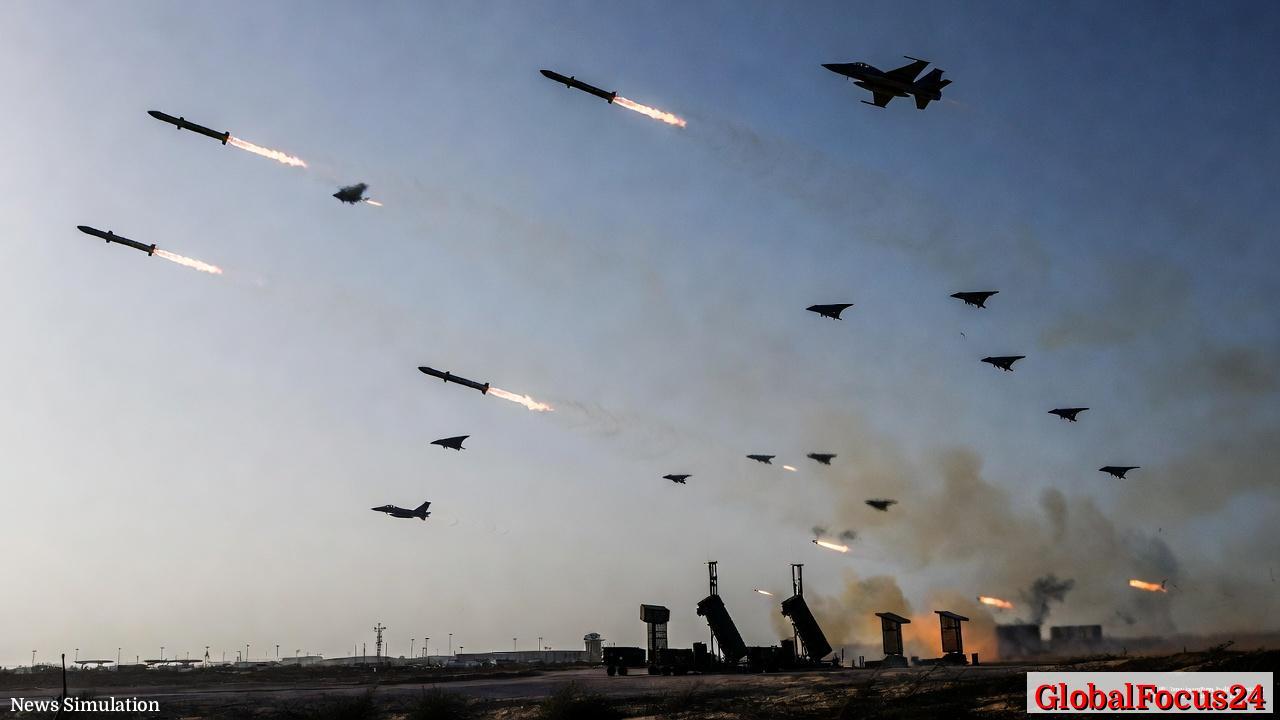
Iran Launches Ballistic Missiles and Drones Toward UAE as Regional Tensions Escalate
Air Defenses Respond Across the Emirates
In the early hours of Tuesday morning, air raid sirens sounded across several regions of the United Arab Emirates after Iran launched a series of ballistic missiles and armed drones toward the country. The UAE Ministry of Defence confirmed that its air defense units, supported by fighter jets, were actively intercepting the threats. Residents in Abu Dhabi, Dubai, and Sharjah reported hearing loud booms and seeing flashes in the sky as interceptor missiles engaged the incoming projectiles.
According to early statements from the Ministry, the sounds heard across multiple emirates were the result of defensive systems successfully neutralizing ballistic missiles, drones, and cruise missiles. Authorities have not yet confirmed any casualties or damage, though emergency services remain on high alert. The attack represents one of the most serious direct threats faced by the UAE in recent years, underscoring the growing instability across the Gulf region.
Coordinated Attack Marks a Dangerous Escalation
The overnight strike appears to be a coordinated assault involving multiple missile and drone launch points from Iranian territory. Defense analysts believe the attack was designed to overwhelm the UAE’s advanced air defense network, which includes U.S.-supplied Patriot batteries and the Terminal High Altitude Area Defense (THAAD) system. Fighter jets were also scrambled to intercept drones that managed to penetrate the initial missile defense perimeter.
The scale and complexity of the attack suggest it was premeditated as part of Iran’s broader strategy to assert pressure on Gulf nations amid rising regional tensions. In recent months, intelligence agencies have warned of increasing Iranian drone activity and the deployment of missile systems capable of striking deep into the Arabian Peninsula. This latest assault marks a sharp escalation from prior proxy engagements carried out by Iran-backed militias in Iraq and Yemen.
Response from the UAE and Regional Allies
The UAE government has pledged to defend its sovereignty and citizens, with officials emphasizing that air defenses remain on full alert. While the Ministry of Defence confirmed that several projectiles were intercepted before reaching populated areas, the event has prompted renewed discussions about joint regional defense cooperation among Gulf Cooperation Council (GCC) members.
Neighboring Saudi Arabia and Bahrain, both of which have faced similar attacks in the past, expressed readiness to assist in intelligence sharing and to coordinate military responses if necessary. The United States, maintaining a large military presence in the region, is believed to be monitoring the situation closely from its bases in Qatar and the UAE. Early unconfirmed reports suggest that U.S. radar and naval assets contributed to tracking incoming projectiles during the assault.
Historical Context of Iran-UAE Relations
Relations between Iran and the UAE have long been tense, shaped by competing territorial claims, religious divides, and differing foreign policy alignments. The dispute over the Persian Gulf islands of Abu Musa and the Greater and Lesser Tunbs remains a central issue, with Iran maintaining military control since 1971. Although trade ties have historically linked the two nations—particularly through Dubai’s re-export sector—geopolitical frictions have frequently overshadowed economic cooperation.
Iran’s support for proxy militias across the region has also unsettled Gulf states, who view Tehran’s influence as a destabilizing factor in countries such as Yemen, Iraq, and Lebanon. The latest missile and drone strike revives fears of a broader confrontation reminiscent of the 2019 attacks on Saudi Aramco facilities, which temporarily disrupted global oil supplies and sent energy prices soaring.
Economic Implications and Energy Market Reactions
The immediate economic impact of the strike is still unfolding, but early indicators point to volatility across regional markets. The UAE’s stock exchanges observed brief trading slowdowns as reports of explosions spread across social media. Investors reacted cautiously, with oil futures climbing in early trading amid fears of potential supply disruptions.
The UAE, a major oil exporter and one of the world’s critical logistical hubs, plays a key role in stabilizing global energy flows. Any sustained threat to its infrastructure or shipping routes could ripple through international markets. Analysts note that while the country’s key energy assets are heavily fortified, repeated or prolonged attacks could test the resilience of both the infrastructure and investor confidence.
In the wider Gulf region, previous incidents have shown that sustained drone or missile campaigns can have cascading effects on insurance costs, logistics operations, and tourism. The UAE, which has cultivated a global image of security and stability, faces a delicate task: reassuring international partners and residents that the nation remains safe while preparing for the possibility of further strikes.
Regional Comparisons: Echoes of Past Conflicts
The attack against the UAE evokes comparisons to earlier missile and drone strikes across the Gulf, particularly those targeting Saudi Arabia’s oil facilities and maritime shipping lanes in the Strait of Hormuz. Each confrontation has underscored the vulnerability of regional economic networks to asymmetric warfare tactics employed by Iran and its allies.
In Yemen, years of missile and drone warfare have shown how disruptive these low-cost technologies can be against sophisticated defenses. Iran’s growing arsenal of precision-guided weapons increases the risk of deeper cross-border escalation. The UAE’s layered air defense architecture has so far proven robust, but as this latest attack demonstrates, no system offers absolute protection against saturation assaults.
Defense experts suggest that the incident will likely prompt Gulf nations to further integrate their defense networks, share radar data, and increase cooperation with Western partners. Calls for a GCC-wide early warning system are expected to intensify in the coming months.
Public Reaction and Civil Precautions
Across the UAE, citizens and residents took to social media overnight to share videos of bright streaks in the sky followed by explosions as interceptors engaged their targets. Authorities have urged the public to rely only on official sources for updates, emphasizing that misinformation could hinder emergency response efforts.
In major cities like Dubai and Abu Dhabi, daily life appeared to resume cautiously by morning, though a heightened security presence was noticeable near government complexes and key infrastructure sites. Schools and businesses remained open, but security advisories reminded residents to stay alert and follow any emergency instructions issued by local authorities.
The UAE’s established system for rapid public communication, including mobile alerts and digital signage, proved essential in preventing panic. Despite the intensity of the assault, the swift containment of the threat has been widely viewed as a testament to the country’s preparedness and advanced defense capabilities.
International Reactions and Diplomatic Fallout
Within hours of the attack, several countries issued statements condemning the aggression and calling for restraint. The European Union and the United Kingdom both urged de-escalation, warning that continued hostilities could undermine fragile diplomatic initiatives aimed at stabilizing the region.
The United States, which maintains a close defense partnership with the UAE, reaffirmed its commitment to regional security and indicated that consultations are underway with allies regarding potential responses. Washington has been attempting to deter Iranian missile proliferation in the Gulf through diplomatic and economic measures, but the latest attack underscores the limits of deterrence amid growing regional volatility.
China and India, both deeply invested in the UAE’s energy and trade sectors, expressed concern about potential supply disruptions. As major importers of Gulf oil, both nations have a vested interest in maintaining maritime stability and protecting energy transit corridors such as the Strait of Hormuz and the Bab el-Mandeb Strait.
Strategic Calculations and the Road Ahead
For Iran, the launch of ballistic missiles and drones against the UAE may serve multiple objectives: demonstrating military capability, signaling defiance against perceived foreign interference, and testing regional defense readiness. For the UAE and its allies, the incident reinforces the necessity of constant vigilance and coordinated response.
Defense specialists expect a period of heightened alert across the Gulf as intelligence agencies analyze missile trajectories and seek to determine the full scope of Iran’s operational involvement. Satellite imagery and radar logs will likely reveal whether the projectiles originated directly from Iranian territory or from proxy forces elsewhere in the region.
The immediate priority for the UAE will be to secure its airspace, reassure investors, and maintain public calm. Yet the broader challenge lies in managing the delicate balance between deterrence and diplomacy—a balance that will shape the Gulf’s security architecture in the months ahead. As air defense units continue scanning the skies for potential follow-on threats, the region braces for what may be a pivotal moment in its modern history.