Erdogan’s Legal Move with Regional Fallout Amid Turbulent Iran Context
In a moment of regional volatility, Turkey’s political landscape has sharpened around a high-profile trial that has intensified international attention on Ankara’s leadership, its domestic stability, and its strategic role in a volatile Middle East. As war considerations and diplomatic maneuvering reconfigure alliances, President Recep Tayyip Erdogan has placed his chief political rival in a courtroom spotlight, a move that analysts say could reverberate through economics, governance, and public sentiment for months to come.
Historical backdrop informs the current moment. Turkey’s political theater has long oscillated between consolidation of executive power and vigorous checks from opposition voices. Erdogan’s tenure, spanning nearly two decades, has seen a steady push to redefine the boundary between political leadership and constitutional oversight. The latest legal proceedings against a leading rival come amid a broader pattern: presidents and prime ministers in emerging economies have increasingly leveraged courtroom proceedings as instruments of political signaling, sometimes to deter opposition mobilization, other times to demonstrate resolve in the face of security concerns. The courtroom, in this frame, acts less as a neutral adjudicator and more as a stage for signaling national direction to both domestic audiences and international partners.
Regional dynamics amplify the stakes. The ongoing confrontation in Iran has drawn regional powers into a complex web of alliances, ceasefire efforts, and economic recalibration. Turkey’s position—an interplay of proximity to conflict zones, historical trade ties, and a strategic interest in maintaining stability along sensitive borders—places Ankara at a pivotal crossroads. Erdogan’s administration has emphasized security, economic resilience, and regional influence as cornerstones of its foreign policy, while striving to maintain favorable terms in relations with Western allies, Gulf states, and neighboring economies. The theater of war in Iran has, at times, forced Turkish policymakers to weigh immediate security concerns against longer-term economic strategies, such as energy diversification, inflation containment, and foreign investment confidence.
Economic implications loom large in the wake of the political developments. Market observers note that judicial actions against opposition figures can produce a nuanced impact on investor sentiment and business confidence. InTurkey’s economy, credibility and predictability are critical factors that influence both domestic consumption and outward investment. A display of decisive political theatrics may be read as a signal of stability by some investors, while others may worry about policy rigidity and the potential for policy shifts under heightened political leverage. The Turkish lira’s trajectory, inflation trends, and fiscal discipline will continue to be closely watched as investors assess whether the ruling coalition’s approach—balancing security-centric governance with growth-focused economics—can sustain confidence in a climate shaped by regional tensions and global energy markets.
To understand the unfolding scenario, it helps to consider the internal political architecture. Erdogan’s governing coalition has pursued structural reforms aimed at centralizing authority, while attempting to preserve a competitive multi-party landscape. The rival’s trial, in this context, can be seen as part of a broader strategy to articulate a narrative of national unity and decisive governance. Observers emphasize that the legal process will not only determine the political fate of a single figure but may also recalibrate the tenor of opposition organization, parliamentary dynamics, and how civil society channels dissent in a high-stakes environment. The judiciary’s independence, its procedural rigor, and its ability to withstand external pressure will be critical factors shaping both domestic legitimacy and international reception.
Regional comparisons illuminate the broader pattern. In several neighboring countries, political leadership has used court-centered narratives to manage legitimacy challenges amid economic or security stress. The Turkish case stands out for its combination of a long-standing ruling-party framework, a history of aggressive modernization projects, and a security-focused foreign policy that seeks to align Turkey with Western defense commitments while maintaining robust ties with regional partners. In Europe and the broader Western alliance, Ankara’s stance on governance, rule of law, and civil liberties often becomes a touchstone for discussions about democratic resilience under pressure from external security threats. Comparatively, other regional players have faced similar tests—balancing strong executive action with the imperative to preserve market confidence and international credibility.
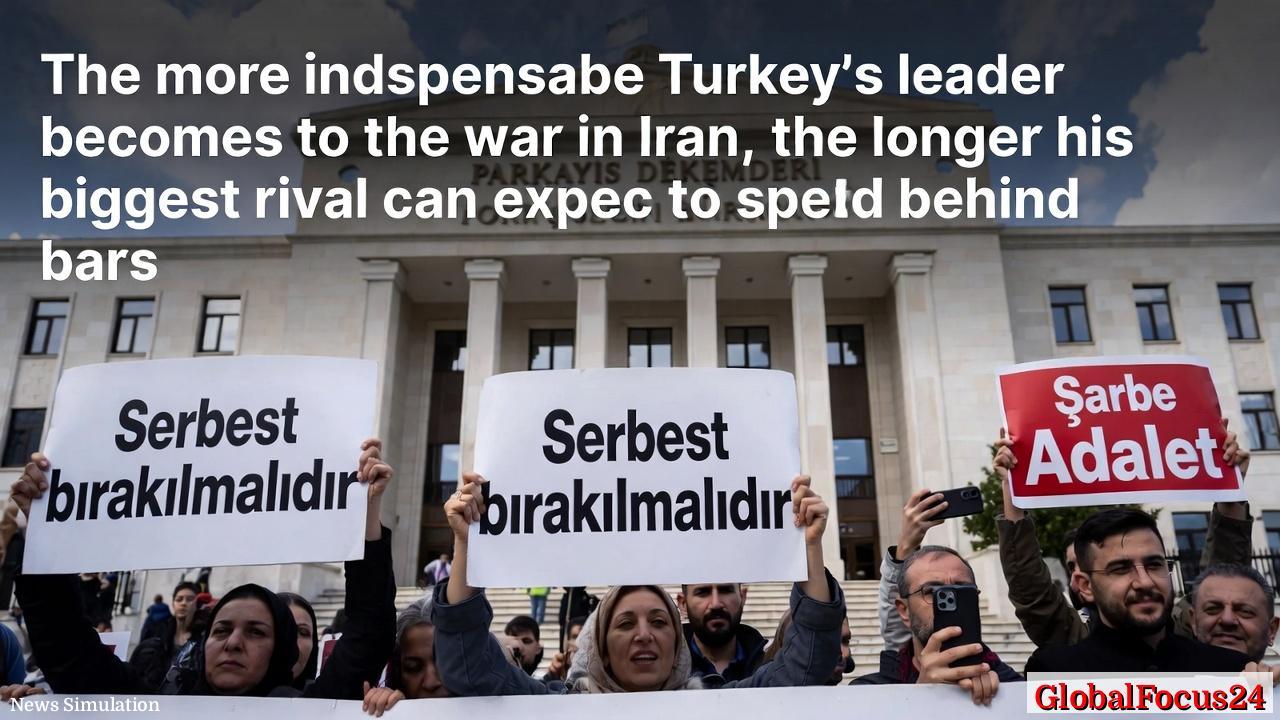
Public reaction across cities and provinces has varied, reflecting differing experiences of economic pressures and political loyalties. In metropolitan hubs, voices of concern have merged with calls for due process and fair legal proceedings, underscoring a preference for stability in a volatile geopolitical climate. In smaller municipalities, perceptions of national leadership’s effectiveness, especially regarding security and economic stewardship, have converged with expectations of responsive governance. Demonstrators outside courthouses and government precincts have routinely framed their messages around demand for due process, transparency, and immediate accountability—signals that resonate with broader publics seeking continuity and fairness amid upheaval.
Security considerations add another layer of complexity. While the legal proceedings unfold, Turkish authorities remain vigilant about potential demonstrations or counter-mobilizations that could strain urban infrastructure or public order. Law enforcement agencies typically balance the need to protect civic space with the imperative to prevent violence or disruption. The capacity to maintain orderly streets—especially in major cities with dense populations and busy commercial districts—will be an important gauge of the administration’s ability to manage synchronized political events without destabilizing daily life or undermining investor confidence.
In the long arc of regional geopolitics, the trial’s outcome could influence Turkey’s role as a mediator and partner in international efforts. Ankara has positioned itself as a conduit for regional dialogue, a stance that requires credibility, redundancy of risk, and clear signals about the rule of law. The extent to which this credibility endures depends on perceptions of judicial fairness, procedural transparency, and the government’s willingness to separate political contests from judicial processes. If the court demonstrates impartiality and adherence to due process, it could reinforce Turkey’s reputation as a stable partner amid a region marked by competing interests and frequent shifts in alliances. Conversely, perceptions of political motivation could complicate Ankara’s ability to negotiate with allies and influence regional security architectures.
The human dimension remains central. Families, colleagues, and communities connected to the rival figure have watched developments with a mix of anxiety and resolve. Legal proceedings that are seen as rigorous and fair can provide a sense of closure and continuity for supporters and skeptics alike, while intense courtroom rhetoric or perceived politicization can deepen divisions. Civil society groups—ranging from professional associations to advocacy organizations—continue to monitor the judiciary’s independence, while business associations assess the implications for supply chains, labor markets, and investment plans. The social fabric in major urban centers often reflects the tension between political passions and the everyday needs of citizens who seek reliable electricity, steady price levels, and steady access to capital.
From a policy perspective, several strands deserve close attention. First, macroeconomic policy remains a critical lever for balancing growth with price stability. The government’s approach to fiscal discipline, monetary policy autonomy, and structural reforms will shape the trajectory of the Turkish economy in the near term. Second, energy security and diversification will influence broader trade patterns, particularly if regional conflict disrupts energy routes or alters bulb-to-grid dynamics with neighboring markets. Third, international diplomacy will continue to guide Turkey’s external relations, including its roles in NATO, the European Union accession dialogue, and relations with Gulf Cooperation Council states, all of which intersect with the domestic political timeline. These policy vectors will determine whether Turkey can sustain momentum on growth while preserving the resilience needed to weather geopolitical shocks.
Looking ahead, regional analysts anticipate a period of heightened sensitivity around political stability and economic signals. The market’s response will likely hinge on the pace and transparency of judicial proceedings, the administration’s ability to communicate policy continuity, and the government’s capability to deliver concrete economic relief where needed. In the longer run, how Turkey navigates its internal political contest, while maintaining constructive engagement with international partners, will influence its standing as a regional power, a transit hub for commerce, and a stabilizing agent in a neighborhood prone to disruption.
Public institutions, for their part, may seek to clarify roles and reassure stakeholders. Transparent communication about judicial procedures, timelines, and the rights of all parties can help temper speculation and stabilize confidence among investors, businesses, and citizens. Independent media coverage, civil society watchdogs, and international observers collectively play a vital role in maintaining an informed public discourse, ensuring that discussions about governance remain rooted in fact and due process rather than rumor or inflammatory rhetoric. In this framework, the court’s proceedings are not merely a national matter but part of a broader narrative about how democracies respond to intense political competition under the stress of regional crises.
Economic indicators and market signals will remain essential barometers in the months ahead. Inflation trends, currency stability, consumer confidence indexes, and foreign direct investment flows will all feed into a broader assessment of how Turkey is balancing political risk with economic opportunity. If economic reforms gain traction and the government demonstrates a track record of policy predictability, Turkey could attract capital willing to bet on a resilient market against a backdrop of regional uncertainty. If, however, political tensions intensify without a clear path to resolution, firms may delay investment decisions or seek safer havens, influencing growth trajectories and employment prospects.
In conclusion, the intersection of an aggressive legal challenge to a major political rival and the broader regional crisis in Iran has created a moment of significant strategic consequence for Turkey. The outcome of the trial, the administration’s handling of the related public demonstrations, and the economy’s resilience will together shape Turkey’s trajectory over the coming quarters. As Ankara navigates this complex environment, observers will be watching not only for the verdicts that emerge from courtrooms but also for the signals that indicate how Turkey intends to balance internal political competition with the responsibilities of governance, regional diplomacy, and economic stewardship in a volatile era.