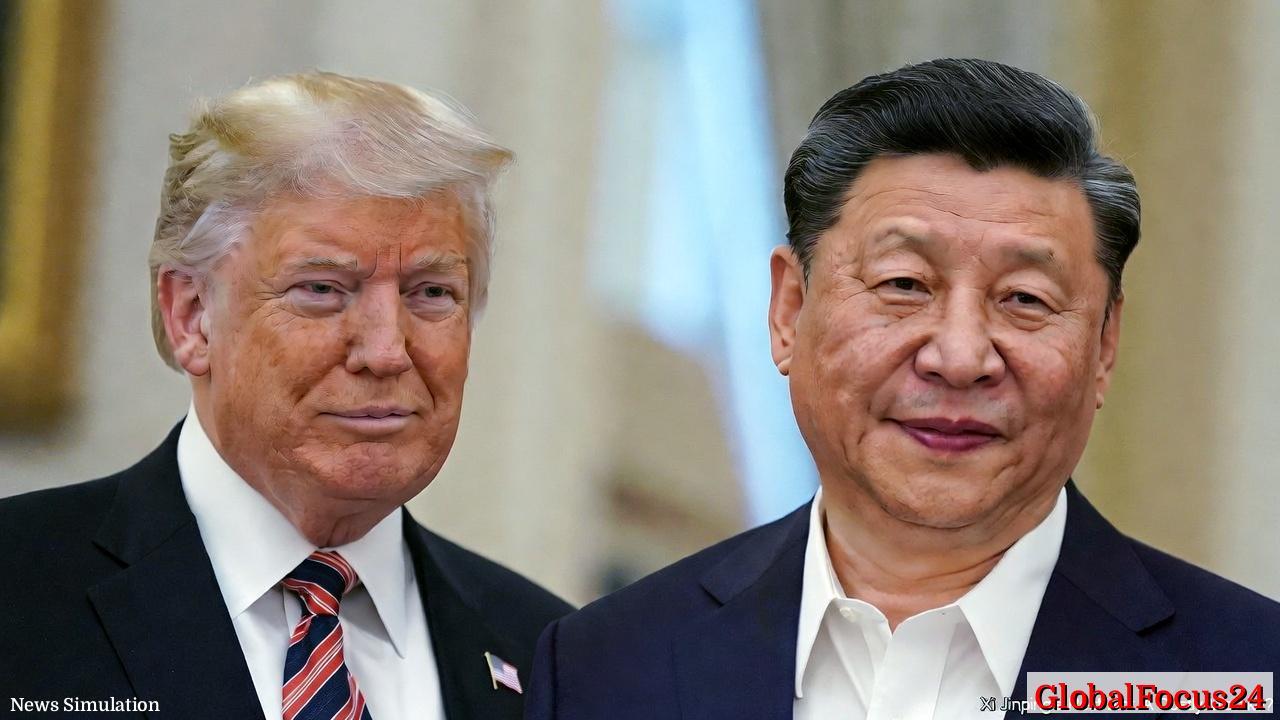
Xi Jinping’s Restraint as a Calculated Strategy in a Shifting Global Balance
Across continents and industries, the global order is adjusting to a recalibrated balance of power, where economic influence often travels faster than diplomatic rhetoric. In this evolving landscape, Xi Jinping’s restraint—paired with targeted, long-range planning—has become a defining feature of China’s approach to international relations, economic competition, and regional influence. As national policies, supply chains, and technology ecosystems intertwine more tightly than ever, observers are watching to see how measured Chinese diplomacy interacts with a U.S. administration that has signaled a willingness to assert American interests more aggressively across the Western Hemisphere and beyond. This dynamic generates a complex tapestry of opportunities, risks, and strategic calculations for businesses, policymakers, and ordinary citizens.
Historical context: from reform to global integration
China’s recent history is a study in how rapid growth can redefine global norms. The reform era, initiated in the late 1970s, set China on a trajectory toward open markets, export-led growth, and an increasingly integrated role in global supply chains. By the early 21st century, China had become a central node in the world economy, supplying everything from consumer electronics to advanced manufacturing components. The country’s rise was accelerated by infrastructure investment, a vast and increasingly skilled labor force, and a reformist mindset that encouraged incremental openness to foreign investment and technology transfer—though always within a framework designed to preserve state control over strategic sectors.
As China modernized, its foreign policy evolved from containment thinking to a more proactive globalization strategy. It pursued regional connectivity initiatives, urbanization at scale, and a diversified portfolio of economic and security partnerships. This shift coincided with a changing geopolitical landscape in which the United States maintained a dominant security role while welcoming a more multipolar world—one in which China, India, the European Union, and other major players exert influence in different domains. The resulting environment has produced both mutual dependency and strategic competition, with trade rules, technology standards, and financial architecture increasingly shaped by decisions taken in major capitals, sometimes far from the places where goods are consumed or produced.
Economic impact: trade, technology, and regional resilience
China’s restrained, but persistent, approach has yielded measurable economic effects across multiple channels:
- Supply chains and manufacturing ecosystems: The sophistication of Chinese manufacturing, especially in electronics, automotive components, and consumer goods, remains a cornerstone of global production. Even as diversification accelerates in many firms, the country’s capacity for large-volume, cost-efficient output continues to influence global pricing, inventory management, and risk assessment. For regions that rely on manufacturing for jobs and investment, the ability to attract or retain resilient supply chains depends on a combination of policy clarity, labor market conditions, and the ability to adapt to shifting demand patterns.
- Technology and innovation: China’s emphasis on domestic innovation, ecosystems of state-supported research, and rapid scale-up of quantum, artificial intelligence, and 5G capabilities underscores a broader push toward technological self-reliance. While tensions exist in the global tech arena, Chinese firms have expanded their footprint in areas such as semiconductor tooling, battery technology, and software services. The result is a more intricate technology landscape where cross-border collaboration coexists with strategic decoupling in certain sectors.
- Financial markets and capital flows: China’s financial reforms have aimed to broaden access to capital markets, attract foreign investment, and promote currency stability. These efforts influence regional financial centers and can contribute to more diversified funding options for multinational corporations operating in Asia, Europe, and the Americas. Investors weigh political risk alongside macroeconomic indicators as they adjust portfolios in response to policy signals and geopolitical developments.
- Regional resilience and diversification: The Belt and Road Initiative, among other regional strategies, reflects a longer-term objective of connecting markets through infrastructure and trade networks. While the scale and scope of such initiatives vary by country, their impact on regional resilience—through improved logistics, energy security, and market access—shapes economic planning in neighboring states and contributor economies alike.
Regional comparisons: Asia-Pacific, the Americas, and Europe’s differing trajectories
- Asia-Pacific: China’s domestic growth engine and its regional diplomacy influence investment climates across East Asia and Southeast Asia. Countries with manufacturing capacity, natural resource interests, or significant consumer markets weigh a mix of collaboration and competition with China. The region’s dynamic is marked by robust intra-regional trade, shared supply chains, and ongoing negotiations over standards, tariffs, and data governance. The interplay between U.S. engagement and China’s ascendance creates a multifaceted environment for policymakers pursuing balanced strategies.
- Americas: In the Western Hemisphere, economic ties with China—ranging from raw materials to consumer goods—are substantial. At the same time, security considerations and concerns about strategic competition color policy choices. Washington’s approach to the region emphasizes sovereignty, democracy, and economic diversification, while partner nations seek reliable investment, stable energy access, and predictable regulatory environments. The result is a nuanced regional landscape where collaboration and risk management go hand in hand.
- Europe: Europe’s market integrates with China through trade, investment, and increasingly harmonized regulatory standards. European policymakers must navigate concerns about technology access, supply-chain security, and governance of critical infrastructure. The balance between maintaining open markets and protecting strategic interests shapes decisions on procurement, collaboration with Chinese firms, and participation in global standards-setting bodies.
Public reaction and societal implications
Public sentiment around China’s rise and its restrained diplomacy is diverse and context-dependent. In regions with strong manufacturing bases or export-oriented industries, there is a pragmatic recognition that China remains a crucial partner for supply chains, employment, and technological advancement. Yet concerns persist about intellectual property protection, market access, and the potential for strategic coercion in sensitive sectors. In domestic audiences, debates center on how best to balance openness to global markets with the protection of national industries and critical infrastructure. The political economy of openness—aligning corporate incentives with national interests—plays a pivotal role in shaping public policy and investor confidence.
Implications for policy and business strategy
- Diversification and risk management: Companies are increasingly prioritizing diversification of suppliers, production sites, and logistics networks to mitigate risk from geopolitical frictions or policy shifts. This includes near-shoring capabilities, regional hubs, and investment in digital resilience to maintain continuity in the face of disruption.
- Technology governance and resilience: Firms are reassessing technology stacks, supplier provenance, and data security measures. Investment in advanced manufacturing, automation, and AI-driven optimization can reduce dependence on any single supplier or region, while ensuring compliance with evolving regulatory regimes.
- Trade and investment policy: Governments are negotiating trade arrangements, screening investments for national security implications, and pursuing standards alignment to reduce friction in cross-border commerce. For businesses, clarity around regulatory expectations and investment incentives is essential to long-term planning.
- Regional development and infrastructure: Public-private partnerships that advance infrastructure, logistics lanes, and energy security contribute to economic resilience. In regions with evolving manufacturing footprints, such investments can attract capital, create jobs, and expand market access for domestic producers.
Public-health and environmental dimensions
The interplay between global commerce and public health has grown more apparent in recent years. International supply chains must withstand disruptions from health crises, and environmental considerations increasingly shape investment decisions. Sustainable manufacturing practices, energy efficiency, and responsible sourcing are not optional addenda but core components of long-term competitiveness. Regions that align policy incentives with sustainable development goals tend to attract investment, talent, and consumer trust, creating a virtuous cycle of resilience and growth.
Outlook: navigating a complex, interconnected era
As policymakers, business leaders, and citizens chart a path forward, several trends stand out. First, the global economy remains deeply interconnected, yet strategic autonomy is becoming a more salient objective for many nations. Second, technology and innovation will continue to redefine competitive advantage, with protection of critical supply chains and data sovereignty at the center of decision-making. Third, regional partnerships will play a decisive role in shaping markets, investment flows, and infrastructure development, making collaboration among neighboring economies essential.
In this environment, measured diplomacy coupled with clear, evidence-based policy design will be crucial. China’s restraint—when paired with aggressive, targeted investment and a long-term vision for regional influence—can contribute to a more stable global order, provided other powers respond with measured, predictable behavior. The economic implications of these strategic choices will reverberate across markets, affecting everything from manufacturing job prospects to consumer prices and financial stability.
This is a moment for careful analysis rather thans. By examining historical trajectories, current policy signals, and regional dynamics, stakeholders can better anticipate how a restrained yet proactive China will interact with a United States determined to secure its own strategic interests in the Western Hemisphere and beyond. The resulting equilibrium will shape trade, technology, and geopolitics for years to come.