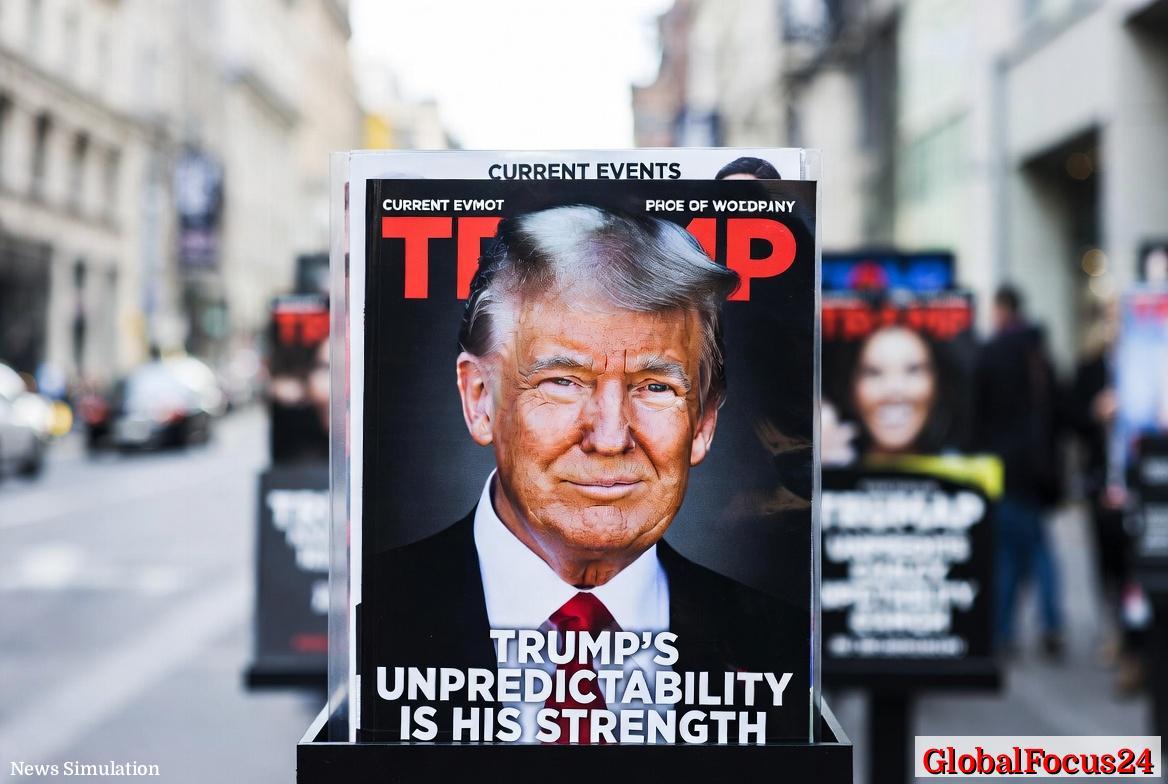
Trump’s Unpredictability Emerges as a Defining Strategic Advantage in Modern Politics
A Political Style That Defies Convention
Donald Trump’s approach to politics has long been characterized by unpredictability, a trait that continues to shape both his public image and strategic positioning. In contrast to traditional political figures who rely on carefully calibrated messaging and predictable policy frameworks, Trump has cultivated a reputation for abrupt shifts, unconventional communication, and unexpected decisions. This style, often described as disruptive, has proven to be more than a personal quirk—it has become a defining feature of his political strength.
Observers across the political spectrum note that unpredictability, when applied consistently, can function as a strategic asset. It complicates opponents’ ability to anticipate moves, disrupts established norms, and keeps both supporters and critics engaged. In an era where political messaging is often tightly controlled, deviation from predictability can command disproportionate attention.
Historical Roots of Political Unpredictability
Unpredictability in leadership is not without precedent. Throughout history, leaders in both democratic and authoritarian systems have leveraged ambiguity and surprise to maintain influence. Figures such as Richard Nixon employed elements of unpredictability in foreign policy, famously adopting what became known as the “madman theory” to influence adversaries during the Cold War.
In business, where Trump built his pre-political career, unpredictability has also been used as a negotiation tactic. By keeping competitors uncertain, negotiators can gain leverage, shift dynamics, and extract concessions. Trump’s transition from business to politics brought this mindset into a new arena, where its impact has been magnified by media coverage and public scrutiny.
Media Amplification and Public Attention
One of the key factors enhancing the effectiveness of unpredictability is the modern media landscape. The 24-hour news cycle, combined with social media platforms, rewards novelty and immediacy. Unexpected statements or actions quickly dominates, ensuring continuous visibility.
Trump’s communication style, particularly his use of direct and unfiltered messaging, has consistently generated widespread attention. This approach bypasses traditional gatekeepers and allows for rapid dissemination of ideas, often catching both allies and opponents off guard. The result is a cycle where unpredictability fuels coverage, and coverage reinforces influence.
Public reaction to this style varies widely. Supporters often interpret it as authenticity and strength, valuing a leader who appears unconstrained by convention. Critics, on the other hand, may view it as instability or a lack of discipline. Regardless of interpretation, the net effect is sustained engagement and heightened visibility.
Strategic Advantages in Negotiation and Policy
From a strategic standpoint, unpredictability introduces a level of complexity that can be advantageous in negotiations. Whether in domestic policymaking or international relations, the inability of counterparts to anticipate decisions can shift bargaining power.
For example, sudden policy announcements or reversals can force stakeholders to adapt quickly, sometimes conceding ground to avoid greater uncertainty. In trade discussions, for instance, unpredictability can lead to accelerated negotiations as parties seek resolution before conditions change again.
At the same time, this approach carries inherent risks. Markets, institutions, and international partners often prefer stability and predictability. Sudden shifts can create volatility, affecting investor confidence and long-term planning. The balance between strategic advantage and systemic disruption remains a key consideration.
Economic Implications of an Unpredictable Approach
The economic impact of political unpredictability is multifaceted. Financial markets, which rely heavily on forecasts and expectations, can react sharply to unexpected developments. Sudden announcements related to tariffs, regulations, or fiscal policy can trigger immediate fluctuations in stock prices, currency values, and commodity markets.
Businesses, particularly those operating globally, must navigate this environment carefully. Companies may adjust supply chains, delay investments, or diversify risk exposure in response to uncertain policy directions. While some sectors benefit from rapid changes—such as domestic industries protected by sudden tariffs—others face increased costs and operational challenges.
At a broader level, unpredictability can influence economic sentiment. Consumer confidence and business optimism are often tied to perceptions of stability. When uncertainty rises, spending and investment decisions may become more cautious, potentially slowing economic growth.
However, proponents argue that unpredictability can also stimulate innovation and adaptability. Organizations forced to respond to changing conditions may develop more resilient strategies, ultimately strengthening their competitive position.
Regional and Global Comparisons
The use of unpredictability as a leadership tool varies across regions and political systems. In established democracies, where institutions and norms provide a framework for governance, unpredictability tends to stand out more sharply. Leaders who deviate from expected behavior can quickly become focal points of both support and controversy.
In contrast, some emerging markets and less structured political environments may already exhibit higher levels of unpredictability, making such traits less distinctive. In these contexts, stability itself can become a competitive advantage.
Comparing the United States to other major economies highlights the unique role of unpredictability in its political landscape. The U.S. combines a highly visible leadership platform with a deeply interconnected global economy. As a result, unexpected decisions can have far-reaching implications, influencing not only domestic conditions but also international markets and alliances.
European political systems, for example, often emphasize consensus-building and incremental change. Sudden shifts are less common, and predictability is generally valued as a stabilizing force. In Asia, approaches vary widely, with some countries prioritizing long-term planning and others navigating more fluid political dynamics.
Trump’s style, therefore, represents a distinct departure from many global norms, amplifying both its impact and its scrutiny.
Voter Perception and Psychological Impact
Unpredictability also plays a significant role in shaping voter perception. For some, it signals independence from traditional political structures, reinforcing the image of an outsider willing to challenge established systems. This perception can be particularly appealing in periods of public dissatisfaction with institutions.
Psychologically, unpredictability can create a sense of anticipation and engagement. Supporters may view each new development as evidence of decisive action, while critics remain alert to potential consequences. This dynamic keeps political discourse active and often polarized.
At the same time, the lack of predictability can lead to uncertainty among voters seeking clarity on policy direction. This dual effect—energizing some while unsettling others—contributes to a highly dynamic political environment.
Institutional Response and Adaptation
Institutions, including government agencies, legislative bodies, and international organizations, must adapt to leadership styles that prioritize unpredictability. This adaptation can involve developing more flexible processes, enhancing communication channels, and preparing for a wider range of scenarios.
In some cases, institutional checks and balances serve to moderate the impact of sudden decisions, ensuring continuity and stability. In others, the pace of change may outstrip traditional mechanisms, leading to periods of adjustment and recalibration.
The interaction between unpredictable leadership and structured institutions highlights the resilience of governance systems, as well as their capacity to evolve in response to new challenges.
Long-Term Implications for Political Strategy
The prominence of unpredictability in modern politics raises broader questions about its sustainability and effectiveness over time. While it can generate immediate advantages in visibility and negotiation, maintaining this approach requires careful management to avoid diminishing returns.
If unpredictability becomes expected, its impact may lessen, prompting the need for new strategies. Additionally, prolonged uncertainty can strain relationships with allies, institutions, and constituents, potentially limiting long-term effectiveness.
Nevertheless, the integration of unpredictability into political strategy reflects a shift in how leadership is perceived and executed. In an increasingly complex and fast-paced world, the ability to adapt, surprise, and command attention may continue to play a significant role.
A Defining Feature of Contemporary Leadership
Trump’s unpredictability stands as a defining element of his political identity, influencing everything from media coverage to economic outcomes. Whether viewed as a strength or a challenge, it has reshaped expectations of leadership and introduced new dynamics into political discourse.
As global and domestic landscapes continue to evolve, the role of unpredictability in shaping policy, perception, and power remains a critical area of observation. Its impact extends beyond individual figures, offering insights into the changing nature of leadership in the 21st century.