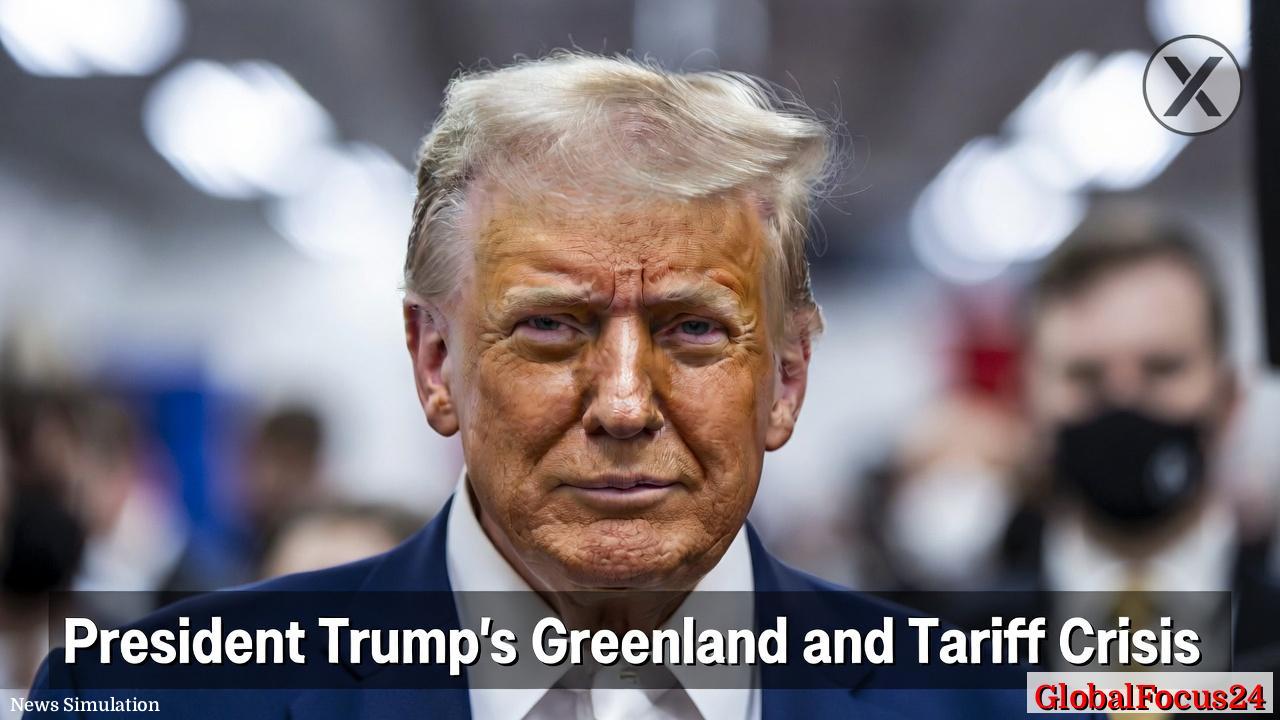
Trump’s Greenland Move Triggers Probe, Tariff Threats, and Transatlantic Tensions
The global economic and political landscape faces a notable test as renewed, high-stakes proposals from the White House intersect with long-standing alliances, trade norms, and regional security concerns. President Trump’s asserted bid to annex Greenland and his stated intent to unleash tariffs on several European nations have stirred a unique and potentially destabilizing moment for the trans-Atlantic alliance. Economists, policymakers, and global observers are watching how such moves would reverberate through markets, supply chains, and diplomatic channels, even as many cautions emphasize the potential for lasting economic consequences on both sides of the Atlantic.
Historical context: a shifting balance in Arctic strategy and trade policy
Greenland has long occupied a strategic position in global geopolitics, lying at a crossroads of Arctic resources, maritime routes, and security considerations. The region’s ice and resource potential have made it an object of interest for multiple powers over the decades. In parallel, Europe and North America have built a framework of economic integration and policy coordination—anchored by trade agreements, shared institutions, and regulatory norms—that have buffered some shocks and facilitated synchronized responses to global events.
The suggestion of annexation, even if primarily rhetorical or exploratory in nature, taps into a broader historical dynamic: the postwar order in which major powers negotiate, barter, and recalibrate influence within established alliances. It also intersects with the modern era’s competitive pressures, including technology competition, climate-driven resource debates, and shifting energy markets. Any proposal that challenges firm boundaries or norms tends to provoke both domestic political maneuvering and international caution, with consequences for global confidence in predictable policy signaling.
Economic impact: potential ripple effects across markets, industries, and regions
The possibility of a unilateral tariff wave targeting European economies carries immediate implications for multiple sectors. Tariffs can alter price structures for consumer goods, industrial inputs, and energy products, influencing inflation, wage dynamics, and investment decisions. The immediate market response typically includes volatility in currency movements, shifts in equity prices, and reassessment of supply chain configurations, particularly for industries already exposed to global trade risk.
Consumers might feel the impact through higher prices on imported goods, while exporters could face retaliatory measures, leading to a potential demand contraction in affected sectors. Businesses with diversified supply chains might respond by reconfiguring sourcing, seeking alternative suppliers, or adjusting production footprints to maintain competitiveness. In the medium term, tariff environments influence capital allocation, with firms prioritizing efficiency projects, automation, and regionalization where feasible.
The Arctic dimension adds another layer of economic calculation. Greenland’s resources, while subject to environmental and regulatory scrutiny, have long been viewed as a potential future anchor for mining, energy exploration, and specialized logistics. Any policy shift that complicates access or elevates the cost of doing business in the Arctic region could slow investment in exploration and infrastructure. Conversely, a stable framework around Arctic development, aligned with international standards and environmental safeguards, could unlock orderly growth opportunities and attract collaborative ventures that emphasize safety, transparency, and sustainable practices.
Regional comparisons provide useful context for assessing risk and opportunity. Europe’s economy has diversified export profiles, with heavy emphasis on manufacturing, automotive, aerospace, and high-tech services. The United States, while offering a broad consumer market and advanced manufacturing capabilities, depends on imported raw materials and intermediate goods in several sectors. In Asia, notably, the supply chain ecosystem has grown more geographically distributed, but Europe and North America remain core markets for many high-value products. A tariff dynamic involving Europe would likely trigger tariff and non-tariff response patterns across other regions, influencing global commodity prices, exchange rates, and investment sentiment.
The potential impact on regional inflation trajectories is a critical consideration. If tariffs raise import costs for European products and components used domestically, consumer price levels could rise, prompting central banks to reassess monetary policy paths. On the export side, regions with strong trading ties to Europe could see demand adjustments, impacting manufacturers and service sectors alike. The net effect depends on the degree of tariff breadth, the speed of policy implementation, and the availability of substitutes or domestic alternatives.
Regional comparisons also highlight the varying degrees of resilience. Nations with diversified export profiles and robust domestic markets may absorb tariff shocks more readily, while economies heavily reliant on a few sectors or those with limited fiscal capacity could face sharper downturns. In the United States, manufacturers with global supply chains are particularly sensitive to tariff levels that alter input costs or complicate logistics. In Europe, nations that rely on intra-European trade and cross-border supply chains may experience heightened exposure to policy uncertainty, especially in industries with long lead times and high capital intensity.
Policy dynamics: the role of alliances, sanctions, and adaptation
Beyond the immediate economic calculus, the scenario raises questions about alliance management, strategic signaling, and contingency planning. The North Atlantic Treaty Organization and broader European security architecture depend on predictability, shared values, and mutual reinforcement in the face of common challenges. Tariffs and coercive economic measures can complicate diplomatic channels, test credibility, and reshape bargaining dynamics on a wide range of issues, including climate policy, technology governance, and defense cooperation.
Authorities in allied nations may respond through a combination of targeted countermeasures, economic diplomacy, and reaffirmation of existing commitments. Market-driven responses, such as diversifying trade partners, accelerating regional integration initiatives, or adjusting investment portfolios, can accompany formal policy actions. The boundary between economic tools and strategic leverage becomes an area of intense negotiation, with the potential to redefine cooperative frameworks that have underpinned global trade for decades.
Public reaction, sentiment, and business adaptation
Public sentiment often follows the arc of policy uncertainty and economic signals. When governments hint at drastic shifts in commerce or sovereignty, communities and industry groups are inclined to assess risk exposure and plan for various scenarios. In sectors with high import exposure or export dependency, businesses may accelerate hedging strategies, supplier diversification, and capital expenditure to weather potential volatility. Workers in affected industries might watch wage dynamics, job security, and training opportunities as a key part of domestic political discourse.
Meanwhile, public discourse surrounding Arctic development typically emphasizes balancing economic opportunity with environmental stewardship and Indigenous rights. Responsible development frameworks that incorporate transparent governance, measurable safeguards, and community engagement can help sustain broad support for exploration and investment while mitigating potential backlash.
Geographic and regional comparisons reinforce the need for nuanced policy thinking. Nations with strong fiscal buffers and credible institutions are better positioned to absorb shocks and maintain investor confidence. Regions with established industrial bases, robust logistics networks, and diversified export channels may experience more moderate adjustments, whereas economies with high reliance on a small number of trade partners might see sharper, quicker responses to policy shifts.
Looking ahead: scenarios and policy pathways
The path forward involves balancing strategic objectives with economic resilience. If a tariff program is narrow in scope and time-limited, markets might anticipate a swift rollback or a negotiated settlement, easing some anxiety. A broader, persistent tariff regime, however, would demand a comprehensive response plan: adjust supply chains, expand domestic production, pursue free-trade or regional agreements, and strengthen economic diplomacy to preserve credibility and avoid long-term stagnation.
In parallel, the Arctic dimension invites an approach grounded in governance best practices. Collaborative exploration agreements, transparent licensing, environmental safeguards, and strong monitoring regimes can enable responsible development that benefits local communities, national interests, and global consumers. Engaging with regional partners and multilateral institutions can help ensure that Arctic initiatives align with climate goals and sustainable development principles.
The integration of these considerations into a coherent policy stance is no small feat. It requires clear communication, credible commitments, and a willingness to engage in constructive dialogue with allies and partners. The objective is to manage risk without sacrificing the core benefits that have historically accompanied strong trans-Atlantic trade and security cooperation.
Public-sector and private-sector roles
Government agencies face the challenge of designing targeted measures that address strategic objectives while minimizing unintended economic disruption. This includes careful calibration of tariff structures, exemptions for critical sectors, and a timeline that reduces prices for consumers and businesses alike. Simultaneously, central banks must maintain monetary stability and provide forward guidance to manage inflation expectations and market anxieties.
The private sector bears the responsibility of maintaining resilience. Companies can pursue supply chain diversification, nearshoring or onshoring where viable, and investments in automation or technology-driven productivity enhancements. Firms may also explore hedging strategies to manage currency and commodity risk, while consultants and trade advisors assist with compliance, regulatory navigation, and strategic planning.
Conclusion: a moment of recalibration rather than a definitive turning point
The unfolding narrative—spanning a potential Greenland-related annexation and tariff plans against European economies—will test the resilience and adaptability of the global trading system. While the immediate consequences depend on the specifics of policy implementation, the broader takeaway is clear: shocks of this magnitude demand thoughtful coordination, robust risk assessment, and deliberate, transparent communication among nations, markets, and communities.
The trans-Atlantic corridor has historically thrived on predictability, open exchange of ideas, and shared economic gains. Preserving that equilibrium in the face of unprecedented proposals will require steady leadership, credible policy design, and a resolve to prioritize economic stability while pursuing strategic interests. As markets digest developments and actors adjust to evolving realities, the enduring question remains: how can policymakers align ambition with accountability to sustain growth, safeguard livelihoods, and maintain the integrity of long-standing alliances?