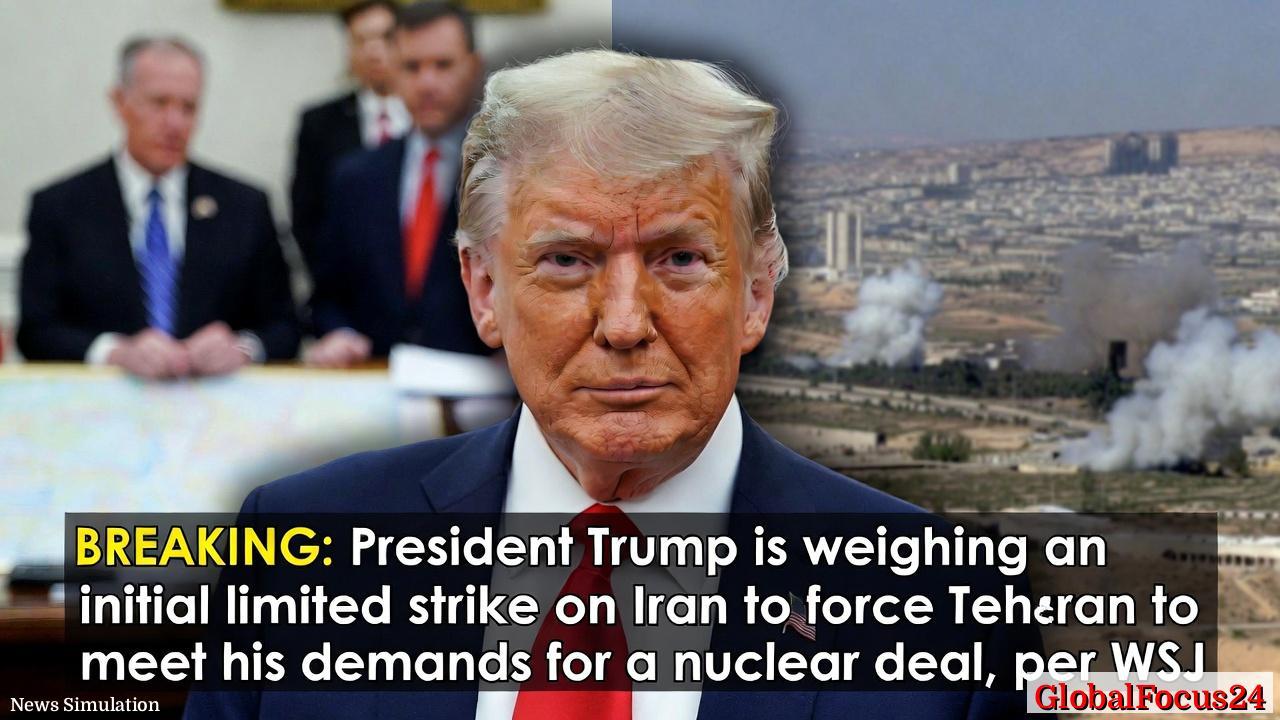
Trump Considers Limited Military Strike on Iran to Advance Nuclear Deal
The United States is weighing a carefully calibrated, limited military strike on Iran as a pragmatic lever to push Tehran toward a new nuclear accord. According to individuals briefed on the discussions, the plan envisions striking a small set of military or government targets with the aim of generating pressure that could compel Iran to accept terms that restrict its nuclear activities and its regional behavior. The approach is described as an opening move designed to test Tehran’s willingness to negotiate under the threat of escalating consequences, rather than a full-scale assault.
Context and historical backdrop
To understand the current moment, it helps to situate it within decades of diplomacy, conflict, and shifting regional power dynamics in the Middle East. Iran’s nuclear program has been a focal point of international tension since the early 2000s, with successive rounds of diplomacy, sanctions, and threats of force shaping the trajectory of its development. Previous administrations have employed a mix of economic pressure, covert actions, and limited military options to deter enrichment activity while seeking a verifiable path to restrictions on nuclear capabilities.
In parallel, regional rivalries—particularly between Iran and its Gulf neighbors—have created a security environment where deterrence, alliances, and risk assessments are constantly recalibrated. The possibility of a targeted strike invokes a long-standing playbook: use a precise, time-bound use of force to create a window for political engagement, ideally accompanied by a credible signaling of ownership and accountability. While such actions carry the risk of broader escalation, supporters argue that a narrowly tailored strike can alter the strategic calculus without triggering a full-scale confrontation.
Strategic aims and potential targets
The plan discussed by advisers centers on a limited operation aimed at signaling resolve and creating leverage for a favorable negotiation position. Potential targets may include facilities tied to nuclear enrichment processes, command-and-control nodes, or other critical infrastructure that would immediately constrain Tehran’s operational tempo. The objective would be to avoid catastrophic damage or civilian harm while delivering a decisive political message: that Iran cannot advance its program without consequence.
A limited strike is intended as a first step, not an end in itself. If Iran halts enrichment or agrees to a verifiable cap on its nuclear program and accepts additional limitations on ballistic missiles and regional activities, negotiators would pursue a broader framework of verification, inspections, and enforcement mechanisms. If Tehran rejects the terms, the spectrum of options could broaden to additional pressure measures, escalating in a controlled, deliberate manner designed to avoid indiscriminate or prolonged conflict.
Economic implications and market reactions
Market observers are watching the situation closely, mindful that even a narrowly scoped intervention can ripple through global energy prices, supply chains, and investor sentiment. Iran’s oil exports, though already constrained by sanctions and investment barriers, remain a key node in the global energy market. A limited strike could intensify political risk premia in energy markets, potentially driving short-term price volatility, especially if supply routes in the Persian Gulf area are perceived to face jeopardy or if allied shipping lanes are placed on heightened alert.
Beyond energy, the broader economic impact would hinge on the duration and geographic scope of any conflict, as well as the severity of retaliation that might target regional partners or global financial systems. In regions with dense commercial ties to Iran and its proxies, businesses could experience disruptions ranging from insurance costs to the security of supply chains. Policymakers typically weigh these effects against the perceived strategic gains from a credible threat, aiming to minimize longer-term damage to regional stability and global trade.
Regional comparisons and lessons
Comparisons to other historical episodes of targeted use of force reveal a complex calculus. In several cases, limited military actions have succeeded in altering negotiation dynamics when paired with credible consequences and a transparent pathway to diplomacy. In other instances, even a precise strike has led to unintended escalation, complicating alliance commitments and drawing in additional actors. Observers emphasize the importance of maintaining alliance cohesion and clear rules of engagement to avoid wider regional spillovers.
Regional responses to any potential strike would likely be swift and multifaceted. Gulf partners, who have long balanced security assurances with economic ties to Tehran, would closely monitor the risk-reward balance. European observers would weigh compliance, verification mechanisms, and the potential need for multilateral diplomacy to de-escalate tension while preserving the possibility of a durable agreement. In any case, the timing of such actions would be closely coordinated with allied governments to ensure consistency in messaging and operational readiness.
Public sentiment and civil implications
Public reaction to a limited strike would likely reflect a mix of urgency, fear of escalation, and cautious support for diplomatic solutions. Historians and political scientists often note that public opinion in democratic states weighs heavily on whether leaders choose to pursue force, particularly when the aim is to secure a long-term agreement rather than an immediate victory. In capitals around the world, communities would watch for consequences that could affect travel, trade, and regional security. Governments would need to communicate clearly the rationale, safeguards, and potential paths to de-escalation to maintain public trust and prevent misinformation from shaping the narrative.
Geopolitical stakes and the path forward
The overarching goal of any limited strike is to create a credible opportunity for a negotiated settlement that reshapes Iran’s nuclear trajectory and alters its broader regional behavior. Success would hinge on several factors: the precision and credibility of the action, the speed and transparency of the subsequent diplomatic talks, and the willingness of Tehran to engage with verifiable constraints in exchange for relief from sanctions or other bargaining chips. Importantly, the plan would require robust security guarantees for U.S. personnel and regional allies, along with clear post-strike objectives and a defined exit strategy to prevent mission creep.
Analysts caution that even a measured operation carries the risk of retaliation, ranging from cyber and asymmetric actions to conventional responses against U.S. or allied targets. The possibility of Iranian countermeasures—such as strikes against military bases, shipping routes, or proxies—renders the landscape increasingly fluid. In such a scenario, U.S. policymakers would rely on a combination of military readiness, diplomatic channels, and coalition pressure to deter broader conflict while preserving the option of diplomacy.
Process and decision-making timeline
According to insiders briefed on the deliberations, the administration’s approach envisions a phased sequence: an initial surgical strike, followed by a window for negotiations, and, if needed, a staged escalation that remains constrained in scope. The timeline is described as potentially taking place within days if the action is approved, with the ultimate aim of reaching a deal that ends Tehran’s nuclear program or, at minimum, imposes verifiable limits and robust monitoring.
Internal discussions reportedly reflect a debate between two schools of thought: a narrowly targeted operation designed to maximize signaling effect with minimal collateral damage, and a broader campaign that would demonstrate resolve but carries heightened risk of broader regional instability. Officials emphasize that any operation would be paired with a comprehensive strategic communications plan to articulate the rationale, the constraints, and the conditions under which diplomacy would resume.
Security and defense posture
In anticipation of potential retaliation, the U.S. has reinforced its posture in the Middle East with a mix of air defense capabilities, surveillance assets, and carrier-based aviation. The objective is to deter and, if necessary, respond proportionately to any Iranian actions against American forces or interests in allied countries. Allies would expect demonstrable coordination on red lines, rules of engagement, and shared intelligence to ensure that any response is measured and reversible if diplomacy progresses.
Operational risk assessment
Experts point out that a limited strike, while strategic in intention, remains a high-stakes option. The narrow focus reduces some forms of risk but cannot eliminate the possibility of miscalculation, civilian harm near sensitive facilities, or rapid deterioration of regional security dynamics. The calculus also includes the chance that Iran might respond asymmetrically, leveraging proxies across the region to complicate the security environment for U.S. and coalition partners. Analysts recommend parallel diplomatic channels, including back-channel discussions, to manage escalation risk and keep doors open for negotiation.
Media narrative and information stewardship
Media coverage of any potential strike typically centers on the human and regional consequences, while also highlighting the drivers of policy decisions. Journalists track the delicate balance between deterrence and diplomacy, the always-present risk of miscommunication, and the necessity of presenting verified information in a rapidly evolving situation. Officials and experts alike stress the importance of accurate attribution for any attacks, as misattribution can rapidly undermine trust and complicate crisis management.
Conclusion: navigating ambiguity with prudence
A limited military strike as a tool to advance a nuclear deal represents a calculated, high-stakes choice. Its success would be measured not only by the immediate tactical outcomes but by the durability of subsequent diplomacy, the verifiable constraints placed on Iran’s nuclear program, and the stability of the broader regional security landscape. Achieving a sustainable arrangement would require meticulous planning, broad international support, and a clear exit ramp that reduces the likelihood of prolonged conflict.
As the situation unfolds, policymakers, global markets, and everyday citizens will be watching the sequence of events with a heightened sense of urgency. The decision to move forward—whether now or in the near term—will shape the future balance of power in the Middle East, influence energy security across the globe, and determine the calculus of diplomacy in a region long defined by its volatility and its resilience. The path ahead remains uncertain, but the emphasis on precision, accountability, and diplomacy suggests that negotiators will be seeking a solution that preserves stability while addressing core strategic concerns.
Note: This article presents an objective overview of strategic considerations, historical context, and potential implications. It does not advocate for or against any particular policy outcome.