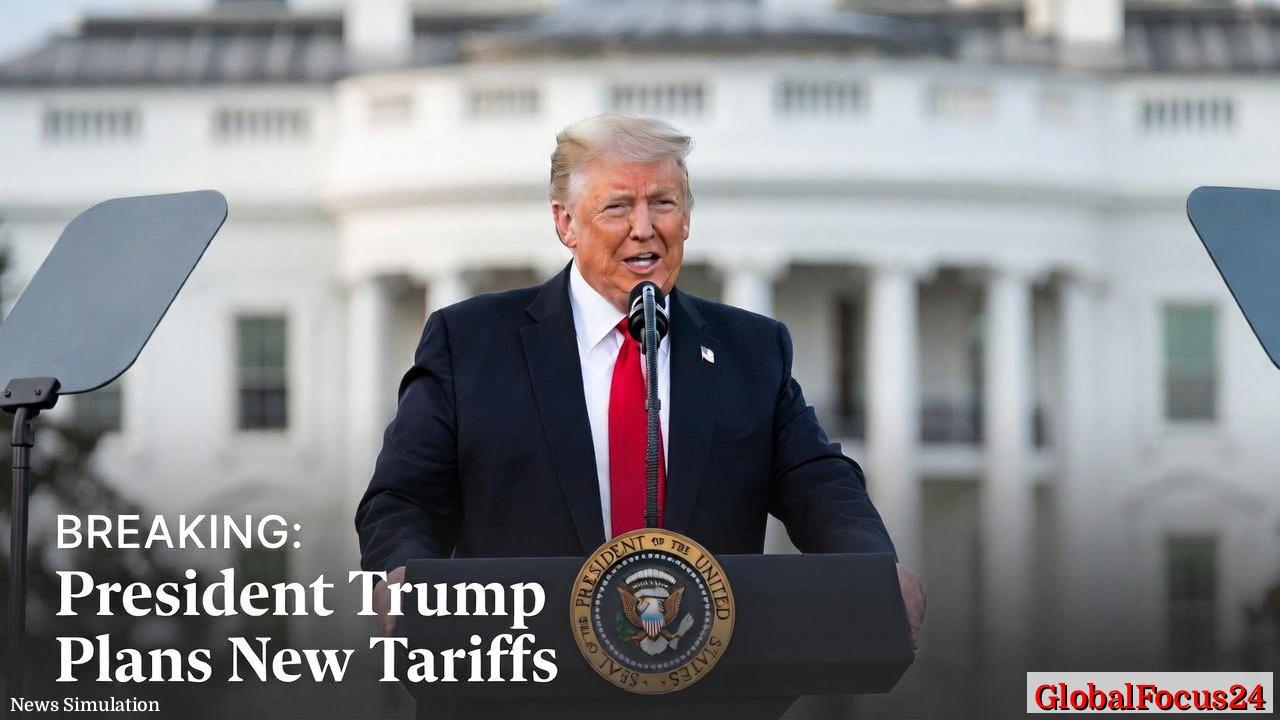
President Trump Announces Across-the-Board Tariffs Following Supreme Court Ruling
In a decisive turn after a Supreme Court ruling that challenged his administration’s previous tariff strategy, former President Donald Trump's team signaled plans to implement broad, across-the-board tariffs using newly authorized trade powers and Section 122 tariffs. The move signals a recalibration of the United States' approach to global trade and domestic market protection, aiming to curb what proponents describe as uneven competition while drawing sharp scrutiny from opponents who warn of far-reaching economic consequences.
Historical context and precedent Tariffs have long been a tool of economic policy in the United States, dating back to the protectionist measures of the late 19th and early 20th centuries and resurfacing periodically in response to shifting global dynamics. In recent decades, tariff policy has often struck a balance between safeguarding domestic industries and maintaining stable international trade relationships. The current development arrives against a backdrop of evolving global supply chains, rising competition from emerging economies, and a broader shift toward strategic economic nationalism. Analysts note that the administration’s intent to widen tariff coverage taps into a historical impulse to use levies as leverage in negotiations and as a shield for critical domestic sectors.
Legal and procedural contours The proposed tariffs are framed within authorities that allow for rapid mobilization of protective measures in response to perceived threats to national economic security and domestic employment. Section 122 tariffs, a tool referenced in recent policy discussions, are designed to permit targeted levies in response to specific trade concerns, while broader tariffs may be deployed under broader trade powers granted by executive action or statutory authority. Legal observers emphasize that the precise scope, rate structure, and affected sectors will determine the policy’s enforceability and potential challenges. The Supreme Court ruling that preceded these plans serves as a fulcrum: it narrowed or clarified the legal landscape, prompting the administration to pursue a more expansive, universal tariff framework while navigating potential constitutional and international-law considerations.
Economic impact and sectoral implications A move to across-the-board tariffs would touch a wide swath of the economy. For manufacturers that rely on imported inputs, tariffs raise production costs and can translate into higher consumer prices. Sectors such as autos, electronics, machinery, and consumer goods could see price adjustments as new duties ripple through supply chains. Conversely, some domestic industries may benefit from protected markets, with short-term gains in employment and investment as firms adjust to the new cost structures. The broader macroeconomic effects hinge on tariff design: the breadth of coverage, the rates imposed, existing global supply chain configurations, and how trading partners respond with retaliatory measures.
Regional comparisons illuminate potential differential effects. In regions heavily integrated into global supply chains, such as the Northeast manufacturing corridor and the Midwest automotive clusters, tariff incursions could raise input costs and disrupt just-in-time production models. Conversely, regions with more domestic production capacity or strong domestic demand for protected goods might experience less adverse effects and, in some cases, short-term employment gains. In international comparison, several major economies have navigated tariff adjustments in recent years, balancing domestic objectives with the risk of triggering broader trade tensions. The global market’s reaction often includes shifts in currency values, adjustments in import substitution strategies, and accelerated diversification of supplier networks.
Supply chain resilience and corporate strategy The prospect of intensified tariffs reinforces a broader strategic shift among businesses toward resilience and diversification. Companies may accelerate efforts to localize critical production, diversify supplier bases outside traditional hubs, and stockpile essential components. This strategic pivot could spur investment in advanced manufacturing, automation, and workforce development to offset higher import costs. Financial markets typically respond to tariff announcements with heightened volatility as investors reassess risk, currency exposure, and the potential for price inflation across consumer sectors. Policymakers and business leaders alike will be closely watching for any signs of negotiated relief or exemptions that could ease the transition for sensitive industries.
Public reaction and social implications Public sentiment around tariffs tends to be mixed, reflecting a tension between protectionist instincts and concerns about living costs. Small businesses, dependent on imported goods or materials, often voice worries about margin pressures and pass-through pricing. Labor unions might advocate for protective measures in segments with exposed workforces, while consumer advocacy groups emphasize the broader goal of maintaining affordable goods. Community-level impacts are likely to emerge in the form of price adjustments, changes in employment patterns, and shifts in consumer demand across sectors.
Geopolitical and multilateral considerations Tariffs of this breadth carry implications beyond domestic borders. Trading partners may respond with retaliation, counter-tariffs, or retaliatory regulatory actions, potentially complicating diplomatic relations. Multilateral forums and trade alliances could see renewed negotiation activity as countries seek to mitigate disruption and preserve strategic interests. The policy’s trajectory will hinge on anticipated economic benefits versus the risk of spillover effects, including potential disruptions to global capital flows and investment climates.
Historical lessons and policy design Historical analyses suggest that broad tariff actions can yield mixed outcomes. While certain sectors may benefit from temporary protection, overall gains for the national economy are not guaranteed, and long-term consumer costs can mount if protections hinder competition and innovation. Policymakers often prioritize clarity, predictability, and targeted exemptions to reduce unintended consequences. The current plan, if implemented, could be accompanied by phased or tiered tariff schedules, sunset clauses, or sector-specific carve-outs designed to balance domestic interests with the realities of interconnected markets.
Regional economic comparisons and readiness To understand potential outcomes, it’s helpful to compare regional exposure. The West Coast, with its heavy import reliance and proximity to Asian manufacturing partners, may experience pronounced price pressures on consumer electronics and automotive components. The Great Lakes region, with its manufacturing heritage, could face mixed effects: some industries may gain temporary protection, while others confront higher input costs. The Southeast, with a growing manufacturing footprint and significant export activity, might see shifts in supplier choices and investment patterns as firms weigh tariff-related costs against potential demand growth in domestic markets. Across all regions, economic adaptation will depend on policy clarity, the speed of implementation, and the availability of transitional relief for affected sectors.
Future trajectory and policy considerations As the policy debate unfolds, several questions loom large. Will the tariffs be designed with comprehensive sector coverage, or will exemptions soften initial economic shock? How will trading partners respond, and what degree of retaliation is anticipated? Will the administration pursue complementary measures—such as targeted subsidies for affected industries, investments in domestic capacity, or currency stabilization tools—to temper price volatility and preserve competitiveness? The answers will shape not only the near-term economic landscape but also the long-run trajectory of industrial strategy, consumer prices, and the United States’ role in global trade governance.
Conclusion and outlook The declared intent to implement across-the-board tariffs marks a pivotal moment in the ongoing evolution of U.S. trade policy. Grounded in a broader historical conversation about protection, competitiveness, and national economic security, the approach seeks to recalibrate incentives for domestic production while navigating a complex web of international obligations and market dynamics. The coming weeks and months will reveal the precise architecture of the tariffs, the sectors affected, and the overall economic path the country adopts in response to both domestic needs and global market forces. As policymakers, businesses, and communities prepare for change, the public weighing of costs and benefits will shape the policy’s legitimacy, effectiveness, and staying power in a rapidly shifting global economy.