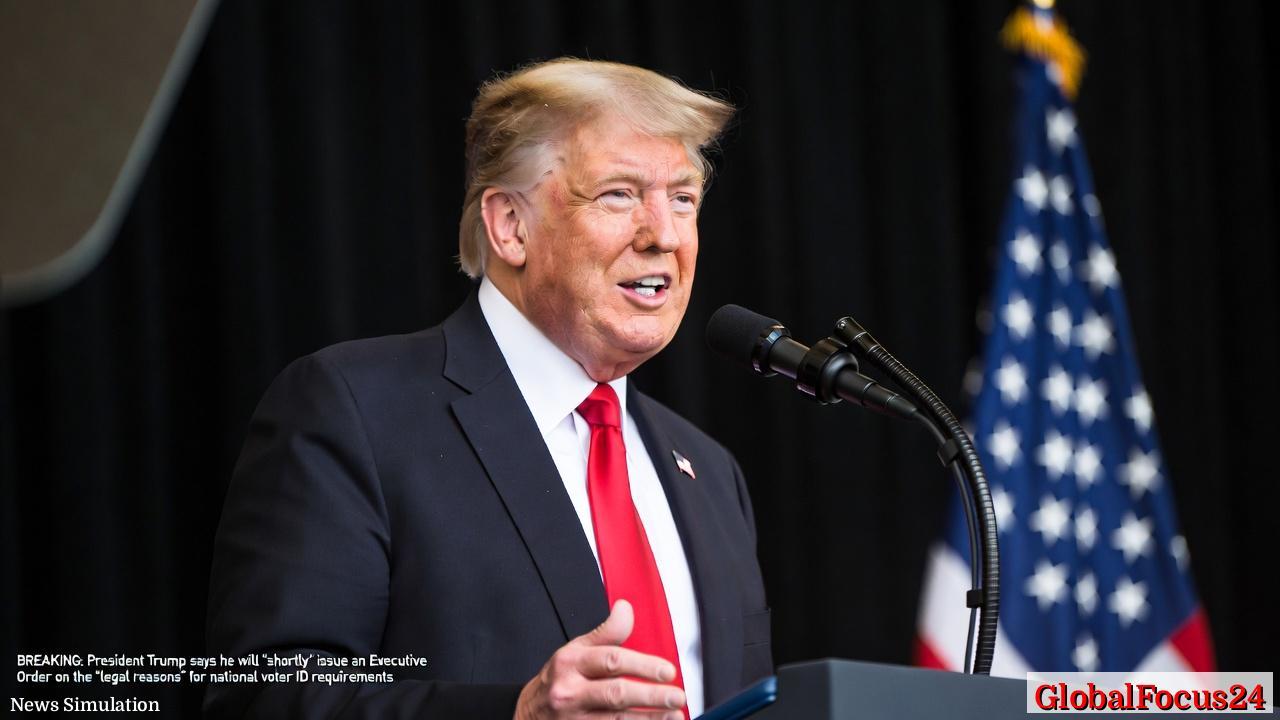
Trump Announces Executive Order on National Voter ID Standards Amid Ongoing Legislative Debate
A major policy move in the ongoing discussion over voter identification has emerged as President Donald Trump indicated he will issue an executive order outlining legal grounds to require voter ID in federal elections. The order, expected to address potential legal pathways for national voter ID standards, arrives at a moment when related legislation is stalled in Congress and public debate intensifies across regional lines.
Context and Historical Background
Voter ID has been a central, contentious feature of American elections for decades. The concept dates to the late 19th and early 20th centuries in various forms of electoral integrity measures, evolving through the modern era with a focus on ensuring that ballots are cast by eligible voters while aiming to reduce instances of impersonation or fraudulent voting. In recent years, proponents have framed voter ID as a necessary safeguard to preserve the legitimacy of elections, while critics warn that stringent ID requirements can place burdens on certain populations, including seniors, low-income individuals, and rural residents who may have less access to required documentation.
The political landscape around voter ID intensified after several high-profile elections where opponents argued that existing rules disproportionately affect minority communities and individuals with limited mobility. Supporters, meanwhile, often point to public polling showing broad cross-partisan support for ID verification in various forms. The current administration’s approach to national standards—whether through executive action or legislative change—has been a focal point for lawmakers, legal scholars, and election administrators working to balance accessibility with integrity.
Executive Action in Focus
The central premise of the forthcoming executive order is to articulate permissible legal grounds for establishing a nationwide voter ID framework, potentially enabling uniform verification practices across federal elections. While executive orders can direct administrative agencies and set procedural expectations, they operate within a constitutional and statutory framework that typically requires legislative compatibility or judicial interpretation for long-term enforceability.
Critics of an executive-order approach caution that national standards could face constitutional questions or face varying interpretations across federal courts. Supporters argue that a presidential directive can provide consistency where states differ widely in their requirements for voter identity verification, especially in federal electoral participation. The White House has signaled a sense of urgency, underscoring public sentiment in polls that indicate substantial cross-partisan support for ID requirements while acknowledging that opinions vary by region and demographic.
Key Elements of the Plan
While the exact language of the executive order remains to be released, several core components are anticipated to feature prominently:
- Scope of Application: The order is expected to delineate that voter ID verification applies to federal elections, with potential implications for how states administer national race ballots, including presidential, senate, and House elections.
- Eligibility and Documentation: Proposals may outline acceptable forms of identification, such as government-issued IDs, passports, or alternative documents, and establish accessibility provisions to minimize barriers for voters who may lack standard documents.
- Exceptions and Accommodations: Provisions may include exceptions for military personnel, individuals with disabilities, those who are ill, or travelers, with mechanisms to verify identity through alternative means or temporary accommodations.
- Proof of Citizenship: A focus on citizenship verification could be part of the framework, aiming to reduce ineligible participation while preserving access for eligible voters.
- Implementation Timeline: The order is likely to set forth a phased approach, balancing immediate action with the practical realities of administrative implementation, staffing, and resource allocation.
- Violations and Penalties: Mechanisms for addressing potential violations of ID requirements or fraudulent activities may be outlined to deter noncompliance and ensure enforceability.
Regional and Economic Implications
The push for national voter ID standards intersects with diverse regional political cultures and economic realities. In regions with robust access to ID documents and efficient state services, the transition to a more uniform system could be relatively smooth. Conversely, rural and economically distressed areas may face logistical challenges, including limited access to ID-issuing offices, transportation barriers, and administrative backlogs. These disparities can have downstream effects on voter turnout, election administration costs, and public trust in the electoral process.
Economically, the potential costs of implementing a nationwide ID framework extend beyond the immediate administrative expenses. States may need to invest in outreach campaigns, additional staff for voter services, and state-level upgrades to election infrastructure to handle more rigorous verification procedures. Vendors providing secure ID technologies, identity verification platforms, and secure data storage solutions could see shifts in demand as procedures evolve. Economies of scale might reduce per-ballot costs over time, but initial investments could be substantial for some jurisdictions.
Regional comparisons offer insight into the potential rollout dynamics. States with long-standing, relatively streamlined ID laws and strong election administration capacities may adapt quickly, while others may encounter longer transition periods. Public reaction often reflects local experiences with elections—regions that have faced publicized ID-related turnout concerns may be more receptive to reforms framed as safeguarding the process, while communities that perceive new requirements as barriers may express frustration or apprehension.
Public Response and Political Context
Public sentiment on voter ID measures tends to be nuanced and context-dependent. Polling in previous elections has shown broad, cross-partisan curiosity about preventing fraud and ensuring confidence in results, tempered by concerns about access and fairness. In states with competitive political landscapes, such issues can influence turnout dynamics and policy priorities ahead of elections.
The executive-order discussion comes amid broader debates about election integrity, accessibility, and trust in government institutions. Supporters argue that clear, nationwide standards can reduce confusion, promote uniformity, and deter fraudulent activity. Critics warn that mandated ID standards could disproportionately affect marginalized communities or create practical barriers to voting, requiring careful design and robust accommodations to maintain universal participation.
Impacts on Voter Participation and Access
A central question is how a national ID framework would affect voter participation. Proponents suggest that well-designed ID requirements, paired with broad eligibility criteria and accessible documentation processes, can maintain high participation levels while strengthening legitimacy. Opponents worry about potential decreases in turnout among populations with historically lower ID access or documentation challenges, such as elderly voters, low-income residents, and those lacking easy access to ID-issuing offices.
To mitigate access concerns, effective strategies could include:
- Mobile ID-issuing units and expanded hours at government offices to reduce travel and waiting times.
- Clear, multilingual guidance on required documents and application steps.
- Partnerships with community organizations to assist with ID acquisition and voter education.
- Alternative verification methods for those who cannot obtain standard IDs due to temporary circumstances or documentation issues.
- Transparent, public reporting on verification processes, rejection rates, and appeal pathways.
Economic and Administrative Considerations
From an administrative standpoint, a shift toward nationwide voter ID standards would require robust coordination between federal agencies, state election offices, and local governments. Training for election workers, updates to voting equipment, and data security measures would be essential components. The private sector could witness opportunities in secure identity verification technologies, support services, and compliance consulting for municipalities navigating new requirements.
Public communications strategies would play a crucial role in shaping understanding and acceptance. Clear explanations of what constitutes valid IDs, how exceptions are applied, and how individuals can verify their eligibility are vital to reducing confusion and maintaining voter confidence.
Regional Comparisons and Lessons Learned
Drawing on experiences from regions with established ID verification frameworks can offer guidance. For example, some states have implemented comprehensive ID policies tied to state-level voting processes, emphasizing public outreach and streamlined issuance. Other jurisdictions have faced legal challenges or logistical hurdles, highlighting the importance of scalable infrastructure, predictable complaint processes, and ongoing monitoring.
While each jurisdiction has unique demographics and administration structures, the overarching lesson is that successful implementation hinges on balance: safeguarding the integrity of federal elections while preserving broad, equitable access to the ballot. This balance requires ongoing assessment of impact on turnout, costs, and public trust, with flexibility to adjust procedures as real-world results unfold.
Operational Path Forward
If the executive order proceeds, several operational steps are likely to unfold:
- Interagency Coordination: A clear mandate for cooperation among agencies responsible for immigration, identity verification, and elections to ensure coherent implementation.
- Stakeholder Engagement: Broad consultations with state election officials, civil society groups, and community organizations to identify potential barriers and mitigation strategies.
- Pilot Programs and Phased Rollout: Local pilots to test ID verification workflows, followed by phased nationwide adoption aligned with resource availability.
- Data Privacy and Security: Strong safeguards to protect voter information, with compliance oversight and independent audits to maintain public trust.
- Legal Preparedness: Ongoing readiness to address potential court challenges, with careful attention to constitutional considerations and statutory limits.
Regional Comparisons: A Snapshot
- States with robust administrative capacity and existing ID frameworks may experience smoother transitions, leveraging established relationships with voters and efficient ID issuance networks.
- Regions facing longer wait times for ID documents or significant rural dispersion may require more intensive outreach and mobile services to avoid disenfranchisement.
- Urban centers with diverse populations may emphasize multilingual outreach and accessible, user-friendly processes to minimize confusion and ensure inclusivity.
Public Safety and Civic Responsibility
Beyond the technicalities of ID verification, the broader conversation centers on public safety and the health of the democratic process. Proponents argue that verifiable identities reduce opportunities for fraudulent activity and bolster trust in electoral outcomes, which can translate into greater civic engagement and participation in governance. Critics caution that well-intentioned measures may inadvertently depress turnout if not carefully implemented, underscoring the importance of transparent rules, robust accommodations, and ongoing monitoring.
Long-Term Outlook
The long-term implications of a national voter ID framework depend on the interplay between federal actions, state governance, and the courts. If implemented effectively, the initiative could set a durable baseline for integrity in federal elections while allowing states to tailor supplementary measures at the local level. If legal challenges persist or implementation gaps appear, the policy could evolve through legislative refinement, judicial interpretation, or administrative adjustments.
Conclusion
As the administration advances discussions around a potential executive order on national voter ID standards, the outcome will hinge on how potential barriers are addressed, how accessibility is protected, and how effectively agencies can coordinate across federal and state lines. The policy debate reflects a broader national conversation about balancing security with participation, ensuring that every eligible voter can cast a ballot without unnecessary obstacles, and maintaining trust in the democratic process.
Note: This article presents an objective overview of policy developments, historical context, and potential economic and regional implications without bias toward any political position. Public understanding will continue to evolve as more official details emerge, and readers are encouraged to follow official channels for the latest updates on implementation timelines and program specifics.