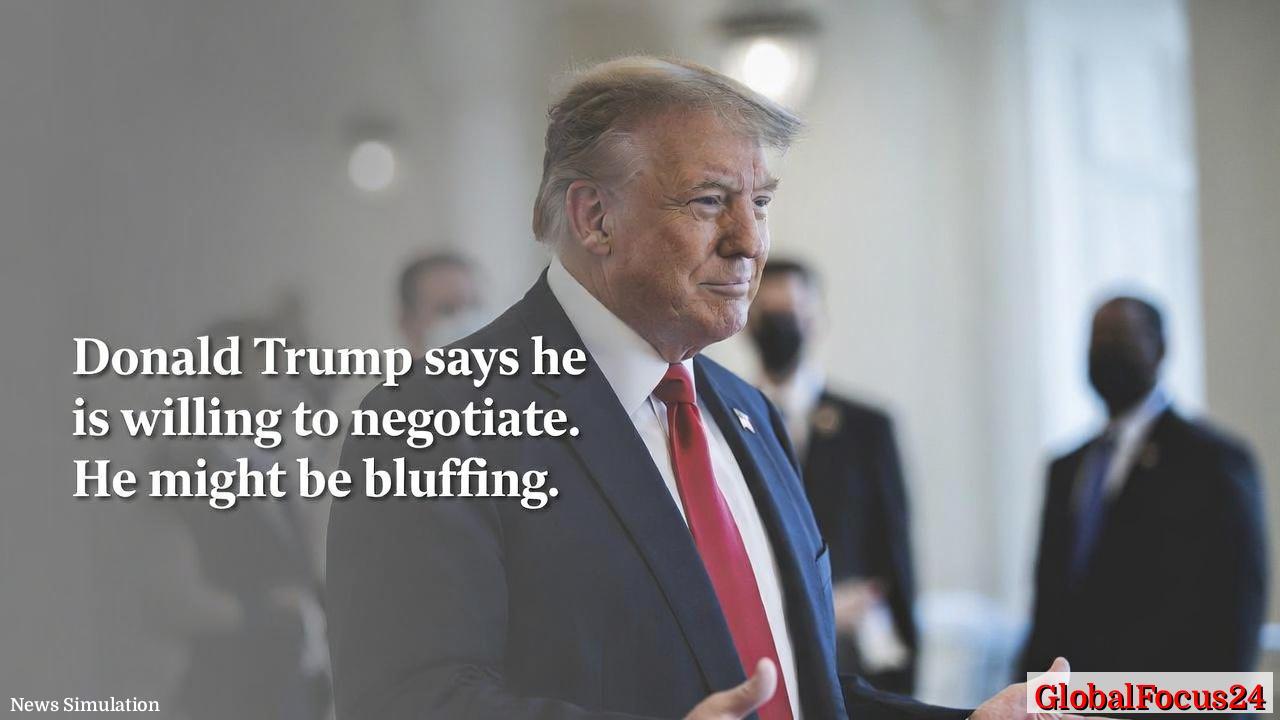
Trump signals openness to Iran talks amid renewed tensions, raising questions about U.S. strategy
In a marked shift from recent rhetoric, former President Donald Trump indicated he would be willing to negotiate with Iran, a development that has stirred strategic discussions across Washington and beyond. The statement arrives at a moment when regional tensions, economic pressures, and long-running security concerns intersect in a complex calculus for U.S. policymakers, allies, and adversaries. With the prospect of diplomacy once again on the table, analysts are parsing what a potential negotiation could mean for nuclear risk, regional stability, and the global energy market.
Historical context: a long arc of engagement and distrust
The relationship between the United States and Iran has evolved through waves of negotiation, suspicion, sanctions, and occasional bursts of dialogue. The 2015 Joint Comprehensive Plan of Action (JCPOA) represented a high-water mark of formal engagement, with Tehran agreeing to stringent limits on its nuclear program in exchange for relief from economic sanctions. The subsequent U.S. withdrawal from the agreement in 2018 under a different administration disrupted the framework, leading to heightened tensions, a series of sanctions regimes, and periodic confrontations in the Persian Gulf.
In the years since, efforts to restart diplomacy have faced a labyrinth of domestic and international obstacles. Iran’s regional influence—through proxies and direct engagement—has grown in some theaters, complicating security calculations for the United States, its partners in the Gulf, and European allies. Against this backdrop, any renewed talk of negotiation carries significant historical resonance: it would, in effect, test whether the current moment can translate into durable channels for limiting nuclear-weapons risks and ensuring a more predictable regional security environment.
Economic impact: sanctions, supply chains, and global energy markets
Economic considerations loom large in any conversation about Iran. Sanctions have shaped the incentives and constraints facing Tehran, while also creating ripple effects in global markets. Energy markets, maritime insurance, and refinery operations in the region frequently respond to shifts in risk sentiment, especially whens signal the possibility of negotiated restraints or heightened tensions.
For the United States and its allies, negotiations could influence sanctions policy, potential relief pathways for targeted sectors, and considerations around investment climates for regional infrastructure projects. A negotiated settlement—or even the prospect of one—might ease the burden of restrictive measures on international banks and multinational companies that have navigated compliance regimes for years. Conversely, failure to reach a credible agreement could sustain or escalate sanctions pressures, with attendant implications for oil pricing, inflationary pressures, and broader financial flows.
Regionally, Gulf Cooperation Council members monitor any talk of diplomacy with keen interest. Their calculations hinge on balancing deterrence against Iran with opportunities for economic diversification and regional integration. A credible dialogue framework could unlock pathways for limited security cooperation, confidence-building measures, and potential multilateral confidence that reduces the likelihood of sudden escalations that disrupt shipping routes through the Strait of Hormuz.
Strategic considerations: deterrence, diplomacy, and the risk of miscalculation
Diplomatic engagement with Iran is never merely a transactional exercise. It sits at the intersection of deterrence theory, alliance commitments, and the calculus of miscalculation in high-stakes environments. For U.S. policymakers, the core objective is typically to prevent a rapid escalation that could jeopardize regional stability or spark unintended consequences for civilians in affected areas. Any negotiation scenario would likely require transparent verification mechanisms, robust mechanisms to address ballistic-m missile programs, and clear criteria for the gradual easing of restrictions tied to verifiable compliance.
From an intelligence perspective, the credibility of any negotiation hinges on trust-building measures that can survive political churn in both Tehran and Washington. History shows that even when negotiations begin with candor, the path to a durable agreement is often nonlinear, punctuated by periods of détente followed by renewed skepticism. In that context, the international community would watch for signals that negotiators can translate into enforceable commitments—ideally including time-bound milestones, independent monitoring, and a credible enforcement framework.
Regional comparisons: how similar negotiations have unfolded elsewhere
Looking at comparable cases helps illuminate potential pathways and pitfalls. In other regions facing nuclear or WMD-related challenges, diplomatic overtures have sometimes yielded results when paired with credible verification and economic considerations that align with domestic interests. For instance, dialogues in certain regions have combined security assurances with gradual concessions, allowing both sides to rebuild trust incrementally. The key takeaway across such cases is that credible diplomacy requires more than rhetoric; it requires verifiable steps, clear timelines, and a shared sense of consequence if commitments are not honored.
Another point of reference is the balance between deterrence and engagement that has characterized multilateral security architectures. When alliances coordinate on sanctions, export controls, and intelligence-sharing, the pressure on a negotiating partner tends to be more predictable and easier to manage. Conversely, unilateral moves can create friction with partners who fear being caught in a geopolitical squeeze. A nuanced approach that involves regional actors—while respecting sovereignty and international law—often offers the most sustainable path to reducing risks without triggering a broader confrontation.
Public reaction and the information environment
Public sentiment around any potential shift toward diplomacy is shaped by a mix ofs, expert commentary, and social narratives. In many capitals, there is a pragmatic desire to lower the risk of conflict and to reintroduce negotiating channels that can address core concerns about nuclear capability, missile development, and regional behavior. In other communities, skepticism persists, reflecting experiences of past cycles where promises did not translate into lasting outcomes. News cycles can accelerate perceptions of momentum or stall, underscoring the importance of transparent communication and accountable processes that explain what is feasible, what is verifiable, and what remains uncertain.
The role of allies and international institutions
Allied voices and international institutions typically play a crucial role in shaping any negotiation. The United States would likely seek to coordinate with partners across Europe, the Middle East, and Asia to present a unified approach that preserves shared security interests while allowing room for national policies. European allies, in particular, have historically emphasized the value of negotiated limits on nuclear programs and the importance of maintaining open channels for diplomacy even amid sanctions regimes. Multilateral institutions could offer verification frameworks, dispute-resolution mechanisms, and periodic review processes that help sustain confidence in the agreement over time.
What a potential path forward could look like
While specifics depend on many developing factors, a plausible framework might involve the following elements:
- Verification and monitoring: establishing a robust, credible, and transparent verification regime to monitor nuclear activities, ballistic missile programs, and related components.
- Gradual sanctions relief: a staged approach to easing economic restrictions contingent on demonstrable compliance, with clearly defined milestones and independent assessments.
- Confidence-building measures: measures such as diplomacy channels, prisoner exchanges, or regional security dialogues to reduce misinterpretations and miscalculations.
- Regional security architecture: efforts to broaden the security conversation to include neighboring states, maritime security guarantees, and mechanisms to deter incidents that could escalate quickly.
- Economic incentives: targeted investments in civil projects and energy cooperation that align with broader regional development goals, carefully designed to avoid dual-use confusion and ensure compliance with international norms.
Implications for energy markets and supply chains
The energy sector often reacts to geopolitical risk with heightened volatility. Any decrease in perceived risk can bolster price stability, while renewed tensions could trigger spikes in crude and refined products due to concerns about supply disruption. Shipping lanes through the Persian Gulf are critical arteries for global energy trade, and even small shifts in the risk premium on regional routes can ripple through markets worldwide. Given the high sensitivity of oil markets to geopolitical developments, stakeholders in energy trading, refining, and shipping will be closely watching for credible signals about negotiation progress, verification certainty, and the durability of any agreements.
Regional development and infrastructure implications
Beyond immediate security concerns, a credible diplomatic pathway could influence regional development trajectories. Investors often weigh geopolitical risk when allocating capital to large-scale infrastructure, energy corridors, and cross-border projects. A stabilized environment could unlock financing for critical projects, improve cross-border trade, and support job creation in areas affected by decades of conflict and sanctions. However, investors will require a clear, verifiable plan with enforceable commitments and a track record of implementation to justify long-term capital commitments.
Conclusion: diplomacy as a test of credibility and restraint
As discussions unfold, the central question remains whether negotiators can translate talks into verifiable, lasting limits on nuclear and missile programs while balancing regional security concerns. The outcome will hinge on credibility—of both sides—and the capacity of the international community to provide mechanisms that enforce agreed terms. A willingness to negotiate, in and of itself, signals a potential pivot point in a decades-long cycle of tension and containment. Yet the true measure will be what follows the initial statements: concrete steps, verifiable commitments, and a shared appreciation that diplomacy serves broader interests of peace, stability, and economic resilience across a volatile region.
Public discourse will continue to evolve as new information emerges. For policymakers, analysts, and industry stakeholders, the priority is to monitor developments with a careful eye on verification standards, alliance coherence, and the potential for a durable, peaceful resolution that reduces the risk of miscalculation and opens a path toward greater regional stability. The next moves will reveal whether diplomacy can supplant escalation as the default framework for managing one of the most complex security challenges of our era.