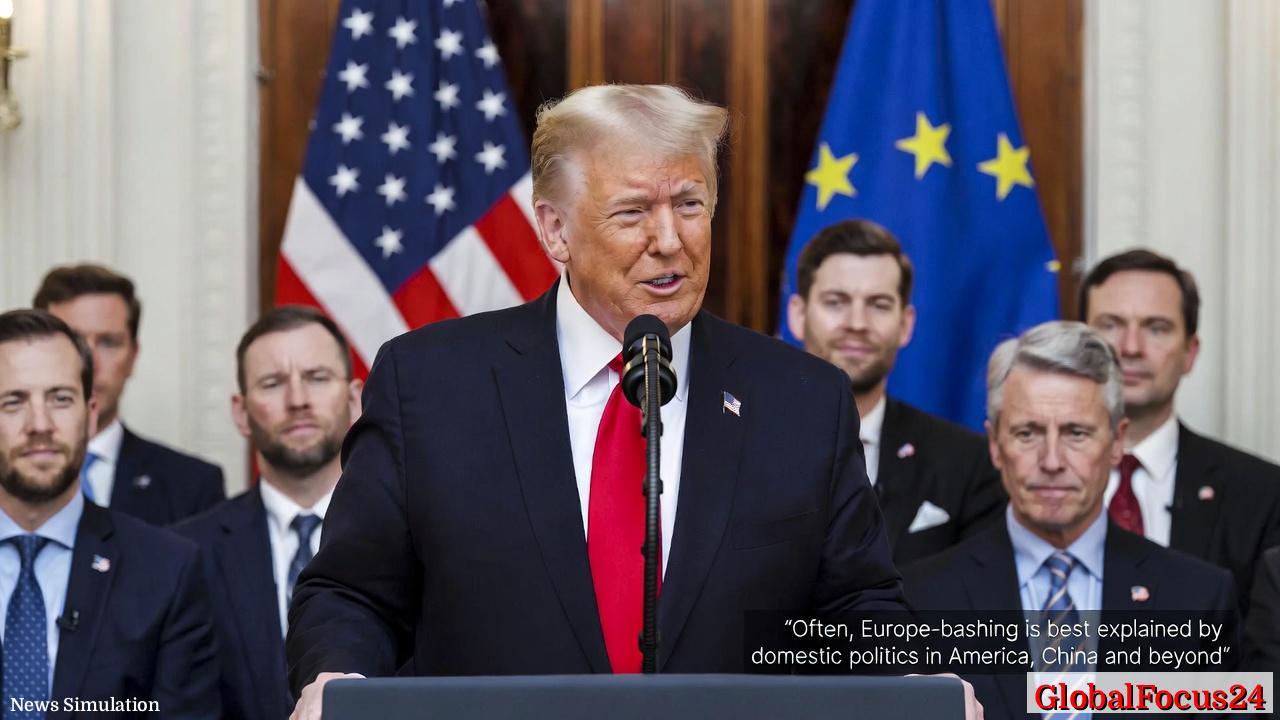
Trump’s Greenland Gambit: Economic Stakes, Historical Context, and Transatlantic Repercussions
In a development that has drawn attention across continents, the United States is pressing for a rapid resolution to its longstanding interest in Greenland, a strategic Arctic territory that sits atop valuable mineral resources and a key military outpost. The move, framed as a potential complete acquisition, has sparked a robust response from European Union members, the United Kingdom, and regional allies, who view any coercive measures as an escalation of tensions that could ripple through global markets and security calculations. While the situation remains fluid, observers are seeking clarity on historical roots, economic implications, and regional comparisons to gauge what a resolution might mean for the broader transatlantic relationship.
Historical context and strategic value
Greenland’s history is inseparable from its relationship with Denmark and the broader North Atlantic security architecture. Settled by Indigenous Inuit communities for millennia, Greenland became an autonomous realm within the Kingdom of Denmark in 1979 and expanded its self-rule in 2009. The island’s geography—vast ice sheets, rugged coastlines, and proximity to critical shipping lanes—has long made it a focal point for military, research, and resource considerations. The United States first established a notable footprint in Greenland during World War II, and the subsequent decades saw a sustained, though often complicated, exchange of strategic interests between Washington and Copenhagen.
Two moments in history underscore America’s persistent curiosity about Greenland: the mid-19th and mid-20th century episodes of open offers and the enduring presence of U.S. military facilities in the region. The strategic calculus centers on access to arctic airspace, early-warning capabilities, and potential mineral wealth that could diversify global supply chains for critical technologies. While the Arctic environment poses formidable challenges, the potential payoff in terms of defense capabilities and natural resources has kept Greenland on policymakers’ radar for generations.
Economic implications for Greenland and the region
Greenland’s economy, historically anchored by commercial fishing, faces a complex transition as mineral exploration and energy questions come to the fore. The island’s mineral potential—ranging from rare-earth elements to other strategic commodities—has attracted global attention, even as local communities weigh the environmental and social implications of large-scale development. Any shift toward greater foreign ownership or a broader U.S. role in Greenland’s economy would necessitate careful navigation of local consent, environmental stewardship, and the rights of Indigenous peoples.
From a regional perspective, Greenland sits within a broader European and North American economic framework. Denmark, Norway, Iceland, and other Nordic economies share interests in Arctic governance, climate resilience, and sustainable development. An arrangement that reshapes Greenland’s ownership or governance could influence investment flows, supply-chain resilience, and energy security across the North Atlantic. In the wake of ongoing global supply-chain realignments, the Arctic’s mineral potential could intensify competition among major economies seeking to secure strategic resources for next-generation technologies.
Regional comparisons illuminate potential pathways and pitfalls. The Arctic’s economic activity is increasingly characterized by joint research programs, co-management of natural resources, and partnerships with indigenous communities to balance development with conservation. Countries in the region have pursued diversified strategies—combining fishing, mining, and renewable energy with strong regulatory frameworks—to ensure that any expansion of resource extraction occurs responsibly and with broad community support. A transaction of Greenland’s status, if realized, would be one of the most consequential shifts in Arctic governance in decades, with implications for neighboring economies and regional stability.
Geopolitical dynamics and international response
The proposed move has ignited a spectrum of reactions across Europe and beyond. European Union members and allied states have stressed the importance of sovereignty, rule-of-law principles, and the need for diplomacy to prevail. The potential deployment of tariffs or other coercive measures to compel a political outcome has been met with concern about how such tools might undermine longstanding alliances, disrupt trade, and risk unintended escalation.
Leaders in the United Kingdom, Germany, France, and the Nordic states have underscored the importance of direct dialogue and negotiated agreements rather than unilateral pressure. They emphasize that transatlantic ties—built on shared interests in security, trade, and democratic values—are best safeguarded through cooperation rather than coercion. The EU itself has explored legal and policy mechanisms designed to deter aggressive actions by external actors while preserving open trade and mutual economic benefits.
From a broader perspective, the United States’ approach prompts a reckoning of cross-border interdependence. The U.S. and European economies are tightly intertwined, with trade in goods and services forming a central axis of collaboration. In 2024, the European Union registered a substantial trade surplus with the United States, reflecting deep economic integration that extends beyond bilateral relations to global value chains. Any attempt to disrupt that relationship could trigger reciprocal measures and broader market volatility, affecting not only commodity prices but also investment climates and business confidence.
Public sentiment and domestic considerations
Public reaction to the Greenland discourse has been diverse. In many regions, the focus remains on reliability of energy and mineral supplies, environmental safeguards, and the protection of Indigenous rights. Communities in Greenland and across the North Atlantic watch developments closely, weighing the implications for local governance, economic opportunities, and cultural preservation. Domestic political dynamics, including national security narratives and economic priorities, can intensify or dampen support for any prospective agreement.
Meanwhile, regional capitals are balancing rhetoric with pragmatic diplomacy. Governments are emphasizing multilateral approaches, regional cooperation, and transparent processes to build trust among stakeholders. Public communication from leaders often underscores the long arc of Arctic governance, highlighting resilience, scientific collaboration, and responsible stewardship as foundational principles for any future arrangement.
The path forward: negotiation, cooperation, and resilience
Several avenues exist to resolve the situation without triggering broader conflict or economic shocks. A negotiated framework that respects Greenland’s autonomy, Danish sovereignty, and Indigenous rights—while ensuring credible security guarantees for regional partners—could provide a stable basis for future arrangements. Such an approach would ideally involve:
- Multilateral diplomacy that engages the United States, Denmark, Greenland, and key European allies in structured talks, with clear milestones and transparent decision-making processes.
- Mechanisms to manage critical resources through joint ventures, revenue-sharing models, and robust environmental safeguards that balance development with community interests.
- Confidence-building measures in Arctic security, including information-sharing, crisis communications protocols, and cooperative scientific research on climate and resilient infrastructure.
- Economic diversification strategies for Greenland that emphasize sustainable development, local employment, and long-term governance frameworks that protect cultural and environmental assets.
Integrated regional strategy and long-term outlook
The Arctic is increasingly recognized as a strategic arena where security concerns intersect with climate resilience, scientific discovery, and economic opportunity. Any major decision regarding Greenland will reverberate across the region, shaping how nations collaborate on search-and-rescue operations, polar meteorology, and maritime domain awareness. The long-term outlook for Greenland hinges on a balanced mix of governance, investment, and sustainable development—all guided by transparent processes and broad stakeholder participation.
If the current discourse catalyzes renewed attention to Arctic governance, it could spur useful reforms in how Arctic nations coordinate on resource management, environmental protections, and indigenous rights. For investors and regional businesses, the period ahead will demand careful risk assessment, adherence to evolving regulatory standards, and a nuanced understanding of transatlantic political dynamics. In this sense, Greenland’s future may become less about a single deal and more about a framework for responsible stewardship of a vital, shared frontier.
Conclusion: navigating complexity with steadiness
The Greenland question sits at the intersection of history, economics, and security. It tests the durability of the transatlantic partnership and the ability of diverse stakeholders to navigate competing interests in a region of growing strategic importance. As policymakers weigh options, the guiding principle should be to pursue solutions grounded in sovereignty, consent, and cooperative security rather than coercive tactics or unilateral actions. The goal is to affirm stability, protect indigenous communities, and foster sustainable development that benefits Greenland and its partners over the long term. In the evolving Arctic century, measured, inclusive diplomacy offers the best path to preserving peace, enhancing resilience, and ensuring a prosperous future for all involved.