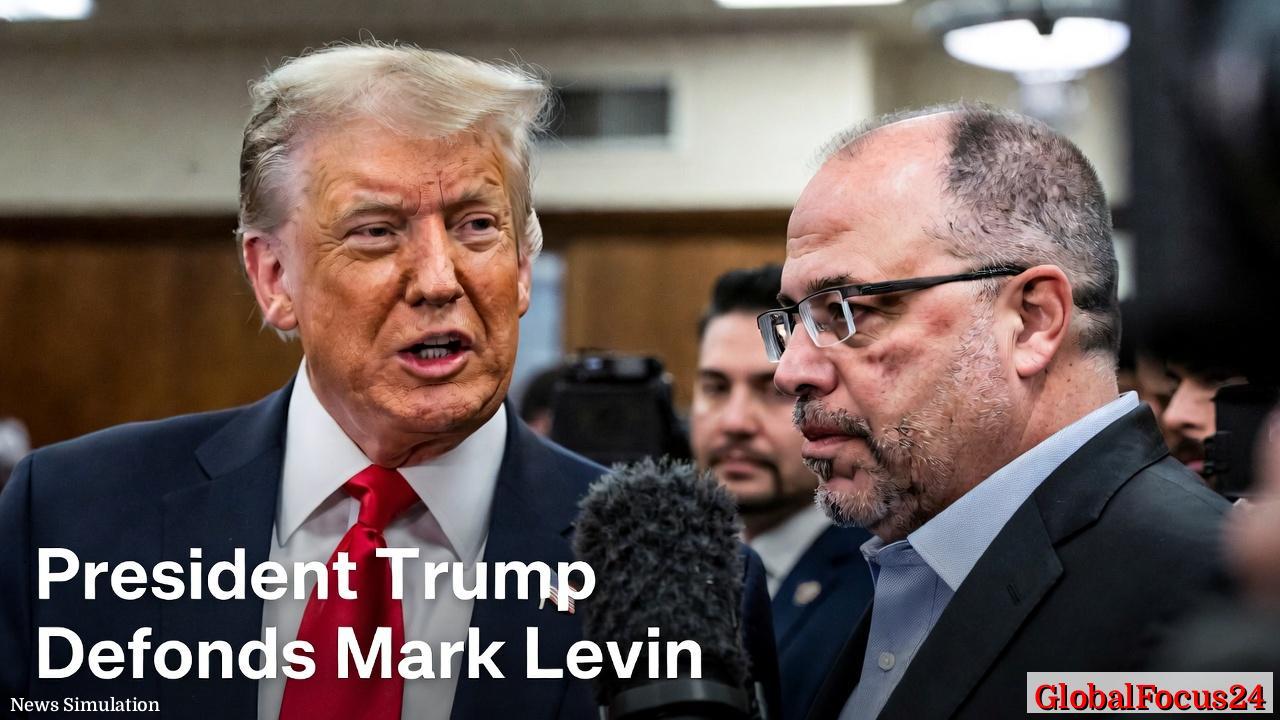
Trump Defends Levin as MAGA Unity Emphasizes Strength and Nuclear Deterrence in Public Message
Donald Trump issued a public defense of conservative commentator Mark Levin on Sunday night, framing Levin as a symbol of American patriotism and intellectual rigor under attack from critics he described as lacking both intellect and loyalty to the country. The statement, delivered in a detailed address that echoed familiar themes from Trump’s political vocabulary, reinforced the former president’s ongoing tilt toward a more explicit consolidation of conservative voices within the MAGA coalition.
Historical context: a longstanding alliance and evolving public narrative The exchange sits within a broader arc of American conservative media and political strategy that traces its modern roots to the late 20th and early 21st centuries. Levin, a longtime radio host and commentator, has emerged as a prominent voice in conservative circles, known for his advocacy of constitutional originalism, strong national defense, and unapologetic critique of political opponents. Trump’s public endorsement of Levin taps into a shared history of collaboration between the two figures, a relationship that has helped shape policy discussions and voter mobilization strategies across multiple election cycles.
In recent years, the MAGA movement has increasingly leaned on a curated ecosystem of conservative media personalities to amplify messages, mobilize base supporters, and counter narratives from mainstream outlets. By publicly characterizing Levin as “The Great One” and positioning him as a victim of elitist critics, Trump aims to reinforce a narrative of solidarity within his coalition while signaling a broader appeal to audiences that prioritize raw rhetorical toughness, policy clarity, and a posture of resistant nationalism.
Economic context: policy priorities, defense spending, and market sentiment Beyond rhetoric, the public exchange touches on economic themes that are central to contemporary MAGA-era policymaking. The emphasis on a strong national defense and determent of foreign threats has long intersected with questions about defense funding, military procurement, and long-term strategic stability. Supporters argue that a robust defense posture contributes to a climate of predictability and security which, in turn, can influence investment decisions, supply chains, and regional growth corridors—particularly in markets that rely on stable geopolitical conditions.
Analysts commonly examine how defense, energy independence, and trade policy interact with regional economies. In particular, defense-related employment, military contracting, and technology transfer can have outsized effects on local economies in areas with a concentration of defense facilities or manufacturing capacity. Conversely, critics caution that heavy defense spending could crowd out domestic investment in other sectors, potentially affecting long-run productivity and innovation. The current discourse, which frames national security as a central pillar of national prosperity, invites a broader examination of how public legitimacy and policy certainty shape investor confidence and regional growth dynamics.
Regional comparisons: where this narrative resonates Different regions respond to Trump’s framing in varying ways, reflecting diverse economic structures and political cultures. In parts of the Sun Belt and Midwestern states with strong manufacturing bases and established defense supply chains, messages about rebuilding and strengthening national institutions can align closely with local concerns about jobs, wages, and industrial resilience. Voters in these areas often equate a vigorous defense posture with economic stability and opportunity, particularly when local industries are intertwined with federal procurement.
Coastal regions with more diversified economies may weigh these discussions against concerns about fiscal sustainability, debt levels, and the opportunity costs of expansive defense programs. Urban centers may emphasize civil liberties, procedural fairness, and science-led innovation, balancing the allure of strong leadership with calls for inclusive growth and evidence-based policy design. The evolving reception of Levin’s philosophy and Trump’s rhetoric thus maps onto a mosaic of regional priorities, making a uniform national verdict particularly challenging and highlighting the importance of messaging that acknowledges local realities.
Public reaction and the information ecosystem Public reaction to the Trump-Levin dynamic underscores the broader vitality and polarization of contemporary political discourse. Supporters often praise the candor and directness of the exchange, viewing it as a reaffirmation of core conservative principles: limited government, strong national defense, and a commitment to constitutional interpretation. Critics, meanwhile, may interpret the discourse as polarized theater that entrenches partisan divides or as strategic positioning designed to maximize media attention and fundraising potential.
Media ecosystems play a pivotal role in shaping perceptions of legitimacy and credibility. Conservative outlets frequently amplify these narratives, while other outlets scrutinize claims and provide contextual analysis. For policymakers and observers, disentangling rhetoric from policy substance remains a persistent challenge, particularly when public figures frame national interest in high-stakes terms and when economic implications hinge on complex global dynamics.
Security and deterrence in focus: Iran, nuclear nonproliferation, and global stability A central thread in Trump’s statement is a firm stance on preventing Iran from acquiring nuclear weapons capable of threatening the United States, the Middle East, and the world. This position aligns with a long-standing pillar of U.S. national security doctrine: deter aggression through a credible alliance of defense, diplomacy, and pressure. Proponents argue that such a posture can preserve regional stability, protect critical energy routes, and safeguard international norms against the spread of nuclear capability.
Scholars and regional analysts typically assess deterrence strategies through several lenses: the balance of regional power, the credibility of political commitments, and the resilience of allied partnerships. The effectiveness of sanctions, diplomacy, and military deterrence depends on a constellation of factors, including international cooperation, domestic political will, and the evolving technological landscape. The public articulation of a deterrence-first approach, as seen in Trump’s remarks, reinforces the perception of a determined security strategy, which can influence market expectations for energy prices, technology sectors linked to defense, and regional investment climates.
Military modernization and the rhetoric of rebuilding Trump’s assertion that he has rebuilt the U.S. military—an oft-repeated refrain from his administration—speaks to a broader narrative about military modernization, readiness, and deterrence. The concept of “peace through strength” remains a substantive and symbolic anchor for supporters who link robust defense capabilities with national security guarantees. The economic dimension involves balancing the budgets of defense programs with civilian research and development, ensuring that advances in military technology translate into broader innovations that benefit the broader economy.
From a historical perspective, periods of significant defense investment have sometimes been correlated with technological breakthroughs and industrial diversification. However, the long-term fiscal implications require careful management to avoid crowding out other critical sectors. The current discourse, while emphasizing strength, also invites scrutiny of cost-effectiveness, lifecycle maintenance, and the opportunity costs of spending decisions across a 10- to 20-year horizon.
Public safety, patriotism, and cultural resonance Beyond policy specifics, the conversation resonates on a cultural level. Patriotism, public service, and a shared sense of national purpose often figure prominently in political messaging. When figures like Levin are portrayed as under siege by critics, the rhetoric appeals to a audience that values steadfast leadership and a unifying narrative in a time of divisive public discourse. This dynamic can influence social sentiment, community engagement, and civic participation, especially among groups that identify strongly with traditional symbols and values.
Aspiring conservatives watching the scene may interpret the exchange as a cue to prioritize loyalty to core principles, communicate with clarity, and engage in public debate with confidence. For political observers, the moment offers a glimpse into how advocacy communities crystallize around influential personalities and how those coalitions navigate external criticism while preserving organizational cohesion.
Operational implications for political and media strategists For campaign teams, the episode highlights several practical considerations:
- Messaging consistency: Maintaining a cohesive narrative across multiple voices helps reinforce core themes without producing conflicting signals.
- Audience segmentation: Tailoring messages to regional concerns and economic realities can improve resonance and turnout.
- Credibility management: Balancing bold rhetoric with substantiated policy positions can reinforce trust among voters seeking competence and accountability.
- Media involvement: Proactively shaping the conversation through controlled releases, interviews, and public appearances can influence momentum and perception.
Regional economic indicators to watch As the public conversation centers on defense, deterrence, and national strength, several economic indicators warrant attention:
- Military procurement activity: Contract awards and defense-related investment often reflect anticipated policy direction and can impact regional job markets.
- Energy sector stability: Prices and supply resilience influence both domestic growth and regional competitiveness, particularly in energy-intensive states.
- Industrial innovation metrics: Patenting activity, R&D expenditures, and supply chain diversification signal how defense-oriented policy translates into broader economic gains.
- Labor market trends: Employment data in manufacturing and high-tech sectors connected to defense programs can reveal how political rhetoric aligns with real-world labor dynamics.
Conclusion: a moment of reaffirmation within a shifting political landscape The Sunday night statement in defense of Mark Levin is more than a standalone remark; it is a signal of a consolidated effort within the conservative movement to present a unified front around leadership, national security, and cultural resilience. By foregrounding Levin as a trusted voice and emphasizing a firm stance on preventing nuclear proliferation, the message seeks to galvanize supporters, reassure allies, and project confidence to markets and international partners.
As regional economies and global markets monitor policy trajectories, observers will be watching for concrete policy proposals, fiscal implications, and the practical steps that accompany a pledge to defend national interests. The balance between principled rhetoric and measurable outcomes will shape not only political fortunes but also the pace at which the broader economy adapts to evolving security challenges, technological innovation, and the ever-shifting vines of international diplomacy. The dialogue underscores a central tension in contemporary governance: the demand for strong leadership in an uncertain world, and the persistent need to translate that leadership into tangible benefits for communities across the United States.