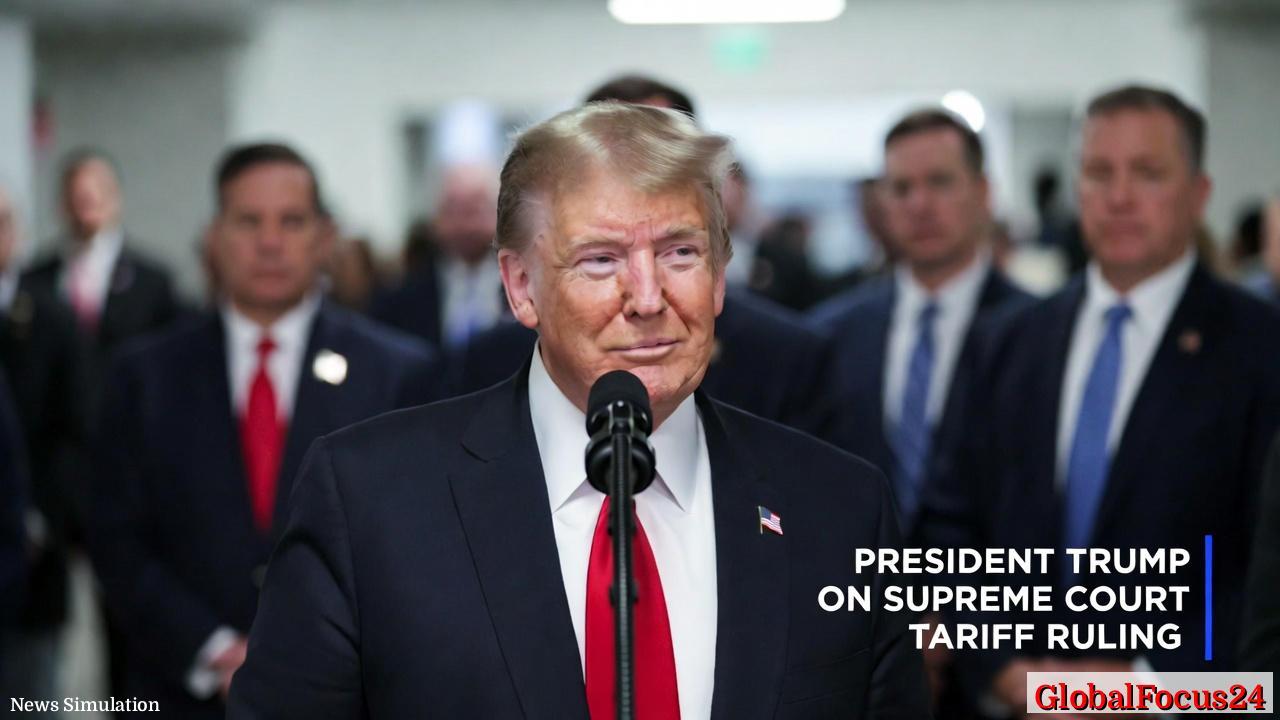
Tariffs in Focus: Supreme Court Waits on Executive Action, Market Implications Across Regions
The Supreme Court faces a pivotal moment as it weighs the legality of tariffs enacted through executive action, a topic that has reverberated through markets, manufacturing belts, and consumer wallets for years. With a decision anticipated as soon as tomorrow, economists, policymakers, and business leaders are parsing the potential legal outcomes for its broad implications on trade policy, supply chains, and regional economic performance. The case centers on whether executive authority to impose tariffs without a full congressional mandate stands on solid constitutional ground, and what that means for the balance of powers in the United States.
Historical context clarifies why this issue resonates far beyond a single ruling. Tariffs have long served as a tool of economic strategy, inflation management, and geopolitical signaling. From late 19th-century protectionist moves to mid-20th-century restructurings of global supply chains, duties and quotas have historically altered the cost of imported goods, shifted consumer behavior, and reshaped domestic industries. In recent decades, the rise of complex global value chains has intensified questions about the effectiveness and legality of unilateral tariff actions, particularly when those measures aim at broad sectors rather than targeting specific transgressions. The Court’s decision could either reaffirm a long-standing practice or recalibrate the lines that define executive discretion in economic policy.
Economic impact is a central thread in the story. Tariffs, by design, affect prices, producer margins, and the relative competitiveness of domestic versus foreign goods. When tariffs are levied without a formal act of Congress, the immediate effect is often a shift in input costs for manufacturers, a squeeze on consumers through higher retail prices, and a reallocation of trade flows as importers seek alternative suppliers. The ripple effects extend into investment decisions, as firms reassess risk exposure to policy surprises and potential retaliation from trading partners. In the near term, industries that rely on imported components, especially those with just-in-time supply chains, may face heightened volatility. Over the longer horizon, tariff-driven price pressures can influence inflation metrics, consumer sentiment, and central bank expectations, all of which shape regional economic trajectories.
Regional comparisons illuminate how different parts of the country might experience the ruling’s consequences. Machinery-dependent areas with robust export manufacturing—think regions with a strong concentration of automakers, aerospace suppliers, and electronics assemblers—could face more pronounced implications if tariffs persist or expand. Conversely, regions with a higher share of consumer goods production or import-heavy retail activity may feel the impact more acutely in everyday prices. For ports and logistics hubs, tariff policy intersects with customs processing, tariff revenue collection, and international freight flows, potentially altering shipment schedules and inventory management. The interplay between federal policy and regional economic ecosystems will be a key feature of post-ruling analysis, as economists assess which sectors gain resilience and which face renewed exposure to policy shifts.
Market participants have reacted to the ongoing discourse in ways that reflect their expectations for the Court’s decision. Financial markets often price in policy risk, and the prospect of a decisive ruling can influence currency movements, bond yields, and equity valuations across sectors tied to international trade. Businesses adopt hedging strategies to mitigate anticipated volatility, while investors weigh the potential for policy stabilization or further turbulence depending on the Court’s interpretation of constitutional authority. In parallel, consumer-facing industries monitor price pass-through effects, inventory levels, and demand sensitivity to tariff-induced costs, which can cumulatively shape retail performance and wage dynamics in the months ahead.
A closer look at the legal questions helps illuminate possible paths the Court could take. The central issue concerns the scope of executive power to impose tariffs without a formal legislative authorization. Proponents of executive action argue that tariffs are a standard tool of foreign policy and economic leverage, necessary to address unfair trading practices or national security concerns. Critics contend that broad use of tariffs bypasses the legislative branch’s constitutional responsibilities, potentially undermining checks and balances and increasing the risk of executive overreach. The Court’s interpretation could hinge on the precise statutory language available to the administration, the unintended consequences of unilateral measures, and the precedent set by earlier rulings on administrative authority and trade policy.
Public reaction to the anticipated ruling has reflected a range of perspectives. Business associations emphasize predictability and policy coherence, arguing that stable rules promote investment and long-term planning. Labor groups, meanwhile, focus on how tariff policies affect wage levels, job security, and domestic production capacity. Consumers express concern about rising prices for everyday goods and the potential for retaliation that disrupts global supply chains. News coverage and commentary often capture the sense of urgency surrounding a decision that could reshape trade posture, with regional stakeholders weighing historical dependencies on imports and the strategic importance of diversified sourcing.
In terms of regional policy implications, policymakers are examining how to bolster resilience regardless of the Court’s decision. This includes strategies to diversify supply chains, increase domestic capacity in critical sectors, and invest in workforce development to adapt to changing trade conditions. Some regions may accelerate investments in advanced manufacturing, automation, and new materials research to reduce vulnerability to external policy shocks. Others may pursue trade diplomacy efforts to secure favorable terms or to mitigate the impact of potential disruptions, aiming to preserve competitiveness in a globally connected economy.
The potential economic outcomes of the ruling extend to international partners as well. Tariff policy is rarely contained within national borders; it interacts with global pricing dynamics, exchange rate movements, and the economic cycles of trading partners. A decision supporting executive authority could embolden more assertive tariff actions in the future, while a ruling that curtails unilateral tariffs might incentivize greater multilateral negotiation and reliance on trade agreements. Both paths carry implications for global supply chains, cost structures in manufacturing, and the strategic planning of multinational corporations.
Industry analysts also highlight the importance of non-tariff tools as complementary levers. Export credits, subsidies, and targeted industrial policies can influence competitiveness and offset some of the costs associated with tariff regimes. The choice to deploy these tools involves careful consideration of fiscal stability, market distortions, and long-term efficiency. In addition, currency dynamics and inflation expectations play a role in how tariffs translate into real economic effects, affecting consumer purchasing power and the overall tone of economic recovery in different regions.
From a historical lens, the current moment sits at the intersection of evolving trade norms and transformative technologies. The ongoing digitization of supply chains, the rise of nearshoring trends, and the emergence of regional trade blocs all shape how tariffs are perceived and managed. The Court’s ruling, viewed through this broader context, could either reinforce a conventional approach or catalyze a rethinking of how economic leverage is exercised within constitutional boundaries. The outcome will likely influence legislative dialogue and executive strategy for years to come, even as markets adjust to the near-term uncertainties.
Public communication surrounding the ruling will be scrutinized as part of the broader policy process. Officials may seek to preserve consumer confidence and business investment by offering clear guidance on interim measures, anticipated timelines, and contingency plans. Transparent messaging about how any ruling will affect pricing, procurement, and supply chain continuity can help reduce unnecessary volatility and provide stakeholders with a sense of direction during a period of change. The media narrative will likely emphasize practical implications for households and firms, while avoiding sensationalism that could amplify market swings.
Looking ahead, observers expect a mix of outcomes and adaptive responses. Depending on the ruling, companies may accelerate diversification of suppliers, invest in resilience metrics, or adjust product pricing strategies to reflect anticipated tariff trajectories. Governments may respond with policy clarity to minimize disruption, while economic researchers track the real-world effects across sectors such as automotive, aerospace, electronics, and consumer goods. The interplay between policy clarity, market discipline, and regional adaptation will become a focal point for quarterly earnings, trade data releases, and economic outlook reports in the months following the decision.
In sum, the forthcoming Supreme Court ruling on executive-acted tariffs stands as a landmark moment for U.S. economic policy and the global trading environment. Its consequences will unfold across manufacturing floors, port cities, and rural communities alike, shaping how businesses plan, how workers are employed, and how households experience price changes. As the decision looms, regional analysts continue to monitor indicators of resilience and vulnerability, ready to translate policy shifts into actionable insights for manufacturers, retailers, and policymakers seeking to navigate a complex and evolving economic landscape. The balance of power between the executive branch and Congress remains at stake, with broader implications for how the United States engages with the global marketplace in the years ahead.