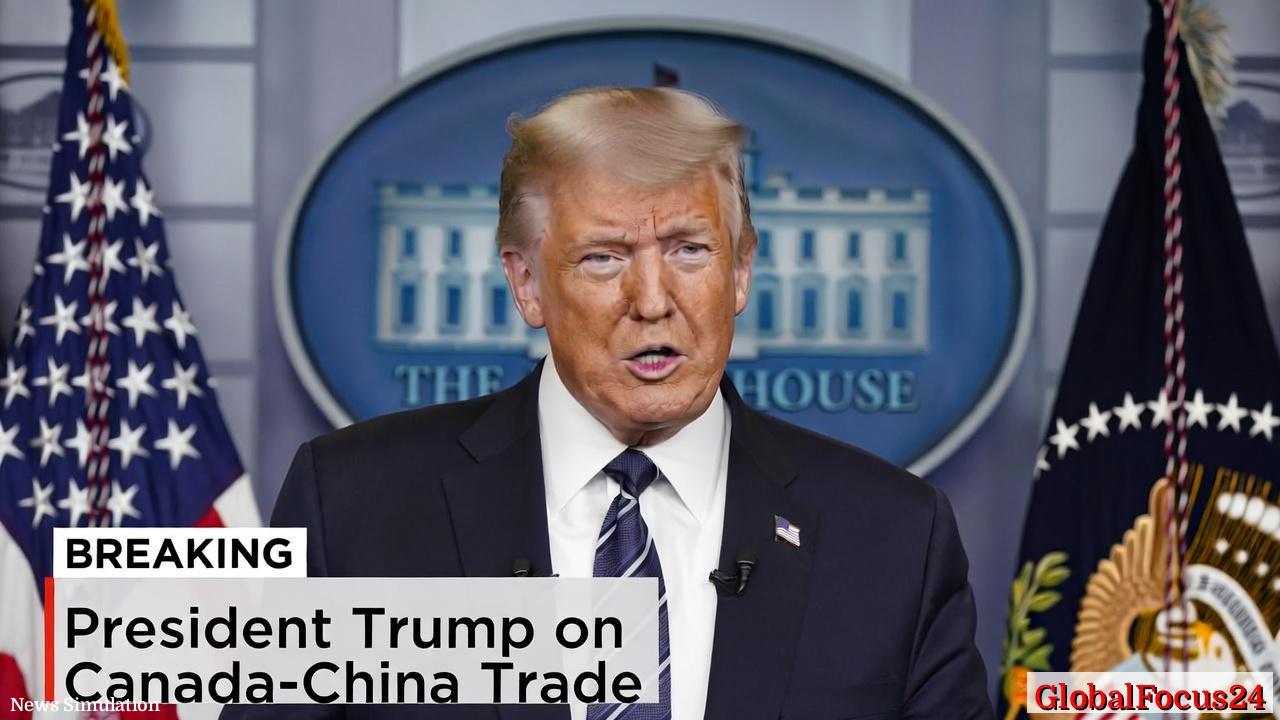
Canada–China Relations in Flux: Economic Stakes, Regional Impacts, and the Shadow of Tariff Threats
In recent weeks, a volatile public discourse around Canada’s economic ties with China has spotlighted the delicate balance between strategic partnerships and market access. While leaders seek to expand trade in energy, agriculture, and high-tech sectors, a series of statements from the United States has added a layer of urgency and uncertainty to regional economies that are still recovering from global supply-chain disruptions. This development underscores how bilateral relationships among North American and Asian economies can reverberate through markets, industries, and worker livelihoods across Canada and beyond.
Historical Context: From Cold War-Era Trade to Modernized Ties
Canada’s economic relationship with China has evolved over more than four decades. Early engagement focused on resource shipments and incremental market access, gradually expanding into a broader trade and investment relationship. The last decade has seen a more complex dynamic: while China remains a major trading partner for Canada—particularly in agricultural products, energy, and manufactured goods—Canadian policymakers have also sought to diversify markets and mitigate reliance on a single origin for critical inputs and consumer goods. This shift has occurred against a backdrop of shifting global trade norms, evolving supply-chain resilience strategies, and rising geopolitical competition among global powers.
Energy corridors, agrifood supply chains, and advanced manufacturing have emerged as central pillars. Canada’s energy exports, including crude oil and natural gas, are essential to global markets, while Canadian canola, soybeans, and other agricultural commodities have established Canada as a trusted supplier for international buyers. At the same time, the Chinese market has shown appetite for high-tech components and sustainable energy technologies, creating opportunities for joint ventures, research collaborations, and investment in processing capacities. The historical arc of these ties helps explain why policymakers weigh openness against risk, and why public sentiment can swing once new developments or threats surface.
Economic Impacts: Trade Flows, Tariffs, and Market Access
The prospect of punitive tariffs reverberates through multiple layers of the economy. A 100% tariff would represent a drastic shift in the cost structure for goods crossing the Canada–U.S. border, potentially transforming supply chains, pricing, and investment decisions. Industries that could be most affected include energy, agriculture, manufacturing, and consumer electronics, all of which rely on interconnected cross-border and transpacific supply networks. For farmers, a tariff shock could alter export competitiveness and income stability, while manufacturers might face higher input costs or the need to re-origin certain components to preserve duty-free or reduced-duty access.
Canada’s announced strategic partnership with China—building on a framework that encompasses energy cooperation, agri-food trade, and broader economic exchanges—signals a careful attempt to deepen mutual gains while managing risk. Reductions in tariffs on specific products, such as canola and select electric vehicles, demonstrate a targeted approach to expanding market access and encouraging bilateral investment. In economic terms, these moves can stimulate scale economies, accelerate export volumes, and attract joint-venture activity that leverages Canada’s resource base and China’s manufacturing capacity.
Regional Comparisons: How North American Economies Navigate Trade Tensions
- United States: The U.S. stance toward Canada’s trade relationships with China sits at the intersection of national security, economic strategy, and domestic industry considerations. A scenario that envisions sweeping tariffs on Canadian goods would carry broad implications for cross-border supply chains and regional competitiveness. U.S. policymakers often weigh the benefits of diversified imports against the risks associated with overreliance on any single trading partner. The result is a nuanced approach that seeks to preserve consumer access and industrial strength while defending strategic sectors.
- Europe and Asia-Pacific: In broader markets, Europe and Asia-Pacific economies monitor Canada’s moves with an eye toward alignment of standards, regulatory coherence, and the potential for synchronized tariff frameworks. While Canada’s energy and agrifood sectors are not identical to European or East Asian export profiles, the interdependencies created by global supply chains mean that tariff threats or real policy shifts can have ripple effects—affecting pricing, currency markets, and investment confidence.
- Regional Canada: Within Canada, provinces rich in energy and agriculture—Alberta, Saskatchewan, Manitoba, and parts of Atlantic Canada—stand to experience tangible impacts from policy shifts. Export-oriented communities benefit from stable access to large markets and price competitiveness, while changes in tariff regimes could prompt diversification into alternative markets or product mix adjustments. Urban centers with strong manufacturing ecosystems may face cost pressures that require productivity improvements or supply-chain diversification.
Market Dynamics: Price Signals, Demand Shifts, and Investment Patterns
Tariff talk tends to trigger a cascade of market responses. Investors may reassess capital allocation, seeking sectors and regions with more predictable policy environments. Domestic producers might accelerate efficiency upgrades, source strategic inputs from alternative partners, or renegotiate supply terms to maintain margins. Consumers could see modest price adjustments if import costs ripple through the retail chain, though end-user effects often depend on the breadth of products affected and the speed of policy implementation.
The strategic partnership with China is likely to influence investment flows in several ways. First, it can encourage collaborative ventures in energy technology, including cleaner fuel solutions, infrastructure modernization, and storage technologies. Second, it can expand agri-food logistics and processing capacity, potentially reducing transportation times and improving food security margins. Third, it can attract joint research and development funding, helping Canadian universities and private firms advance innovations in manufacturing, robotics, and environmental sustainability. Each of these channels contributes to a more integrated economic relationship, while also requiring careful governance to ensure compliance with trade rules and national interests.
Public Reaction and Social Implications
Public sentiment around cross-border trade with China and the possibility of punitive tariffs often reflects a balance of optimism and concern. On one hand, the prospect of expanded market access and increased investment can be welcomed by producers, workers, and communities that stand to gain from higher export volumes and job creation. On the other hand, the fear of rising costs, disrupted supply chains, or retaliation that damages domestic industries can provoke caution and calls for policy clarity. News cycles that highlight potential policy shifts tend to amplify these emotions, underscoring the importance of transparent communication from government and industry leaders.
Industry voices in sectors such as agriculture, energy, and manufacturing typically emphasize the value of reliability and predictability in trade relationships. They advocate for clear policy signals, robust dispute-resolution mechanisms, and assurances that essential supply chains will remain resilient in the face of geopolitical stress. In parallel, consumer groups often prioritize affordability and access to a broad range of goods, highlighting the interconnected nature of global commerce.
Operational Considerations: Logistics, Compliance, and Infrastructure
Beyond policy narratives, the operational realities of trading with China and managing cross-border flows are shaped by logistics and regulatory environments. Tariffs—whether imposed or avoided—directly affect cost structures, lead times, and inventory management. Compliance with product standards, safety certifications, and environmental regulations is a persistent challenge that requires ongoing coordination among exporters, importers, and customs authorities in both Canada and China, as well as intermediary markets.
Infrastructure readiness matters as well. Ports, rail corridors, and inland logistics hubs determine how efficiently goods move from field to port and from port to consumer. Investments in processing capacity, cold-chain logistics for perishable products, and digital traceability systems can improve resilience and speed, reducing the risk of supply disruptions and enhancing competitiveness on the world stage.
Conclusion: Navigating an Evolving Trade Landscape
Canada’s evolving relationship with China sits at the intersection of economic opportunity, national strategy, and regional prosperity. The move to deepen energy collaboration, advance agri-food trade, and expand manufacturing linkages reflects a strategic push toward diversified markets and greater global influence. Simultaneously, statements and policy signals from adjacent economies—especially the United States—introduce an element of volatility that must be managed with clarity, evidence-based policy design, and robust stakeholder engagement.
As policymakers evaluate tariff scenarios and trade commitments, the emphasis is on maintaining an open yet prudent framework that safeguards domestic industries while promoting sustainable growth. The long-term outlook will hinge on the ability to balance competitive markets with mutual gains, invest in innovation and infrastructure, and foster transparent dialogues with partners across continents. In this environment, regional competitive dynamics will continue to evolve, shaping how Canada positions itself within the global economy and how its workers, industries, and communities adapt to a rapidly changing trade landscape.