Trump’s Remark Toward Pope Leo XIV Signals Rare Break From Centuries of Diplomatic Restraint
A Sharp Exchange Uncommon in Modern Diplomacy
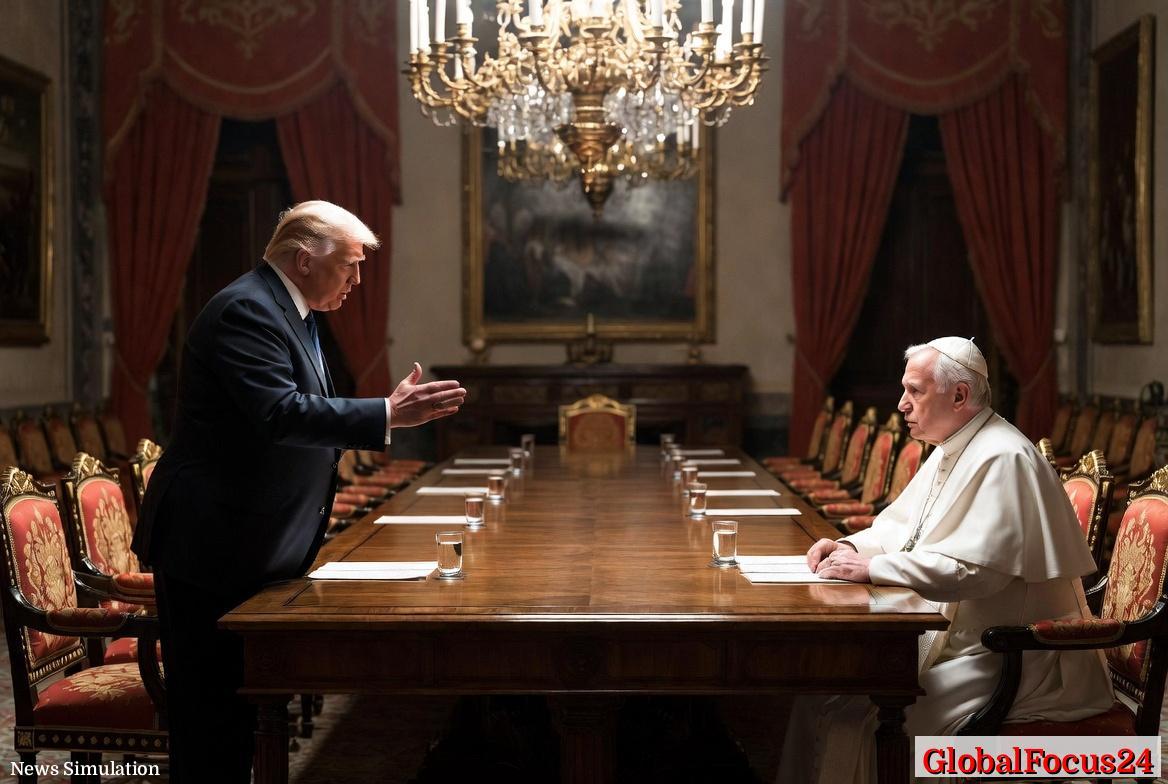
A pointed remark attributed to U.S. President Donald Trump directed at Pope Leo XIV has drawn global attention, marking a rare moment in which a sitting American leader publicly rebukes the head of the Roman Catholic Church. The comment—urging the pontiff to “get his act together”—stands in stark contrast to the long-standing tradition of cautious, highly respectful engagement between political leaders and the Vatican.
For nearly a millennium, heads of state have generally taken great care to avoid direct criticism of the pope, whose influence extends beyond religion into global diplomacy, humanitarian work, and cultural leadership. Even in periods of significant disagreement, public rhetoric has typically remained measured, reflecting the Vatican’s unique status as both a spiritual authority and a sovereign entity.
Historical Context of Papal Relations With World Leaders
Relations between secular governments and the papacy have evolved significantly over centuries. During the Middle Ages, popes wielded considerable political power, often influencing or directly shaping the actions of monarchs across Europe. Conflicts such as the Investiture Controversy in the 11th and 12th centuries illustrated the tension between religious authority and secular rule, but even then, public discourse retained a degree of formal respect.
In modern times, the Vatican’s role has shifted toward diplomacy and moral guidance rather than direct governance. The establishment of the Holy See as a recognized sovereign entity has allowed it to maintain formal diplomatic relations with over 180 countries. U.S.-Vatican relations, officially established in 1984, have generally been characterized by cooperation on global issues such as poverty, migration, and conflict resolution.
Presidents from both major political parties have traditionally approached interactions with the pope with caution and deference. Even when policy disagreements arose—such as over war, economic inequality, or social issues—public statements were typically framed in diplomatic language.
The Vatican’s Global Influence
The pope leads more than 1.3 billion Catholics worldwide, giving the office significant influence across continents. Beyond religious leadership, the Vatican plays a role in international diplomacy, often acting as a neutral mediator in conflicts and humanitarian crises.
Papal statements can shape public opinion on major global issues, including climate change, economic inequality, and migration. This influence is particularly pronounced in regions such as Latin America, Southern Europe, and parts of Africa, where Catholic populations remain large and politically engaged.
In recent decades, popes have increasingly taken positions on global economic systems, calling for greater equity and sustainability. These positions have occasionally placed the Vatican at odds with political leaders advocating different economic or policy priorities.
Economic Implications of Vatican Relations
The relationship between the United States and the Vatican carries subtle but meaningful economic implications. While the Vatican itself is not a major economic power, its moral authority can influence public policy debates that affect markets and industries.
For example:
- Papal advocacy on climate change has influenced discussions around energy policy and investment in renewable technologies.
- Statements on labor rights and economic inequality can shape public discourse and, indirectly, regulatory approaches.
- The Vatican’s humanitarian initiatives often intersect with global aid flows, affecting international development strategies.
A breakdown in tone between the U.S. government and the Vatican could introduce uncertainty into these areas, particularly where moral authority intersects with economic policymaking.
Regional Comparisons: How Leaders تعامل with the Papacy
Across different regions, leaders have historically adopted varied approaches to engaging with the pope, though most have remained within the bounds of diplomatic courtesy.
In Europe, where the Catholic Church has deep historical roots, leaders often maintain close and cooperative relationships with the Vatican. Countries such as Italy, Spain, and Poland frequently align with papal positions on cultural and social issues, even when political disagreements arise.
In Latin America, where Catholicism remains a dominant religion, political leaders often seek alignment with the pope to bolster domestic legitimacy. Public criticism of the pontiff in these regions is exceedingly rare, given the potential political repercussions.
In contrast, leaders in parts of Asia and the Middle East—where Catholic populations are smaller—tend to engage with the Vatican primarily on diplomatic and humanitarian grounds. Even in these contexts, public rhetoric remains respectful, reflecting the Vatican’s global stature.
Against this backdrop, a direct and critical remark from a U.S. president stands out as highly unusual.
Public Reaction and Media Attention
The comment has sparked widespread discussion across political, religious, and social spheres. Supporters of the president have framed the remark as a reflection of a broader willingness to challenge established institutions, while critics have expressed concern about the potential erosion of diplomatic norms.
Religious leaders and Catholic organizations have responded with a mix of caution and concern, emphasizing the importance of maintaining respectful dialogue between political and spiritual authorities. Some have noted that public criticism of the pope risks deepening divisions among followers and complicating efforts to address shared global challenges.
Media coverage has highlighted the rarity of such a statement, often pointing to the long history of careful diplomatic language used by world leaders when referencing the papacy.
The Role of Language in International Relations
Diplomatic language serves as a critical tool in maintaining stable relationships between nations and institutions. Even minor deviations from established norms can carry symbolic weight, signaling shifts in tone or priorities.
In this context, the president’s remark may be interpreted not only as a personal critique but also as a broader indication of changing attitudes toward traditional diplomatic practices. Analysts note that language in international relations often functions as a proxy for deeper policy positions, making even brief comments subject to intense scrutiny.
Potential Implications for U.S.-Vatican Relations
While a single remark is unlikely to fundamentally alter the longstanding relationship between the United States and the Vatican, it could introduce new complexities into future interactions.
Diplomatic engagement between the two entities typically occurs across multiple levels, including:
- High-level meetings between the president and the pope
- Collaboration on humanitarian initiatives
- Ongoing dialogue through diplomatic channels
Maintaining effective communication will likely require careful navigation in the wake of heightened public attention. Both sides have historically demonstrated an ability to manage disagreements while preserving broader cooperation.
A Departure From Tradition
The significance of the president’s statement lies less in its immediate impact and more in its departure from centuries of established practice. For nearly a thousand years, leaders have generally refrained from publicly admonishing the pope, recognizing the unique role the office plays in global affairs.
This moment underscores the evolving nature of political communication in the modern era, where direct and unfiltered language increasingly shapes public discourse. Whether this approach becomes more common in interactions with religious leaders remains to be seen.
Looking Ahead
As global challenges continue to require cooperation across political, economic, and spiritual domains, the relationship between secular leaders and the Vatican will remain an important element of international affairs.
Observers will be watching closely to see how both the U.S. administration and the Vatican navigate this episode, and whether it signals a broader shift in diplomatic norms or remains an isolated incident in an otherwise stable relationship.