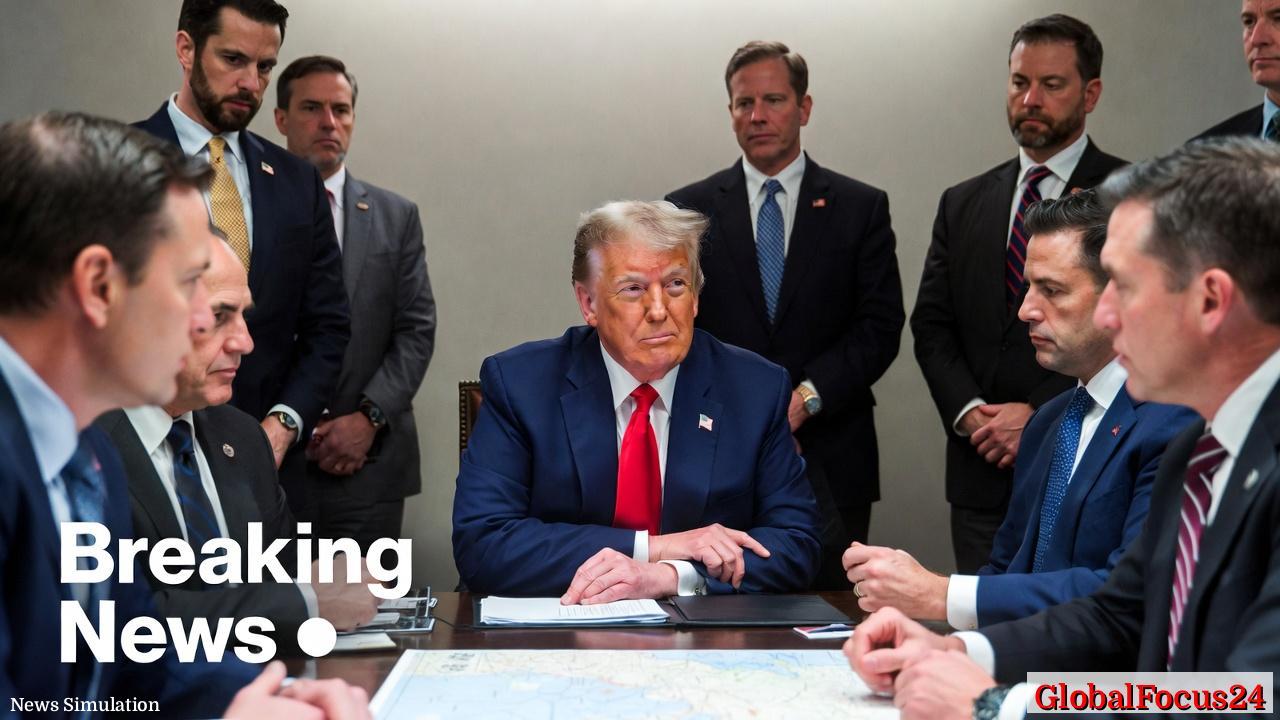
U.S. Consideration of Expanded Options on Iran Signals Shifting Security Calculus and Regional Implications
In a moment of heightened global tension, discussions among top U.S. officials have centered on broadening military options in response to Iran’s ongoing nuclear program and its regional activities. The conversations, described by participants familiar with the deliberations, focus on the possibility of a larger, more decisive strike if diplomacy or limited precision actions fail to deter Tehran’s nuclear ambitions. The evolving posture reflects long-standing strategic concerns about Iran’s weaponization timeline, regional influence, and the credibility of deterrence in an era of multipolar security dynamics.
Historical Context: From the Early Days of the Nuclear Question to a Fractured Diplomatic Landscape The trajectory of Iran’s nuclear program has shaped regional security for decades. In the early phases, international oversight and successive rounds of inspections, sanctions, and incentives set the frame for dialogue. Over time, the balance shifted as Iran’s nuclear capabilities advanced and its regional partnerships deepened. The most persistent question has been whether Tehran’s leadership seeks a purely civilian program or a stepping-stone toward a weapon capability. In parallel, the Middle East has experienced transformative changes: oil markets, energy policies, and infrastructure investments intersect with security strategies, creating a multifaceted backdrop for any potential escalation.
Economic Impact: Ripple Effects Across Markets, Energy, and Supply Chains Any expansion of military options against Iran would reverberate through global energy markets and shipping routes. Iran sits along critical corridors that influence regional pricing and insurance costs, particularly for crude transported through the Persian Gulf and the Strait of Hormuz. A broader military action could disrupt small- to mid-sized oil exporters in the region, amplifying price volatility and impacting global inflation trends. The maritime insurance market would likely respond with tighter coverage and higher premiums, while refineries around the world would recalibrate supply chains to mitigate exposure to potential disruptions.
In the United States and allied economies, a more aggressive posture could influence defense budgets, production schedules for weapons systems, and the broader investment climate. Policymakers would weigh the short-term costs of escalation against potential long-term benefits of deterring nuclear advancement. For regional economies within the Gulf Cooperation Council and adjacent markets, the fiscal implications would hinge on security assurances, diversification efforts, and the ability to maintain steady energy production during periods of heightened tension.
Regional Comparisons: How the Situation Stacks Up Against Other Persistent Security Challenges When compared with other persistent regional threats, the Iran question remains uniquely complex because it intersects with energy security, nonproliferation norms, and a network of alliances. In East Asia, for example, deterrence dynamics around North Korea feature similar concerns about escalation risk but differ in the degree of external energy exposure. In Europe, security concerns around Russia have driven a sustained investment in resilience and defense modernization, creating a framework that can inform, though not substitute for, regional policy responses in the Middle East. The comparison highlights how deterrence, diplomacy, and economic levers must be calibrated to each theater’s specific risk profile.
Diplomacy, Deterrence, and the Risk of Escalation: A Delicate Balance Experts underline that the calculus behind any broadened military option is not simply a binary choice between dialogue and force. A layered strategy—combining credible deterrence, targeted strikes, and robust diplomatic engagement—may be viewed as a more resilient approach. The risk of rapid escalation is a central concern, given the potential for civilian harm, unintended consequences, and the possibility of aligning other regional actors against Western interests. In scenarios where diplomacy stalls, the credibility of deterrence hinges on clear signaling, joint readiness exercises, and visible, but constrained, military demonstrations that are designed to avoid broad destabilization.
Technological and Strategic Dimensions: How Modern Capabilities Shape Decisions Advances in unmanned systems, cyber operations, intelligence, surveillance, and reconnaissance (ISR) capabilities influence modern decision-making in high-stakes environments. Precision strike assets, if deployed at greater scale, increase the potential for decapitation attempts or disruption of key command-and-control nodes. Conversely, the same technologies raise the bar for rapid de-escalation once a conflict is underway, with the risk that misinterpretations or miscommunications could trigger unintended consequences. The interplay between conventional military power and economic coercion also remains a central element, as governments weigh the leverage gained from sanctions and secondary measures against the costs of collateral damage and regional instability.
Public Insight and International Reactions: The Societal Pulse in a Time of Tense Diplomacy Public sentiment in the United States, allied capitals, and partner regions often tracks the temperature of diplomatic engagement and threat assessment. Parallels exist between official postures and civilian concern about energy prices, travel advisories, and the potential for broader conflict. In many communities, residents balance an awareness of regional security realities with a desire for stability and predictable policy. In markets and boardrooms, corporate leaders monitor policy signals, assess supply-chain vulnerabilities, and adjust risk premiums accordingly. The social dimension of this debate—how people perceive the balance of power and the likelihood of escalation—adds a human scale to strategic calculations.
Operational Realities: Readiness, Alliances, and the Role of Global Partners Any shift toward broader military measures would entail coordinated actions with regional allies and international partners. Multinational readiness, joint intelligence-sharing arrangements, and standardized procedures for escalation control would be essential to prevent missteps. The strategic architecture would likely involve a blend of deterrence, confidence-building measures, and a recognition that diplomatic channels must remain open to prevent a slide into broader confrontation. The role of international institutions and allied governments would be critical in maintaining strategic balance and providing a unified message about red lines and consequences.
Historical Lessons: Why Past Cycles of Escalation Matter Historically, cycles of rising tension followed by cautious de-escalation illustrate the fragility of peace in contexts of nuclear risk and regional rivalry. Lessons from past episodes emphasize the importance of maintaining open lines of communication, ensuring escalation control mechanisms, and avoiding misinterpretations that can trigger disproportionate responses. The value of measured responses—whether through sanctions, diplomatic signals, or limited military actions—has repeatedly proven its worth in preventing a slide into broader conflict. An informed approach recognizes that even well-intentioned actions carry the risk of unpredictable reactions in an interconnected and volatile theater.
Policy Implications: Steering Through Uncertainty with Clarity and Prudence The policy implications of contemplating a more expansive use of force hinge on several core questions: What are the defined red lines? How will success be measured in the absence of unintended escalation? What are the thresholds for returning to diplomacy if attempts at deterrence falter? And how can economic tools be harmonized with security objectives to minimize collateral damage while preserving regional stability? Analysts stress the need for transparent decision frameworks that articulate goals, risk thresholds, and fallback options. Clear, consistent messaging to allies and adversaries alike helps reduce the likelihood of misinterpretation and miscalculation.
The Road Ahead: Navigating a Complex Security Landscape As conversations continue, regional actors are watching closely. Gulf states, Israel, Turkey, and other partners have distinct security concerns and strategic computations that influence their responses to any emerging plan. Iran, for its part, weighs domestic political considerations, economic pressures, and regional ambitions in shaping its own calculus. The international community’s response—ranging from sanctions policy to diplomatic outreach and economic resilience programs—will likely define the contours of the coming months. The path forward will require a balance between credible deterrence, steady diplomacy, and pragmatic engagement aimed at preventing broader conflict while addressing the underlying drivers of instability.
Conclusion: A Moment of Strategic Reevaluation with Broad Impacts In the broader arc of regional security, decisions about expanding options against Iran are part of a longer conversation about how to manage nuclear risks in a volatile environment. The implications stretch beyond a single confrontation, shaping energy markets, alliance dynamics, and the risk calculus faced by policymakers and business leaders alike. As histories converge—the traditions of deterrence, the lessons of diplomacy, and the realities of a globally interconnected economy—the challenge remains to craft a response that preserves stability, protects civilians, and preserves the possibility of a negotiated settlement that reduces tension and fosters a durable peace.