Trump Administration Recalibrates Immigration Enforcement Strategy Amid Political and Public Pressure
Shift in Immigration Messaging and Tactics
The Trump administration is moving to recalibrate its immigration enforcement strategy, signaling a notable shift in both tone and operational priorities as officials respond to mounting public concern and political considerations ahead of upcoming elections. After months of aggressive enforcement actions, internal discussions have led to a revised approach that places greater emphasis on targeting individuals with criminal records while scaling back highly visible raids that have drawn scrutiny in major urban centers.
According to senior officials familiar with the discussions, President Donald Trump has privately expressed concern that aspects of the current enforcement campaign have exceeded public tolerance. In particular, the phrase “mass deportation,” once a central rallying point during campaign messaging, has been identified as politically damaging. Advisers have presented polling data indicating that the term evokes negative reactions among a majority of voters, prompting a directive to reframe both rhetoric and policy execution.
The evolving strategy reflects an attempt to balance longstanding campaign promises with shifting political realities, as well as to mitigate disruptions in communities that have been affected by high-profile enforcement operations.
Operational Changes at Immigration Agencies
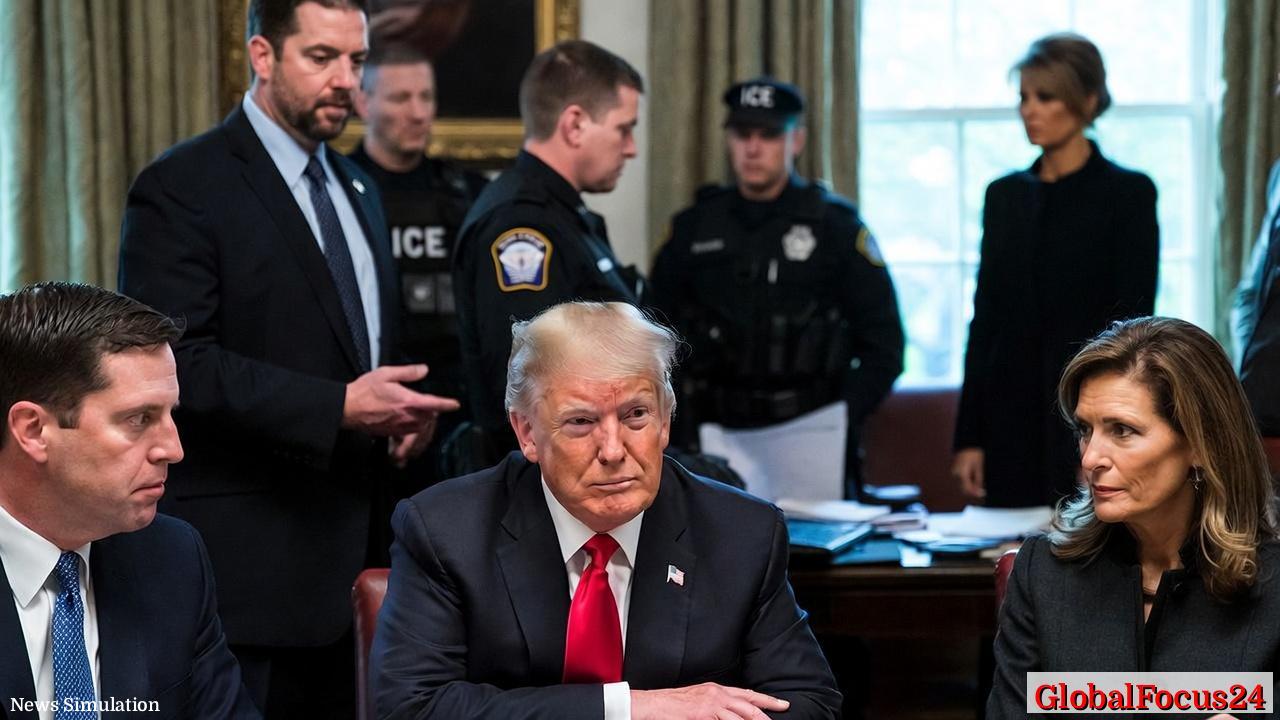
At the center of the policy adjustment is a change in how Immigration and Customs Enforcement (ICE) conducts arrests and prioritizes cases. Under the direction of border enforcement officials, agents are increasingly focusing on individuals already in custody through local law enforcement channels, particularly those identified as having criminal convictions.
This approach marks a departure from earlier tactics that included large-scale, coordinated raids in cities such as Chicago, Washington, D.C., and Minneapolis. Those operations, often conducted in residential neighborhoods or workplaces, generated significant media attention and, in some cases, public protests.
Key changes now underway include:
- Prioritizing arrests of individuals with criminal records over broader sweeps.
- Increasing cooperation with local jails and law enforcement agencies.
- Temporarily suspending large, high-visibility urban raids.
- Reducing daily arrest totals from peak levels.
Recent data indicates that daily immigration-related arrests have declined to approximately 1,200, down from more than 1,500 during the most intensive phase of enforcement. While still substantial, the reduction reflects a deliberate effort to recalibrate rather than abandon enforcement efforts.
Officials have emphasized that the underlying policy objective remains unchanged: the removal of individuals deemed to pose a threat to public safety. However, the methods used to achieve that goal are being refined to reduce political and social backlash.
Political Context and Midterm Considerations
The timing of the shift is closely tied to the broader political landscape, particularly with midterm elections on the horizon. White House Chief of Staff Susie Wiles has been among those advocating for a strategic adjustment, citing concerns that the current approach could create vulnerabilities for Republican candidates in competitive districts.
Polling data has played a significant role in shaping the administration’s thinking. A recent survey found that 58 percent of voters believe deportation efforts have gone too far, highlighting a gap between policy execution and public sentiment. Suburban voters and independent blocs, often decisive in midterm outcomes, have shown particular sensitivity to images of large-scale enforcement actions.
The administration’s revised messaging strategy reflects these concerns. Officials have been instructed to consistently emphasize the removal of “criminals” in public statements, shifting attention away from broader deportation figures and toward individual cases involving serious offenses.
Visual communication has also become a priority. According to aides, the president has encouraged the use of imagery and case-specific narratives that underscore the administration’s focus on public safety rather than volume-based enforcement metrics.
Leadership Changes and Policy Direction
The departure of Department of Homeland Security Secretary Kristi Noem has further accelerated the policy shift. Her tenure had been associated with some of the more aggressive enforcement directives, including policies that expanded ICE’s operational authority.
Her replacement nominee, Senator Markwayne Mullin of Oklahoma, has indicated during confirmation proceedings that he intends to pursue a more coordinated approach with local authorities. Among the proposed changes is a reversal of directives that allowed warrantless home entries in certain circumstances, a policy that had drawn legal scrutiny and criticism from civil liberties advocates.
Mullin’s stance suggests a potential recalibration not only in enforcement intensity but also in legal and procedural frameworks. By emphasizing cooperation with local law enforcement and adherence to judicial processes, the administration appears to be seeking a more sustainable model of enforcement that can withstand legal challenges while maintaining operational effectiveness.
Historical Context of Deportation Policy
The current adjustment fits within a broader historical pattern of U.S. immigration enforcement evolving in response to political, economic, and social pressures. Over the past several decades, administrations from both parties have grappled with how to balance border security, labor market needs, and humanitarian considerations.
During the early 2000s, enforcement efforts expanded significantly, with increased funding for border security and interior enforcement. The Obama administration, for example, prioritized the removal of individuals with criminal records, a policy framework that the current administration is now echoing in its revised approach.
However, the scale and visibility of enforcement actions have varied. Periods of heightened enforcement have often been followed by recalibration when public opinion shifts or when economic factors, such as labor shortages, come into play.
The term “mass deportation” itself has historically been contentious, associated with large-scale removal efforts that can disrupt industries and communities. Its declining favor in public discourse reflects a broader trend toward more targeted and nuanced policy approaches.
Economic Impact and Labor Market Considerations
Immigration enforcement policies have direct and indirect effects on the U.S. economy, particularly in sectors that rely heavily on immigrant labor. Industries such as agriculture, construction, hospitality, and food processing have historically depended on a workforce that includes both documented and undocumented workers.
Large-scale enforcement actions can lead to labor shortages, increased production costs, and supply chain disruptions. For example, previous crackdowns in agricultural regions have resulted in crops going unharvested due to a lack of available workers, driving up prices and affecting both producers and consumers.
The administration’s shift toward targeting individuals with criminal records may help mitigate some of these economic disruptions. By narrowing the focus of enforcement, policymakers aim to avoid widespread labor dislocation while maintaining a stance on public safety.
Regional differences also play a role. States such as California, Texas, and Florida, which have large immigrant populations and diverse economies, are particularly sensitive to changes in enforcement policy. In California’s Central Valley, for instance, agricultural producers closely monitor federal immigration actions due to their potential impact on seasonal labor availability.
In contrast, regions with smaller immigrant populations may experience less direct economic impact but remain influenced by national policy debates and political messaging.
Public Reaction and Advocacy Responses
The administration’s recalibration has elicited mixed reactions from various stakeholders. Some immigration advocates remain skeptical, noting that while messaging may be changing, enforcement capabilities and underlying policies remain largely intact.
Concerns have also been raised about the continued influence of key advisers associated with earlier hardline approaches. Advocacy groups argue that without structural changes to immigration law and enforcement priorities, the shift may prove temporary.
On the other side, organizations advocating for stricter immigration enforcement have expressed alarm at the perceived softening of policy. A coalition of hardline groups has called for a continuation, and even expansion, of deportation efforts, setting ambitious targets for removals in the coming year.
These groups view the current adjustment as a strategic pause rather than a permanent shift and have urged the administration to maintain momentum in achieving long-term enforcement goals.
Regional Comparisons and Policy Variation
Immigration enforcement in the United States often varies by region, influenced by local policies, law enforcement cooperation, and demographic factors. So-called “sanctuary” jurisdictions, which limit cooperation with federal immigration authorities, present unique challenges for enforcement agencies.
The administration’s renewed emphasis on working with local jails suggests an effort to navigate these regional differences more effectively. In areas where cooperation is strong, enforcement actions can proceed with fewer logistical obstacles. In others, federal agencies may face constraints that shape operational decisions.
International comparisons also provide context. Countries in Europe and Asia have similarly grappled with balancing enforcement and integration, often shifting between strict and targeted approaches depending on political and economic conditions. The U.S. approach remains distinctive in its scale and the complexity of its federal-state dynamics.
Outlook for Immigration Policy
The Trump administration’s decision to lower the profile of its deportation campaign while refining its focus reflects a pragmatic response to political, economic, and public pressures. Whether this recalibration represents a lasting shift or a temporary adjustment remains to be seen.
Key factors that will shape the trajectory of immigration policy include:
- Public opinion trends and voter priorities.
- Economic conditions and labor market demands.
- Legal challenges and judicial rulings.
- The outcome of upcoming elections.
As enforcement strategies continue to evolve, the administration faces the ongoing challenge of aligning policy objectives with public expectations and institutional constraints. The current shift underscores the complexity of immigration policy in the United States, where operational decisions carry significant implications for communities, the economy, and the political landscape.