Trump’s Focus Shifts from Midterm Elections to Party Power and Legacy
A Strategic Pivot Ahead of the Midterms
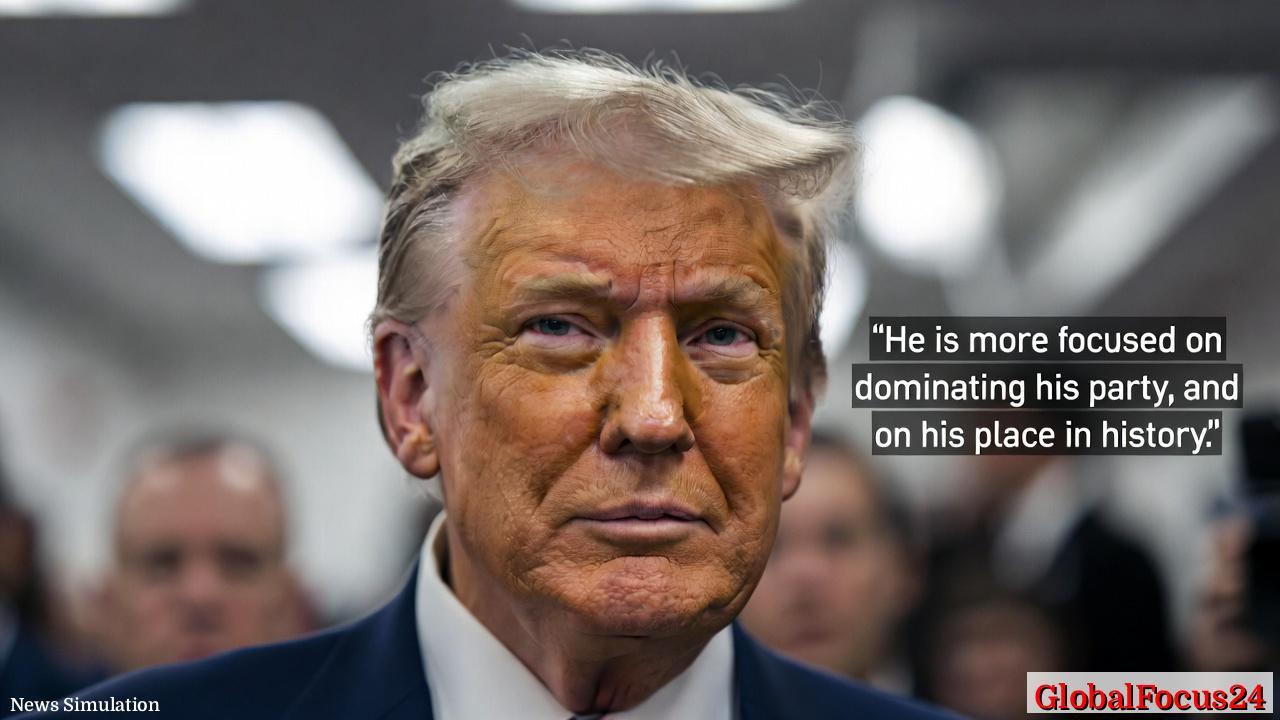
As the United States moves toward the upcoming midterm elections, former President Donald Trump appears to be charting a different course from the traditional political playbook. Rather than making aggressive efforts to boost Republican turnout or secure congressional majorities, Trump’s attention is turning inward — toward consolidating his influence within the Republican Party and shaping how his presidency will be remembered in American history.
This inward turn marks a striking contrast to previous election cycles when party leaders typically fanned across competitive districts in pursuit of legislative control. Instead, Trump’s public schedule and messaging suggest a deliberate pivot: he is using his political capital less to bolster Republican midterm candidates and more to reinforce his personal dominance over the party that still largely orbits around his persona.
The Historical Context of Presidential Midterm Involvement
Historically, presidents — both sitting and former — have played pivotal roles during midterms. For instance, Barack Obama invested significant time and political energy into campaigning for Democrats in 2010 and 2014, while George W. Bush did the same for Republicans in 2002. Such efforts often blurred the line between personal approval ratings and party fortunes, creating a measure of accountability and shared destiny.
Trump’s approach diverges sharply from these precedents. Since leaving office, he has maintained a unique status: neither a traditional ex-president stepping quietly into public life, nor a detached adviser, but a figure who exerts active control over his party’s ideological direction. His limited enthusiasm for the midterms reflects this dual status — a man more interested in sculpting his political movement’s identity than in navigating the tactical battles of congressional politics.
Internal Party Power Dynamics
Several Republican strategists privately acknowledge that Trump’s priorities are revealing the growing divide between national ambitions and local realities. Many party operatives hoped he would serve as an energizing force to unlock swing voters and fortify close races. Instead, Trump has concentrated his attention on ensuring absolute loyalty among Republican contenders, particularly those who echo his claims about the 2020 election and align with his populist economic themes.
This loyalty-driven strategy has reshaped Republican primaries, where endorsements from Trump remain among the most sought-after political prizes. Candidates not closely aligned with his messaging often face uphill battles within their own party, regardless of their general election viability.
The consequence, analysts argue, is a narrowing ideological bandwidth inside the GOP. By emphasizing personal allegiance over electability, Trump has turned internal contests into tests of fidelity rather than policy debate. Whether this approach yields congressional seats or future fractures remains one of the key uncertainties of this election season.
The Economics of Party Control and Legacy
Trump’s focus on personal legacy also reflects broader shifts in the economic fabric of American politics. The Republican brand he nurtures continues to draw deep support from voters in industrial and rural areas affected by globalization, deindustrialization, and sharp cost-of-living increases.
These same voters often see Trump’s economic nationalism — his emphasis on tariffs, domestic manufacturing, and energy independence — as a continuation of their broader social and financial discontent with Washington. For Trump, maintaining this base is imperative not only for possible 2028 ambitions but also for the historical narrative he appears determined to craft: one of a populist leader defying establishment politics to redefine conservative economics.
Economically, midterm elections tend to influence markets less than presidential races, but the broader policy implications still matter. If Republican control of Congress faltered, it could recalibrate the balance of fiscal priorities, spending programs, and regulatory intensity. Trump’s choice to prioritize his long-term narrative over immediate legislative gains introduces uncertainty into that equation, leaving donors and policy observers questioning how cohesive the party’s strategy will be in the months ahead.
Regional Divides and Political Energy
The regional map of Trump’s influence reveals uneven impact. In southern and midwestern states — notably Florida, Texas, and Ohio — Trump’s endorsements remain politically potent and can often define the outcome of primary elections. His rallies in these states continue to draw crowds that resemble campaign stops from his presidency, blending entertainment with political loyalty.
By contrast, in more moderate or suburban enclaves — particularly in the Northeast and parts of the West Coast — his brand of politics faces greater resistance. There, Republican candidates often attempt a delicate balancing act: embracing Trump’s populist economic messaging while avoiding his most polarizing rhetoric.
California, for example, presents a useful comparison point. While Trump’s presence galvanizes activists in inland and agricultural areas, it remains a liability in urban strongholds such as Los Angeles and the Bay Area. This geographical split underscores how Trump’s control over the GOP is less about national consensus and more about regional concentration — a potent force in some territories and a strategic challenge in others.
Historical Echoes of Party Transformation
American history offers parallels for Trump’s current posture. Figures like Theodore Roosevelt and Andrew Jackson similarly sought to redefine their parties rather than merely lead them through election cycles. Roosevelt’s break from the Republican establishment in 1912 to form the Progressive Party and Jackson’s populist influence on Democratic politics in the 1830s both triggered long-term realignments.
Trump’s ongoing effort to reorient the Republican Party in his image — emphasizing nationalism, cultural conservatism, and a combative stance toward institutions — may produce similar structural consequences. Even if legislative control fluctuates over time, his imprint on the party’s identity could prove far more enduring.
This comparison also highlights a key historical irony: while Roosevelt and Jackson both operated from positions of institutional authority, Trump is pursuing this transformation largely from outside government — a testament to how modern media dynamics and political polarization allow influential figures to exert power without formal office.
The Public and Donor Reaction
Among grassroots supporters, Trump’s focus on legacy over midterm logistics has not eroded enthusiasm. Many describe his approach as shrewd — prioritizing ideological purity and long-term reform rather than short-term electoral arithmetic. Others, however, express unease at the lack of visible midterm investment, fearing that the absence of coordinated campaigning could leave congressional seats vulnerable in key battlegrounds.
Major Republican donors remain divided. Some veterans of traditional party finance networks believe Trump’s dominance discourages moderate candidates who might otherwise appeal to suburban and swing voters. Others see his influence as an unavoidable reality, arguing that his magnetic pull on small-dollar fundraising far outweighs any disadvantages.
This tension underscores the central question facing the GOP: whether Trump’s model of personal loyalty and ideological intensity can coexist with the broader coalition-building required to govern effectively at the national level.
What This Means for the Midterms and Beyond
Trump’s relative indifference to midterm outcomes does not imply disengagement from politics; rather, it suggests a recalibration of priorities. His speeches, social media engagements, and political endorsements form part of a longer-term strategy to define the future of Republican identity — one centered on himself as the symbolic core of the movement.
In practical terms, this leaves Republican candidates navigating a complex ecosystem. Some align closely with Trump to secure his base; others attempt to distance themselves to court independents or moderates. The national party must balance both tactics while trying to project unity.
The midterms will therefore serve as a referendum not just on Democratic governance but on Trump’s continued hold over Republican power structures. If his favored candidates perform well, it will strengthen his claim to permanent leadership within the party. If they falter, pressure may rise for new voices to reassert influence — though such realignments rarely occur swiftly.
The Long Shadow of a Legacy
Ultimately, Trump’s current posture suggests that he measures political success less by immediate legislative tallies and more by enduring influence. His interest lies in ensuring that the conservative movement, as reshaped by his rhetoric and agenda, remains loyal to his vision for decades to come.
In that sense, the approaching midterm elections function as a secondary theater — the main stage remains his ongoing effort to define what it means to be a Republican in the post-Trump era. For party leaders, candidates, and voters alike, the coming months will test whether a political movement built around personality can sustain itself as a durable institution in the shifting landscape of American democracy.