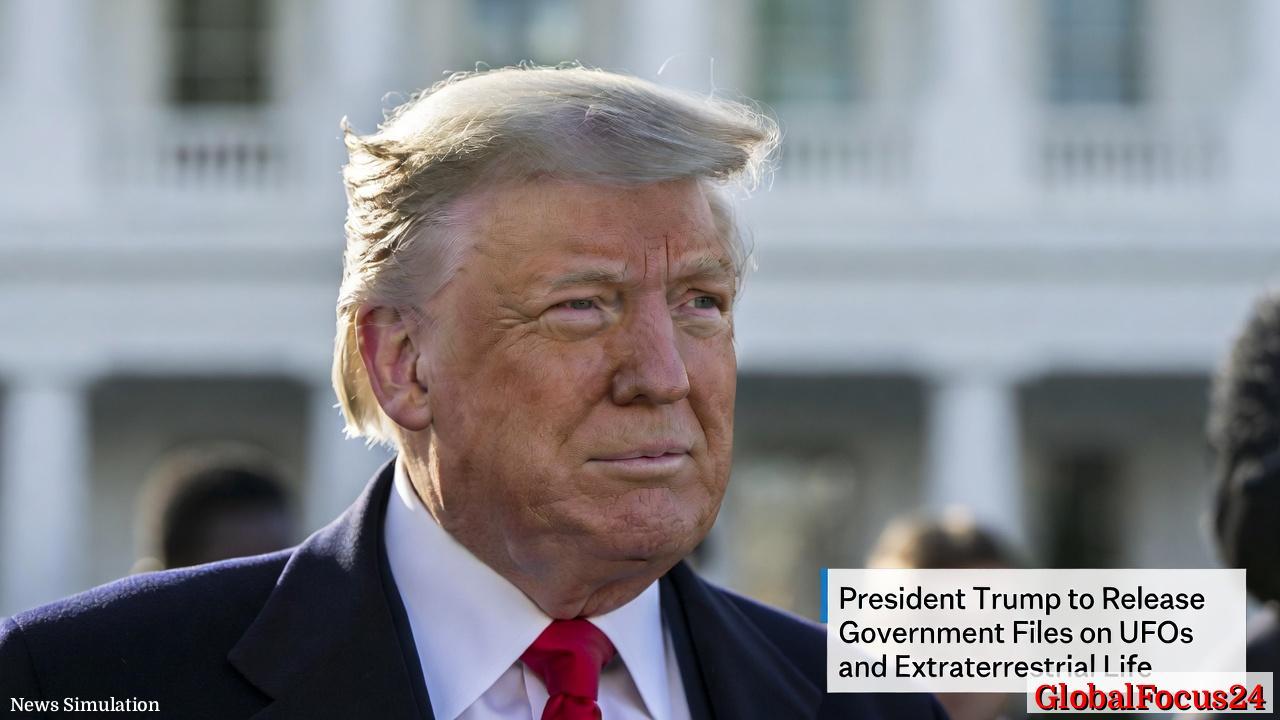
President Orders Declassification of UFO and Extraterrestrial Records, Fostering Global Scrutiny
The president has directed the rapid declassification of government documents related to unidentified flying objects, unidentified aerial phenomena, and potential extraterrestrial life, signaling a formal shift in how agencies will handle sensitive information in an area that has long captivated public imagination and scientific inquiry. The move follows a string of public comments by former leaders and a broader societal push for transparency surrounding government discoveries that could reshape our understanding of space, technology, and national security.
Historical context and the arc of disclosure
Public interest in unidentified flying objects, or UFOs, stretches back decades and has persisted through the Cold War era, the emergence of satellite reconnaissance, and the modern age of advanced sensors and data analytics. Government responses have varied—from classified briefings and restricted access to occasional acknowledgments of unexplained sightings. In recent years, interest has intensified as more robust detection systems, cross-agency collaborations, and open data initiatives began to surface. The current directive aligns with a long-standing impulse toward accountability: when potential breakthroughs or sensitive intelligence intersect with public curiosity, there is a strong societal incentive to share information in a careful, methodical manner.
Experts emphasize that declassification does not automatically equate to public release of every detail. Instead, it typically involves a structured review process to redact sources and methods that could compromise national security, outline the scope of evidence, and present context for misinterpretations or misreporting. Independent researchers, historians, and science organizations will likely scrutinize the materials to assess credibility, identify gaps, and gauge what the data implies about atmospheric phenomena, propulsion theories, or undisclosed testing programs. The balance between transparency and security remains a central consideration as declassification unfolds.
Economic impact and regional implications
Beyond the scientific and security dimensions, the timing of declassification has tangible economic implications. Government transparency about space and defense-related discoveries can influence capital allocation, investment confidence, and workforce dynamics. Aerospace and defense contractors, satellite manufacturers, and research institutions may experience a surge of interest as data becomes accessible, enabling more informed modeling, risk assessment, and project planning. In regions with robust aerospace clusters, such as established tech corridors and port cities with launch and testing capabilities, the flow of information can spur partnerships, stimulate startups, and attract talent.
Moreover, the policy shift may affect the broader economy by shaping public perception of space exploration and scientific inquiry. Public trust in government risk communication matters for investment in research and development, education, and STEM programs. When policymakers commit to declassification and rigorous review, it can bolster confidence that breakthroughs will be pursued with accountability and methodological rigor, potentially accelerating collaboration between federal agencies and private enterprises.
Regional comparisons illuminate differing trajectories in disclosure and interest. In parts of the world with mature aerospace ecosystems, the movement toward openness often harmonizes with strong regulatory frameworks and sector-led innovation. Conversely, in regions where information is tightly controlled, declassification can provoke heightened curiosity, speculation, and demand for independent verification. National priorities—ranging from space exploration ambitions to defense modernization—shape how each jurisdiction negotiates transparency, safeguarding sensitive capabilities while embracing the scientific value of credible evidence.
Scientific and public reception: anticipation meets scrutiny
The scientific community is watching closely. Researchers in astrobiology, atmospheric science, and planetary science have long advocated for access to high-quality data that could clarify the nature of unidentified phenomena. Declassification offers an opportunity to reexamine historical sightings with modern analytical tools, reframe outstanding questions, and potentially standardize reporting practices for aerial phenomena. Yet scientists also caution against premature conclusions. Distinguishing atmospheric anomalies, natural phenomena, and human-made objects requires meticulous cross-referencing of sensor data, event timelines, and corroborating sources.
Public reaction to the announcement has been a mix of curiosity, cautious optimism, and skepticism. Social and traditional media have already launched a flurry of interpretation, highlighting the enduring appeal of mysteries that lie beyond ordinary experience. Community science groups, amateur astronomers, and educational institutions may leverage newly released documents to design outreach programs, host public lectures, and encourage younger generations to pursue careers in science, technology, engineering, and mathematics. As more information becomes accessible, civic discourse is likely to crystallize around questions of evidence, methodology, and the implications for how society assigns meaning to unexplained observations.
Legal and policy considerations
Legal frameworks guiding declassification emphasize the need to protect sources, methods, and operational security while ensuring that the public receives accurate, well-contextualized information. Agencies typically undertake declassification reviews with oversight from senior officials and, in some cases, independent watchdogs to prevent over-classification while avoiding inadvertent exposure of sensitive capabilities. The process often involves phased release schedules, redactions, and accompanying analyses that explain the significance and limitations of the disclosed material. Lawmakers may seek hearings, briefings, and supplementary documentation to address questions about the scope of the data, the procedures used in the review, and the timelines for future updates.
Policy experts anticipate that the declassification initiative will be accompanied by enhanced data-sharing agreements across agencies, standardization of reporting formats for unidentified phenomena, and ongoing investments in sensor networks and data analytics. These steps could foster a more cohesive national approach to studying unknown phenomena, enabling researchers to triangulate observations from multiple platforms and eras. In the long run, the policy stance toward transparency may influence international collaborations, as allied nations pursue comparable openness and collective understanding of a phenomenon that transcends borders.
Historical parallels and lessons learned
Looking back, episodes of public disclosure around sensitive information have often followed similar patterns. Initial cautious acknowledgments give way to broader data release as verification improves and institutions gain confidence in the robustness of the evidence. Throughout these processes, there is a recurring emphasis on avoiding sensationalism, presenting uncertainties clearly, and grounding conclusions in disciplined inquiry. Historical analogies—from weather satellite data becoming integral to climate science to quantum discoveries reframing physics—illustrate how transparent access to credible information can empower innovation, education, and policy formulation while mitigating misinterpretation.
In this context, the current declassification effort can be seen as part of a broader trajectory toward integrating space science with mainstream public discourse. As more people encounter the data, the likelihood of constructive debate grows, anchored by rigorous analyses and trustworthy sources. The outcome may be a strengthened ecosystem where government, academia, industry, and the public collaborate to advance knowledge, improve instruments, and clarify misunderstandings about the nature of the unknown.
Public communications strategy and engagement
The administration has signaled an intent to accompany the declassification with clear, accessible summaries that help readers interpret complex material. Public-facing materials—ranging from executive summaries to annotated briefing documents—are expected to accompany the released files. Communicating uncertainty transparently, while highlighting confirmed findings and credible hypotheses, will be crucial to maintaining trust and avoiding misinformation.
Educational outreach and media literacy initiatives may accompany the news, offering guidance on how to interpret ambiguous data and how to distinguish between verified evidence and speculative claims. Libraries, universities, and science centers could host exhibitions and panel discussions to illuminate the science behind atmospheric phenomena, space exploration, and the methodology of analysis. By prioritizing clear explanations and reproducible reasoning, authorities can transform a moment of potential controversy into a catalyst for learning and public engagement.
Impacts on national security and defense posture
From a national security perspective, the declassification process aims to balance openness with the protection of sensitive capabilities. While public interest in possible breakthroughs is high, defense establishments must ensure that disclosures do not reveal critical intelligence sources, collection methods, or ongoing operations. The declassification plan likely incorporates phased exposures aligned with risk assessments, ensuring that any information that could compromise security remains appropriately safeguarded.
Simultaneously, the move could influence defense strategy and procurement planning by clarifying what is known about unidentified technologies and the associated risks. If credible data emerges that warrants further investigation, it may accelerate investment in research programs, sensor improvements, and international collaboration to advance defense readiness without compromising sensitive information.
The road ahead: what to expect in the coming weeks and months
As the declassification process unfolds, observers can expect several notable developments:
- Gradual release of curated documents accompanied by expert commentary that situates the data within a broader scientific and historical framework.
- Detailed briefings from defense and intelligence communities explaining the scope, limitations, and significance of the released materials.
- Independent analyses from universities and research institutes that help translate technical findings into accessible narratives for the public.
- Clear delineation between what is known, what remains uncertain, and what requires further investigation, thereby reducing misinformation and speculation.
Regional leaders and policymakers will watch the rollout closely to determine how the information affects science policy, education funding, and regional investments in space-related industries. For communities with established aerospace hubs, the declassification could catalyze local initiatives, workforce development programs, and collaborative research projects that leverage new data to propel innovation.
Conclusion: transparency, curiosity, and a shared pursuit of knowledge
The decision to declassify government documents related to unidentified phenomena marks a significant moment in the ongoing conversation about space, science, and national security. It reflects a sustained commitment to transparency while acknowledging the complexities involved in handling sensitive information. As researchers, educators, policymakers, and the public engage with newly accessible materials, the emphasis will be on rigorous analysis, responsible reporting, and thoughtful exploration of what the data can and cannot tell us.
Ultimately, the unfolding process offers a unique opportunity to elevate scientific literacy, encourage cross-disciplinary collaboration, and reinforce a culture of evidence-based inquiry. Whether the released files contain startling revelations or reaffirm established understandings, the public dialogue surrounding these documents is likely to shape perceptions of space exploration, technological progress, and humanity’s place in the cosmos for years to come.