Trump Declares NATO a “Paper Tiger” Without U.S. Power as Oil Prices Surge and Global Tensions Rise
A Renewed Challenge to NATO’s Strength
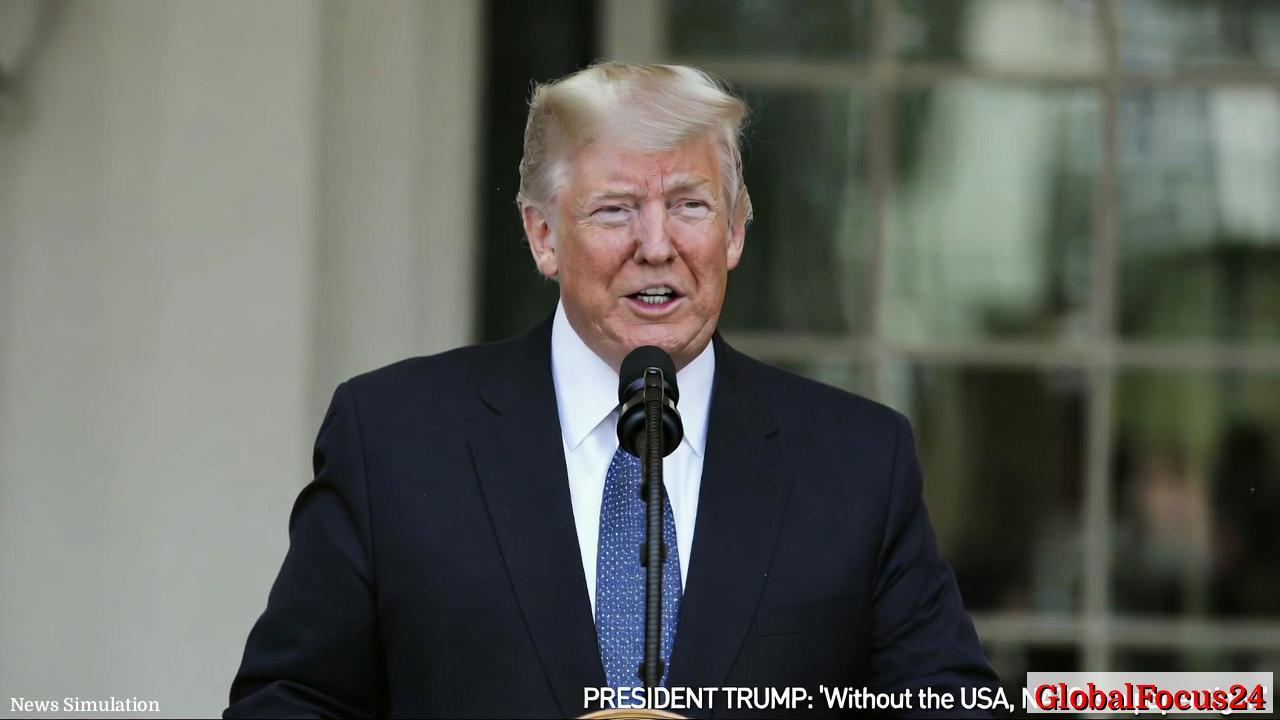
Former President Donald Trump reignited debate over the role and effectiveness of the North Atlantic Treaty Organization (NATO) this week, asserting that the alliance “would be nothing without the United States.” His declaration, calling NATO a “paper tiger,” came during a sharp critique of European allies for refusing to act militarily in the Persian Gulf amid renewed tensions surrounding Iran and global energy security.
Trump’s comments echoed his long-standing skepticism of multilateral defense commitments. His remarks accused NATO members—especially European nations—of failing to support U.S.-led efforts to ensure the free flow of oil through the Strait of Hormuz, a vital maritime corridor through which roughly 20 percent of global petroleum supplies pass.
Without direct American involvement, Trump argued, NATO’s collective military strength “means absolutely nothing.” This marks one of the most forceful reassertions of his critique that European partners depend too heavily on Washington’s defense capabilities while avoiding direct risk in crisis regions.
The Strait of Hormuz and Energy Security
At the center of Trump’s criticism is the Strait of Hormuz, a narrow channel that serves as the world’s most critical oil chokepoint. Backed by U.S.-led naval operations, the strait has historically remained open for commercial traffic—even amid frequent flare-ups involving Iran. The former president’s comments appear to stem from frustration over rising oil prices, which have climbed above $100 per barrel in recent weeks amid regional disputes and shipping disruptions.
Energy analysts note that even a minor obstruction in the strait can send shockwaves through global markets, prompting price surges that strain economies dependent on imported oil. For Washington, maintaining stability there is a strategic priority dating back to the 1980s “Tanker War,” when U.S. naval escorts protected commercial vessels from Iranian attacks during the Iran-Iraq conflict.
Trump’s suggestion that European nations should step up to assist militarily reflects a broader theme in his foreign policy rhetoric: the insistence that NATO partners contribute more to shared security challenges that directly impact global markets.
NATO’s Response and Ongoing Commitments
NATO officials have not issued a formal response to Trump’s latest remarks, but alliance representatives have repeatedly emphasized unity and shared defense obligations under Article 5 of the NATO treaty. In recent years, European member states have increased defense spending and participation in international security operations, partly in response to earlier U.S. pressure.
While NATO’s activities have been largely concentrated on European and Atlantic defense priorities, the alliance maintains cooperative links with regional partners in the Middle East. In recent years, NATO has expanded its role in maritime security, counterterrorism operations, and training initiatives that indirectly support stability near the Persian Gulf.
Analysts caution, however, that deploying NATO forces to the Strait of Hormuz would represent a major strategic shift requiring consensus among all 32 member states—something difficult to achieve amid differing national priorities and energy policies.
Historical Context: Decades of Transatlantic Friction
Trump’s critique taps into a vein of transatlantic tension that dates back decades. Since NATO’s founding in 1949, the alliance has repeatedly faced internal disputes over burden sharing, global intervention, and the balance of power between Washington and European capitals.
During the Cold War, the U.S. assumed the primary role in funding and commanding NATO’s defense posture, deterring Soviet aggression through its nuclear umbrella. Following the collapse of the Soviet Union, European members—particularly Germany, France, and the United Kingdom—lowered defense budgets as direct military threats receded. Successive U.S. administrations, both Republican and Democratic, have since urged Europe to increase spending and assume greater responsibility for global security operations.
The issue reached a peak during Trump’s presidency (2017–2021), when he demanded that NATO allies meet their defense spending commitments of at least two percent of gross domestic product. Though many countries have since moved to meet or exceed that threshold, Trump often portrayed the alliance as a financial burden for the United States and questioned whether it served American interests.
Economic Fallout: Oil Prices and Market Volatility
Trump’s claim that NATO’s inaction has fueled higher oil prices speaks to a broader concern about energy geopolitics. Crude oil markets have been volatile throughout early 2026, with prices swinging sharply amid supply disruptions and ongoing uncertainty over negotiations with Iran.
European economies—already strained by inflationary pressures and sluggish growth—face renewed challenges from high energy costs. The European Central Bank has warned that sustained oil price increases could slow recovery across the eurozone, while American consumers are also feeling the impact at the pump. Rising transportation and manufacturing costs threaten to ripple through supply chains, raising prices for goods worldwide.
In Washington, analysts suggest that Trump’s remarks may be aimed as much at domestic audiences worried about economic strain as at foreign policymakers. His focus on oil prices underscores how energy security and military policy remain tightly intertwined in public debate.
Regional Comparisons: Europe, the Middle East, and the Pacific
Comparing NATO’s role in the Persian Gulf to its actions in other regions highlights the alliance’s selective engagement strategy. In Europe, NATO has rapidly expanded its presence along the eastern flank, deploying troops to deter Russian aggression. In the Pacific, while NATO has no formal mandate, the alliance has strengthened ties with partners such as Japan, Australia, and South Korea—reflecting growing recognition that global security threats are interconnected.
In contrast, NATO’s footprint in the Middle East has been more limited and focused on training missions rather than direct military engagement. The Gulf region’s volatile politics, coupled with divergent member-state interests, make a full NATO intervention unlikely without a major consensus-building effort.
The Legacy of U.S. Leadership
Since the end of World War II, U.S. leadership has underpinned NATO’s operational strength, from strategic planning to intelligence sharing and logistics. American forces, technology, and resources comprise the backbone of the alliance’s deterrent capabilities. As such, Trump’s assertion that NATO would be powerless without the United States carries weight—albeit one that overlooks significant European contributions to recent missions in the Balkans, Afghanistan, and Eastern Europe.
Defense experts frequently note that the alliance’s military infrastructure, including command systems, satellite networks, and rapid deployment capabilities, relies heavily on U.S. assets. Without them, NATO would face serious operational limitations, especially in power projection beyond Europe.
However, critics argue that describing NATO as a “paper tiger” dismisses the collective resolve demonstrated in responding to Russia’s invasion of Ukraine, where European nations collectively mobilized military aid, sanctions, and defense spending at unprecedented levels.
Diplomatic Implications and Future Scenarios
Trump’s remarks come amid renewed discussion in Washington about America’s long-term commitments to NATO and other global institutions. His blunt characterization of the alliance as ineffective may influence both domestic political debates and international perceptions of U.S. reliability as a partner. Should his views gain renewed traction, European leaders could accelerate efforts to strengthen independent defense structures through initiatives like the European Defence Fund and Permanent Structured Cooperation (PESCO).
For NATO strategists, the challenge lies in balancing renewed collective unity with growing skepticism about transatlantic relations. As the alliance approaches its 77th anniversary, questions persist about how to adapt its mission to confront new-era threats, from cyber warfare to global energy instability.
Public Reaction and Global Outlook
Reactions to Trump’s comments have been mixed. Supporters within conservative foreign policy circles praised his call for “fairer burden sharing,” arguing that European nations have long benefited from U.S. protection without shouldering comparable risks. Critics, meanwhile, warned that such rhetoric undermines alliance cohesion and emboldens adversaries by sowing doubt about NATO’s mutual defense commitments.
Among European populations, fatigue over foreign military interventions remains strong, particularly after the costly Afghanistan mission. However, rising energy prices and growing uncertainty in the Persian Gulf may rekindle debate over the role Europe should play in safeguarding critical trade routes.
As tensions in the Middle East persist and energy markets remain unstable, the debate over NATO’s global reach—and America’s role at its core—appears far from over. Whether Trump’s “paper tiger” remark becomes a fleeting sound bite or a catalyst for further policy shifts may depend on how both Washington and Brussels respond to mounting security and economic challenges in the months ahead.