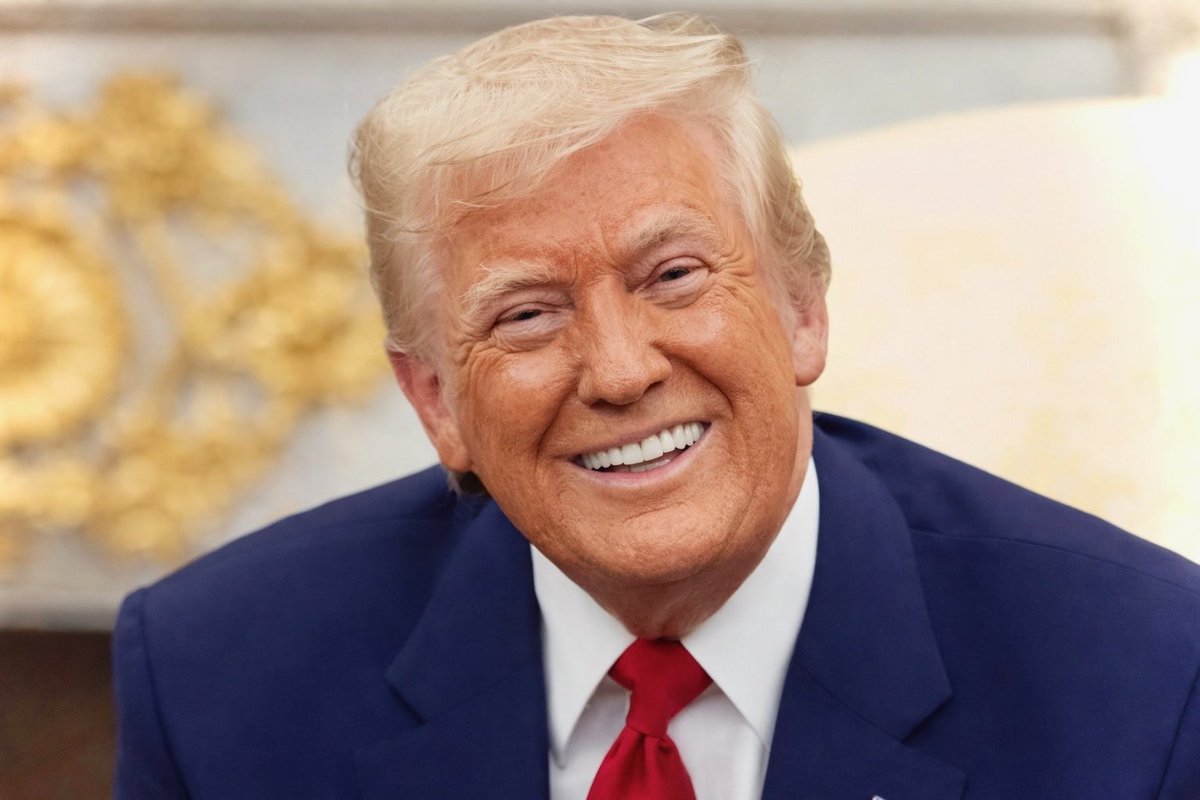
President Trump Announces Xi Jinping’s Visit to the United States Later This Year, Signaling Potential Momentum in US-China Relations
President Donald Trump said Chinese President Xi Jinping will visit the United States later this year, an announcement that immediately drew attention for what it could mean economically, strategically, and for day-to-day business planning across both countries. While no final itinerary or agenda was released, the statement underscored the prospect of renewed high-level engagement at a time when US-China ties remain deeply influenced by trade flows, technology competition, supply-chain resilience efforts, and geopolitical caution.
The prospect of another Xi visit—at the very top of bilateral diplomacy—also fits a longer pattern: major US-China summits and state visits have often served as turning points, even when the underlying relationship has stayed complex. In the United States, investors and industry leaders typically view such milestones through a pragmatic lens—seeking clarity on tariffs, export controls, procurement rules, and market access. In China, government and corporate stakeholders watch for signals on investment conditions, technology restrictions, and the stability of cross-border commerce.
A high-stakes moment in a relationship with deep currents
The US-China relationship has never followed a simple path. Over the decades, it has oscillated between cooperation and competition, with periods of detente often emerging when both sides saw enough shared incentives to reduce friction. The announcement of Xi’s visit arrives against that backdrop—neither a reset button nor a declaration of full alignment, but a move that suggests momentum may be possible.
For the general public, state visits can feel distant, yet their consequences tend to show up closer to home. When senior leaders meet, it can influence financial markets, corporate expectations, and negotiations that trickle down to ports, manufacturing lines, and consumer prices. Even before any specific deal is announced, the expectation of talks can change risk perceptions among banks, exporters, and logistics providers.
In both countries, the symbolism matters. US officials typically treat presidential visits as a way to test whether working channels can be widened and whether sensitive topics can be discussed directly. Chinese leaders, for their part, often emphasize the importance of stable relations in order to protect economic development objectives. That mutual framing—stability paired with ambition—has been a defining feature of recent decades.
Historical context: summit diplomacy and its uneven outcomes
Xi Jinping’s leadership began in 2012, and since then, US-China diplomacy has been shaped by both formal summits and informal, crisis-driven engagements. Over the past half-century, major breakthroughs have often arrived through structured meetings where leaders could signal red lines, create channels for negotiation, and sometimes agree on phased steps rather than sweeping solutions.
Looking back, the 1972 normalization era laid the foundation for a relationship that expanded trade and reshaped global economic patterns. The 1990s and early 2000s brought deeper integration as China’s manufacturing footprint expanded and US firms increased their exposure to Chinese supply chains. But as economic ties grew, so did concerns—about industrial policy, intellectual property, market access, and strategic influence.
In later years, moments of improvement tended to be linked to specific problem sets: trade imbalances and market barriers in the early 2000s; crisis management and commercial stability efforts after periods of heightened tension; and periodic agreements aimed at slowing the momentum of technological and economic constraints.
State visits have repeatedly functioned as accelerators for diplomacy even when they did not immediately resolve structural disputes. They can produce announcements that businesses interpret as temporary easing, while longer-term decisions still depend on subsequent agencies, enforcement patterns, and negotiated frameworks.
Economic impact: what businesses watch before the agenda is final
Even without a confirmed agenda, an announced visit from China’s president carries economic weight. US and Chinese corporations rely heavily on predictability. When high-level leaders signal that talks are upcoming, companies often adjust planning assumptions—reviewing contracts, forecasting tariffs, aligning supply-chain strategies, and re-evaluating cross-border investment risks.
The economic channels are broad:
- Trade policy expectations: Companies producing goods for export or importing components frequently watch for changes that could affect tariffs, customs processes, and rule enforcement.
- Technology and industrial collaboration: Restrictions around advanced semiconductors, equipment, and certain software categories can heavily influence timelines for both research and production.
- Supply-chain resilience and diversification: Firms have spent years redesigning sourcing strategies to reduce exposure to sudden disruptions, and top-level engagement can influence whether further adjustments are necessary.
- Financial and investment conditions: Capital flows, compliance standards, and investment review procedures can shift based on the tone of bilateral engagement.
- Consumer and industrial costs: Even modest policy changes in procurement or import access can influence prices indirectly across multiple sectors.
Markets tend to respond to perceived diplomatic progress through changes in risk sentiment. Analysts often emphasize that these reactions do not depend solely on what is announced publicly; they reflect the belief that negotiations can reduce the probability of escalation or sudden policy shifts.
Regional comparisons help explain why business caution remains. For example, companies with deep exposure to East Asia—where production networks cross borders frequently—have learned to treat diplomatic announcements as signals rather than guarantees. In the wider Asia-Pacific ecosystem, firms also monitor how US-China moves might affect third-country markets, including supply opportunities that can emerge when trade routes reconfigure.
Strategic dimensions without overts
While the announcement included references to personal rapport and excitement about future meetings, the structural realities of the US-China relationship make it hard to separate economics from strategy. Even when discussions focus on commerce, they inevitably intersect with national security considerations around technology, critical infrastructure, and industrial capabilities.
That interplay has become more visible in recent years as governments tightened rules in areas such as advanced manufacturing tools, telecommunications ecosystems, and certain categories of data-related services. For many businesses, the practical question is not politics; it is which products can move, under what conditions, and on what timelines.
In the United States, sectors with significant exposure to Chinese demand and Chinese supply often find themselves at the intersection of policy and profit. In China, companies tied to export markets, inbound technology, and international distribution also feel the pressure of uncertainty. That is why a visit at presidential level can matter: it can create room for negotiation, reduce misinterpretation, and clarify what remains negotiable.
Historically, high-level diplomacy has been most productive when it addresses both sides’ constraints. If expectations diverge—such as when one side wants concrete changes quickly while the other prioritizes maintaining leverage—progress can stall even after extensive meetings. However, the mere fact of a forthcoming visit suggests that leaders see enough shared incentive to keep channels open and to test whether the next phase can be structured more constructively.
Public reaction: anticipation balanced with skepticism
Public reaction in both countries has tended to follow a familiar pattern. Many people recognize that personal rapport at the top can ease immediate friction, but they also remain aware of the underlying structural disagreements that do not disappear because of a handshake.
In the United States, business communities frequently express a cautious optimism: they want clarity, but they do not assume that diplomacy automatically produces market-opening reforms. In China, there is often an expectation that engagement can help reduce economic uncertainty, while citizens and companies remain attentive to how restrictions and competition trends evolve.
Social and media discussions, where they have focused on the announcement, have often highlighted a common theme: the visit might influence near-term conditions for companies waiting on regulatory decisions. At the same time, many observers emphasize that lasting change typically requires follow-through by multiple agencies and detailed negotiations rather than a single.
That tension between hope and caution mirrors the broader history of US-China engagement. High-level summits can set tone and direction, but the practical outcomes depend on implementation—customs enforcement, licensing decisions, procurement rules, and the management of sensitive technologies.
What could be on the table: plausible areas of negotiation
Because the timing and agenda have not been released, any list of topics must be treated as possibilities rather than confirmed plans. Still, past patterns and current pressures suggest a set of areas that are likely candidates for discussion during top-level visits:
- Trade mechanics: Discussions can include how tariffs and trade enforcement are applied, and whether specific categories might receive clearer treatment.
- Macroeconomic coordination: Leaders may address stability concerns and ways to avoid disruptive shocks to global demand.
- Regulatory and compliance pathways: Both sides may seek procedural clarity that reduces friction for firms operating across borders.
- Technology governance frameworks: Even where deeper cooperation is difficult, officials may work toward constraints, licensing norms, or rules to prevent escalation.
- Crisis communication: A recurring goal is ensuring rapid channels for incident resolution, especially around economic or technological disputes.
Any concrete outcomes would likely emerge after technical sessions involving trade ministries, industry regulators, and national security teams. Presidential visits often function as the public marker of what negotiators are already preparing behind the scenes.
Regional comparisons: how similar dynamics have played out elsewhere
US-China diplomacy does not unfold in isolation. The wider East Asian region has long operated under layered economic interdependence and strategic rivalry. When major powers adjust their stance, third-country markets often feel the ripple effects.
In Southeast Asia, for instance, companies have frequently pursued strategies that balance opportunity with compliance—sometimes benefiting from production shifts when trade barriers change, while also guarding against knock-on regulatory consequences. In South Korea and Japan, firms closely monitor whether supply-chain disruptions might be localized or whether policy changes could trigger broader rerouting. In Europe, businesses weigh how US-China constraints can reshape global competition in sectors like industrial technology, consumer electronics, and logistics services.
These regional comparisons matter because they highlight an essential reality: even when the main parties negotiate bilaterally, global supply networks rarely remain untouched. A clearer US-China dialogue can reduce uncertainty not only for companies directly trading with each other, but also for firms in third countries that depend on the stability of regional manufacturing and shipping flows.
The timeline: what “later this year” implies for planning
Announcing a visit “later this year” places a practical marker for business and government planning. It signals that negotiations could intensify in the coming months and that technical discussions may accelerate. For firms with quarterly planning cycles, diplomatic developments can influence procurement decisions, inventory strategy, staffing, and contract terms.
In many industries, the lead time from policy clarity to operational change can be measured in months rather than weeks. Export approvals, licensing processes, and customs interpretations often require administrative guidance. Procurement and supply-chain adjustments require renegotiation of terms and sometimes redesign of product specifications.
That is why the announcement may be more consequential than it appears at first glance. Even without new commitments, the expectation of a presidential-level meeting can change how stakeholders price the probability of future shifts in trade and regulatory conditions.
Looking ahead: momentum depends on follow-through
The statement about a strong personal relationship and an “exciting trip” sets a tone of engagement. Yet diplomacy’s real test lies in execution—whether discussions produce measurable outcomes, whether both sides can define acceptable compromises, and whether any agreements are sustained through implementation.
If Xi’s visit results in clearer frameworks, reduced friction, and more predictable rules, the economic benefits could be significant: fewer surprise disruptions, improved forecasting, and a calmer investment environment for multinational firms. If progress remains limited, the visit may still serve as a valuable reset of communication channels—helpful in preventing misunderstandings from escalating.
Either way, the announcement marks a moment of attention for the global economy. In a world where supply chains, technology ecosystems, and capital markets move quickly, high-level engagement can translate into practical effects long before any final text is published. As both countries prepare for the later-in-the-year meeting, stakeholders across industries will watch closely—not only fors, but for the specific signals that determine whether uncertainty falls or returns.
Conclusion
President Trump’s announcement that Chinese President Xi Jinping will visit the United States later this year signals that top-level engagement remains active amid complex economic and strategic pressures. The historical record of summit diplomacy shows that while major visits do not automatically resolve deep structural disputes, they can redirect negotiations, create workable pathways, and influence economic expectations well beyond the negotiating rooms.
With timing still unspecified and details not yet released, businesses and observers will focus on what the visit implies for trade policy stability, technology governance, and supply-chain predictability. For a relationship that has repeatedly shaped global manufacturing and markets, the prospect of renewed presidential dialogue carries urgency—not because it guarantees breakthroughs, but because it may determine whether the next phase is defined by escalation risk or by managed, incremental progress.