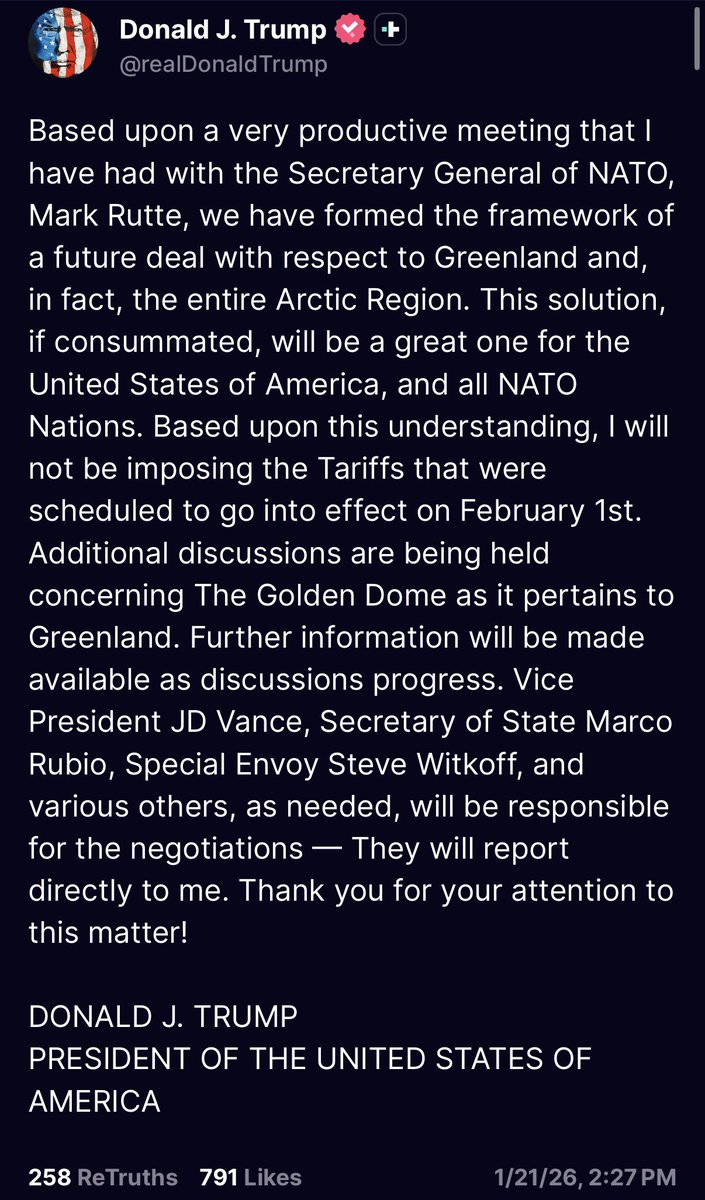
Greenland and the Arctic Framework: A New Era in Transatlantic Cooperation
In the wake of high-level talks between U.S. leadership and NATO counterparts, a framework for a future Arctic-related agreement has emerged, signaling a potential shift in how the alliance approaches strategic interests in Greenland and the broader Arctic region. The discussions underscore the importance of coordinated security, economic development, and environmental stewardship in a region experiencing rapid climate-driven changes and evolving geopolitical dynamics.
Historical context: Arctic strategy and NATO’s evolving role
- The Arctic has long been a stage for external powers to project influence, from historical naval routes to resource exploration. NATO’s role in the region has traditionally balanced deterrence with crisis management, focusing on maintaining open sea lanes, freedom of navigation, and alliance credibility in northern Europe. This frame has grown more complex as ice retreat opens new shipping corridors and potential energy developments, prompting allied planners to reassess defense postures and cooperative mechanisms in the Arctic.
- Greenland’s strategic position—home to major military installations and key communications infrastructure—has consistently made it a focal point for security considerations among alliance members. The region’s dual importance for defense and research, coupled with its variable weather and vast sea routes, has driven years of dialogue about governance, sovereignty, and international cooperation. As Arctic dynamics shift, historic arrangements are being revisited to incorporate new realities while preserving stability and predictability in complex, multi-stakeholder environments.
Economic impacts: potential pathways and regional effects
- Any framework that shapes Greenland's role in Arctic development is likely to influence investments in infrastructure, energy, and logistics. The Arctic’s untapped resources—alongside new sea lanes—can attract public-private partnerships, technology transfer, and job creation across allied economies. This creates a multi-layered economic tapestry where regional communities could gain in throughput, capacity-building, and diversification beyond traditional sectors. At the same time, large-scale development in Arctic environments necessitates stringent environmental safeguards and resilient supply chains to mitigate risks associated with climate volatility and remote operating conditions.
- For neighboring economies in North America and Northern Europe, a coherent Arctic framework could affect trade patterns, shipping costs, and strategic stockpiling considerations. Improved coordination on weather routing, search-and-rescue capabilities, and maritime security can reduce operational friction for commercial vessels transiting northern waters. The collaboration also has implications for research institutions, universities, and regional ecosystems that rely on stable governance structures to plan long-term initiatives in climate science, fisheries management, and sustainable tourism.
Regional comparisons: Arctic governance in context
- When contrasted with other Arctic stakeholders, the evolving framework presents a distinctive blend of alliance-wide security imperatives and sovereign rights considerations. Nations with Arctic coastlines have pursued varying models of governance—ranging from bilateral arrangements to multilateral forums that integrate scientific collaboration with defense coordination. A formal framework within the NATO umbrella could promote standardized practices in areas such as incident response, infrastructure protection, and cross-border data sharing, aligning member states while accommodating Greenland’s unique status within Danish sovereignty. This balance of collective security and national prerogatives is central to understanding how the Arctic becomes an arena for cooperative resilience rather than unilateral advantage.
- The Nordic and Baltic regions, often at the forefront of Arctic policy experimentation, provide practical reference points for implementing any Arctic framework. Shared experiences in cross-border energy projects, disaster preparedness, and environmental monitoring offer a blueprint for scalable, regional approaches that complement broader alliance objectives. In these contexts, the Arctic framework could serve as a catalyst for harmonized regulatory standards, investment pipelines, and collaborative peace-time governance that reduces uncertainty for investors and communities alike.
Key components likely to shape negotiations
- Security and deterrence: A comprehensive Arctic framework would likely address freedom of navigation, surveillance, and emergency response protocols, ensuring that military activities remain predictable and within international law. The goal is to deter aggression while maintaining open channels for diplomatic communication and crisis de-escalation, particularly in times of weather-related disruptions or rapid geopolitical shifts in the region. Such components help sustain alliance credibility and reassure regional partners about continued commitment to collective defense.
- Economic development and infrastructure: The framework is expected to outline mutually beneficial projects in transport corridors, port facilities, and energy infrastructure that can withstand harsh Arctic conditions. Clear guidelines on procurement, environmental safeguards, and local employment would support sustainable growth, ensure benefit-sharing with Arctic communities, and reduce potential conflicts over resource access or land use.
- Environmental stewardship and research: Given the sensitivity of Arctic ecosystems, any agreement would almost certainly incorporate robust environmental protections and cooperative research initiatives. This could include joint weather modeling, climate monitoring, and conservation measures that balance economic activity with the preservation of vulnerable habitats and indigenous livelihoods. Emphasizing science-driven decision-making helps maintain legitimacy and public support across partner nations.
Public sentiment and regional public reaction
- In Arctic communities and among regional stakeholders, the prospect of a formal framework typically generates cautious optimism. Residents and local leaders often seek clear assurances that development will be accompanied by meaningful consultation, fair employment opportunities, and durable environmental safeguards. Positive public perception hinges on transparent timelines, predictable policy environments, and visible benefits such as improved infrastructure, education, and health services that arise from increased regional investment.
- Broader international audiences may view a NATO-led Arctic framework as a signal of continued U.S.-led engagement in Northern affairs. The discourse around Greenland and Arctic governance resonates beyond regional borders, touching on global questions about how to manage climate-related shifts, geopolitical rivalry, and the balance between resource extraction and ecological preservation. The success of any agreement will depend on trust-building measures, predictable implementation, and mechanisms to adapt to changing scientific and strategic realities.
Potential regional implications and considerations
- Navigation and commerce: A harmonized Arctic framework could facilitate more predictable shipping patterns, reduce insurance costs, and lower the risk of environmental incidents by standardizing best practices for vessel operations in icy waters. This would be particularly relevant for the northern sea routes that gain prominence as ice melt accelerates, potentially shortening travel times between Atlantic and Pacific markets and influencing regional logistics networks.
- Indigenous rights and local communities: Any Arctic framework must weigh the interests and rights of indigenous populations, whose cultural and economic well-being are tightly linked to Arctic health. Inclusive governance that ensures consent, benefit-sharing, and capacity-building can strengthen community resilience while enabling responsible development. The integration of traditional knowledge with modern planning processes can enrich decision-making across sectors.
- Climate resilience and energy transition: The Arctic is at the forefront of climate resilience challenges, including permafrost dynamics, infrastructure adaptation, and resilience planning for extreme weather. Coupled with energy transition imperatives, the framework may encourage investments in cleaner energy projects, grid modernization, and risk mitigation strategies that align regional growth with global climate objectives. This alignment supports long-term stability and investment confidence across Arctic economies.
Conclusion: shaping the Arctic future together
- The emergence of a NATO-centered Arctic framework marks a pivotal moment in regional cooperation, offering a structured path to align security guarantees with economic opportunity and environmental stewardship. By addressing governance, infrastructure, and sustainable development in tandem with defense considerations, the framework can help stabilize a region undergoing rapid physical and geopolitical transformation. The success of negotiations will rely on inclusive engagement with Arctic communities, transparent governance processes, and adaptive mechanisms that respond to evolving science and global political dynamics.