Trump Administration Forges Sweeping Reductions in U.S. Science Funding: Implications for Research, Economy, and Regional Innovation
Washington, DC — A broad package of federal下 funding realignments announced by the administration signals a profound shift in U.S. scientific research policy. The plan, characterized by substantial cuts and program reorganizations, targets a wide array of agencies that support basic science, applied research, and technology development. The announcement has sparked immediate attention from universities, national laboratories, industry partners, and regional innovation ecosystems that rely on federal support to sustain long-term research programs and workforce pipelines.
Historical context: a trajectory of federal science investment To understand the present policy shift, it helps to recall the long arc of U.S. government support for science. Since the mid-20th century, federal funding has served as a cornerstone for basic research, seed funding for high-risk projects, and national investments in strategic capabilities. Programs spanning life sciences, physics, environmental science, and engineering provided the foundational knowledge that later translated into industrial leadership, medical breakthroughs, and competitive job creation. Over decades, fluctuations in funding often traced the political and fiscal climate, yet many researchers adapted by forming cross-institutional collaborations, diversifying funding sources, and aligning projects with national priorities such as health security, climate resilience, and technological sovereignty. The current policy direction appears to reweight those priorities, emphasizing budget discipline while recalibrating which research domains receive sustained financial support.
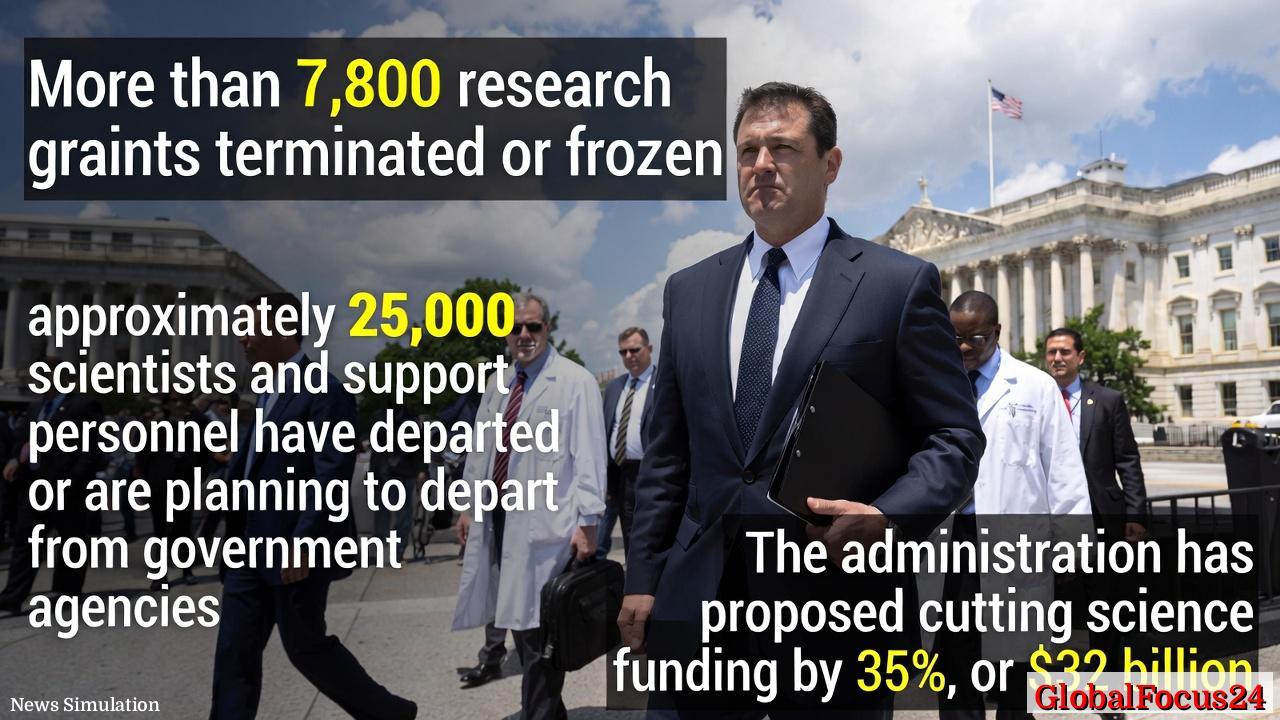
Scope of the funding reductions Officials disclosed a plan that would terminate or temporarily pause thousands of research grants across multiple federal agencies. Reported figures indicate a sizable workforce impact, with a significant portion of scientists, postdocs, and support staff departing from government laboratories and related institutions. The reductions extend beyond a single department and touch programs from basic science through applied research, with a broad aim of aligning federal expenditures with a revised fiscal framework. In practical terms, researchers face grant terminations, pauses on new funding cycles, and the reallocation of resources toward prioritized initiatives.
Economic impact on research ecosystems The implications for the research economy are multifaceted and ripple through universities, private contractors, and regional innovation hubs. Institutions that rely on federal grants for core operations and graduate programs may confront budgeting challenges, necessitating program realignment or strategic partnerships with industry and philanthropy. Immediate effects include personnel adjustments, shifts in ongoing project timelines, and potential postponement of milestone-driven activities such as infrastructure upgrades, large-scale experiments, and data-driven research collaborations.
Nevertheless, certain areas may experience adaptive opportunities. By concentrating resources on a narrowed set of high-impact priorities, agencies might accelerate translational research in targeted sectors, foster collaboration with private sector partners, and stimulate private investment to fill gaps created by reduced public funding. Regions with established ecosystems—home to major universities, national labs, and a dense network of startups—could recalibrate research portfolios to emphasize mission-driven outcomes, workforce retraining, and regional competitiveness.
Regional comparisons: where the effects may be felt most acutely
- Coastal research corridors with strong university-lab ecosystems often depend on steady federal support for long-running programs in climate science, oceanography, and biomedical research. Reductions could affect multi-institution collaborations that rely on synchronized funding cycles and data-sharing infrastructures.
- Midwestern innovation hubs with manufacturing and agricultural science strengths may experience shifting emphasis toward applied engineering, energy efficiency, and agri-tech platforms. The move could influence university-industry partnerships and the pace of tech transfer activities.
- West Coast institutes tied to semiconductor research, quantum technologies, and life sciences may see a recalibration of grant portfolios, potentially altering the cadence of capital-intensive projects and the ability to attract top-tier talent from nearby private-sector opportunities.
- Southern research networks that anchor STEM education and federal laboratories may respond with targeted proposals that align with regional needs in health, resilience, and infrastructure modernization, seeking to preserve critical capabilities through alternative funding streams.
Implications for talent and workforce dynamics A reduction in federal support often translates into adjustments in research staffing. Graduate students, postdoctoral researchers, and technicians may experience shifts in funding stability, prompting career planning decisions and, in some cases, relocation to institutions with more favorable funding environments. Universities and research centers may respond by expanding industry partnerships, increasing emphasis on programs with clear near-term applicability, or diversifying revenue streams through philanthropy and international collaborations. The broader talent pipeline—spanning high-school outreach, undergraduate research experiences, and graduate training—could be affected as institutions recalibrate outreach and enrollment strategies to align with changing funding realities.
Policy nuances and institutional responses In the wake of major funding changes, academic institutions, private research organizations, and state governments are likely to adopt several strategic responses:
- Strengthening industry collaborations: Universities may accelerate joint research centers, contract research, and sponsored projects with private firms to provide continuity for researchers and to leverage private capital.
- Pursuing alternative funding: Institutions could expand participation in philanthropic programs, foundations’ specialized grants, and international partnerships to sustain exploratory research areas impacted by federal reductions.
- Focusing on translational impact: With a leaner federal portfolio, universities might prioritize translational research that demonstrably accelerates product development, regulatory approval pathways, or public-health outcomes.
- Investing in internal capacity: Some institutions could bolster internal research foundations, endowments, or campus-based incubators to buffer the uncertainty of external funding cycles.
A historical lens on funding volatility and resilience Historically, periods of decreased federal support have coincided with intensified private-sector engagement and rapid shifts in research focus. During times of constraint, researchers often pivot toward domains with clear external demand, such as healthcare innovations, sustainable energy technologies, and national-security-relevant capabilities. This adaptive behavior has contributed to the dynamism of the U.S. innovation system, even as it created short-term challenges for labs and departments reliant on stable funding streams. The resilience of research ecosystems often emerges from diversified funding portfolios, robust collaboration networks, and proactive leadership at universities and national laboratories.
Broader regional and national ramifications Beyond academia, the funding shifts carry implications for regional economic development, technology commercialization, and domestic competitiveness. National laboratories, which house specialized facilities and equipment, may face schedule delays or limited access to instruments essential for cutting-edge experiments. Startups and mature tech firms that depend on tech transfer pipelines may need to recalibrate project timelines, while venture capital groups could recalibrate funding priorities in response to shifts in research output and potential market viability.
Public perception and the role of scientific literacy Public understanding of science and its value remains a critical component of sustaining robust research ecosystems. Transparent communication about the goals, scope, and outcomes of federal investments helps communities appreciate the benefits of basic research and long-term scientific planning. Public reaction to funding changes often centers on concerns about job security for researchers, potential delays in breakthroughs, and the broader implications for national competitiveness. Clear, accessible reporting about the rationale behind policy decisions can mitigate uncertainty and sustain a shared sense of purpose across stakeholders.
The path forward: balancing fiscal responsibility with scientific leadership The administration’s approach to science funding reflects a broader prioritization of fiscal discipline while seeking to preserve essential capabilities. Achieving a sustainable balance will likely require ongoing dialogue among policymakers, researchers, industry leaders, and the public. Possible pathways to maintain momentum in critical research areas include targeted, outcome-focused investments; strengthened public-private partnerships; and investment in science education to cultivate the next generation of researchers who can contribute to innovation and economic growth.
Conclusion: navigating a changing funding landscape As federal science funding enters a transformative phase, the research community faces a period of adjustment marked by uncertainty but also potential for strategic realignment. The ability of universities, national laboratories, and private partners to adapt will shape the trajectory of scientific discovery, technological advancement, and regional prosperity in the years ahead. By preserving core capabilities, fostering collaboration, and investing in talent development, the United States can strive to sustain a robust scientific enterprise that supports both foundational knowledge and practical innovations, even amid fiscal contractions.