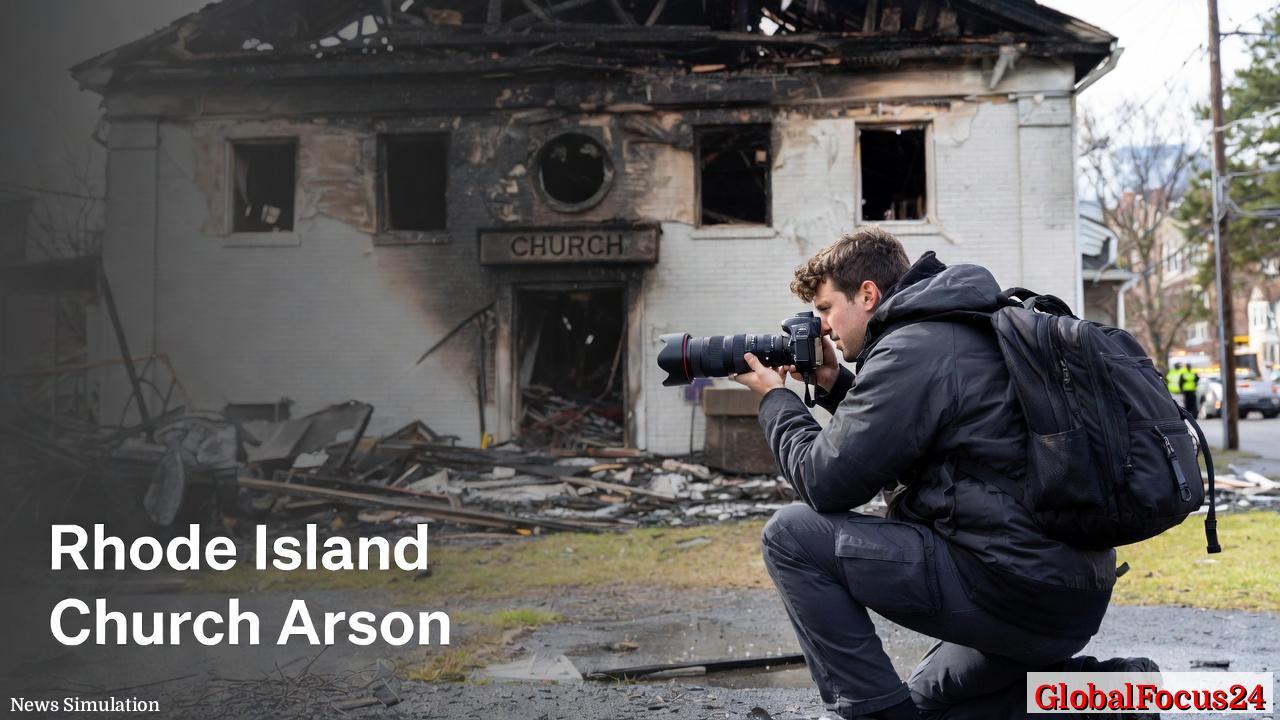
Rhode Island Arson Conviction Fuels Regional Dialogue on Security, Emergency Response, and Community Resilience
In a case that threads together crime, family dynamics, and the broader implications for public safety, a 37-year-old man with documented racial hostility was sentenced last year for a series of arson attacks targeting a predominantly Black church. The incidents, which occurred in the year prior to a separate violent assault carried out by his father, have reverberated through local communities, emergency-response planning, and discussions about preventive interventions. While the courtroom narrative centers on accountability for arson, the ripple effects extend far beyond the courtroom, prompting a closer look at historical patterns of church vandalism, the economics of crime prevention, and regional comparisons that illuminate why some communities invest more heavily in early intervention and rapid response.
Historical context: a pattern of crime against places of worship Attacks on religious institutions have, across decades, reinforced systemic concerns about safety for congregations and the symbolism of worship spaces as public anchors. In many regions, arson and other forms of property crime against churches have been concentrated in areas with shifting demographics, high vacancy rates in commercial corridors, or histories of social discord. Experts note that the symbolism of churches as community centers makes them particularly visible targets in some episodes, causing outsized fear relative to the scale of physical damage. The Rhode Island case fits into a broader historical arc where contrarian acts of violence against faith spaces prompt renewed focus on crime-prevention strategies, community policing, and collaboration between faith leaders and public agencies.
Economic impact: costs of arson and prevention investments Arson against a church does not solely affect the immediate congregation; it triggers a cascade of economic effects that ripple through local economies and municipal budgets. Rebuilding costs, insurance adjustments, and security upgrades represent direct expenditures for institutions. Indirect costs include lost community services during reconstruction, declines in foot traffic around affected neighborhoods, and increased demand for emergency-response resources in the aftermath of an incident. In regions with a high concentration of religious institutions, municipalities often weigh the cost-benefit of enhanced lighting, surveillance, and security staff, especially in areas with a history of church-related crimes. These investments, though sizable, can yield long-term savings by reducing the probability of future incidents and by reinforcing public confidence in local safety infrastructure.
Regional comparisons: how different Northeast communities respond Compared with neighboring states, Rhode Island’s approach to church-related crime responses features a blend of tight-knit civic networks and a willingness to deploy coordinated multi-agency investigations. In nearby coastal and inland communities, the interplay between municipal budgets, nonprofit funding, and philanthropic support shapes the degree of security enhancements seen in houses of worship and community centers. Some regions have adopted standardized risk assessments for religious properties, incorporating factors such as building age, occupancy patterns, and proximity to vulnerable populations. These models help local authorities allocate resources efficiently, prioritizing preventative measures in congregations that serve as hubs for social services, youth programs, or cultural events. The Rhode Island case highlights the importance of integrating fire-safety compliance, arson-detection technologies, and community outreach to mitigate risk while preserving the inclusive character of religious spaces.
The incident timeline: from arson to courtroom to community recovery Detailing the sequence of events offers a window into how such cases unfold and what communities can learn from them. In the year before the deadly hockey rampage linked to the shooter’s family, authorities investigated a string of arson incidents at a predominantly Black church. Investigators linked these acts to an individual with documented racist beliefs, a disability to resist impulse control challenges, and a trajectory that intersected with broader social tensions in the region. The arson offenses resulted in multiple charges, culminating in sentencing that reflects both punitive and rehabilitative aims. Community leaders described a mood of collective resolve: to repair physical damage, restore spiritual life, and strengthen the safety net around vulnerable congregations. The testimony presented at trial underscored the need for robust fire-safety protocols, rapid alert systems, and ongoing support for families affected by violent crime.
Public safety and emergency response implications The case underscores the imperative for comprehensive risk management across the public-safety spectrum. Fire departments, law-enforcement agencies, and emergency medical services must coordinate to detect early signs of incendiary risk, respond quickly to incidents, and support affected communities in the aftermath. Modern practice increasingly relies on integrated incident management, cross-jurisdictional data sharing, and proactive outreach to at-risk individuals. For religious organizations, practical steps include conducting regular fire drills, ensuring functional fire suppression systems, and establishing trusted points of contact with local authorities. Community watchdog programs, neighborhood watch partnerships, and targeted security assessments complement official efforts, creating a layered defense that can deter arson and lessen disruption when incidents do occur.
Legal outcomes and implications for treatment and prevention The arson convictions reflect the judicial system’s emphasis on accountability for property crimes, while also highlighting opportunities for preventative interventions. Sentencing in these cases often considers the offender’s history, intent, and potential for rehabilitation, as well as the ongoing risk to public safety. Courts increasingly emphasize restorative justice elements and treatment programs for underlying issues such as substance abuse, mental health challenges, and extremist ideologies. For communities, the legal resolution can be a catalyst for funding pilot programs that broaden access to counseling, youth outreach, and community-education initiatives designed to reduce the likelihood of recidivism.
Community reaction: resilience, advocacy, and the path forward Public sentiment in the wake of such incidents typically expresses a mix of sorrow, resolve, and vigilance. Congregations and local organizations often mobilize to reinforce bonds, provide support for families impacted by violence, and advocate for policies that bolster safety without compromising open, welcoming spaces. Public reaction can also spur philanthropic engagement, with donors funding security upgrades, youth programs, and infrastructure improvements that bolster long-term resilience. In Rhode Island and similar markets, local media narratives early in the aftermath emphasized solidarity, while investigators and public-safety officials clarified what occurred, how it was addressed, and what remains to be done to protect communities.
Policy considerations: balancing security with openness Policy discussions that emerge from cases like this tend to center on achieving an optimal balance between security measures and the inclusive, welcoming nature of places of worship and community gathering spaces. Policymakers consider the trade-offs of heightened surveillance, access controls, and partner programs against the need to preserve civil liberties and maintain an open environment for worship, service, and civic life. Funding mechanisms for safety upgrades often involve a combination of municipal allocations, state grants, and private philanthropy. Programs focused on prevention—education, outreach, and early intervention—play a crucial role in reducing risk factors associated with domestic violence, hate crimes, and gun-violence contagion. By integrating these elements, communities can craft a proactive safety framework that supports both physical protection and social cohesion.
Regional lessons for municipalities and faith-based organizations Key takeaways for cities and religious communities include the value of proactive risk assessments, community partnerships, and scalable security investments. Regular liaison meetings between church leaders, law enforcement, and fire officials help align prevention efforts with real-world needs. Training for congregants on emergency procedures, along with clear communication channels to alert neighbors and authorities during crises, strengthens collective response capabilities. Investment in fire-safety equipment, lighting, and surveillance—paired with transparent reporting and accountability—can deter misconduct and speed recovery when incidents occur. By prioritizing prevention and community resilience, regions can reduce the likelihood of repeat offenses and minimize damage when tragic events unfold.
Conclusion: advancing safety with careful stewardship The arson convictions tied to a racially charged crime against a Black church—and the parallel violence in the same familial line—illustrate the multifaceted challenges communities face when crime intersects faith, family history, and public safety. While accountability for arson is essential, the broader arc points to the critical role of prevention, rapid response, and resilience-building in safeguarding vulnerable spaces. By combining historical awareness with practical investments in emergency readiness, faith-community engagement, and cross-sector collaboration, the region can strengthen its safety infrastructure and inspire similar efforts in nearby communities. The focus remains clear: protect congregations, support affected households, and cultivate a public sphere where openness and security go hand in hand.