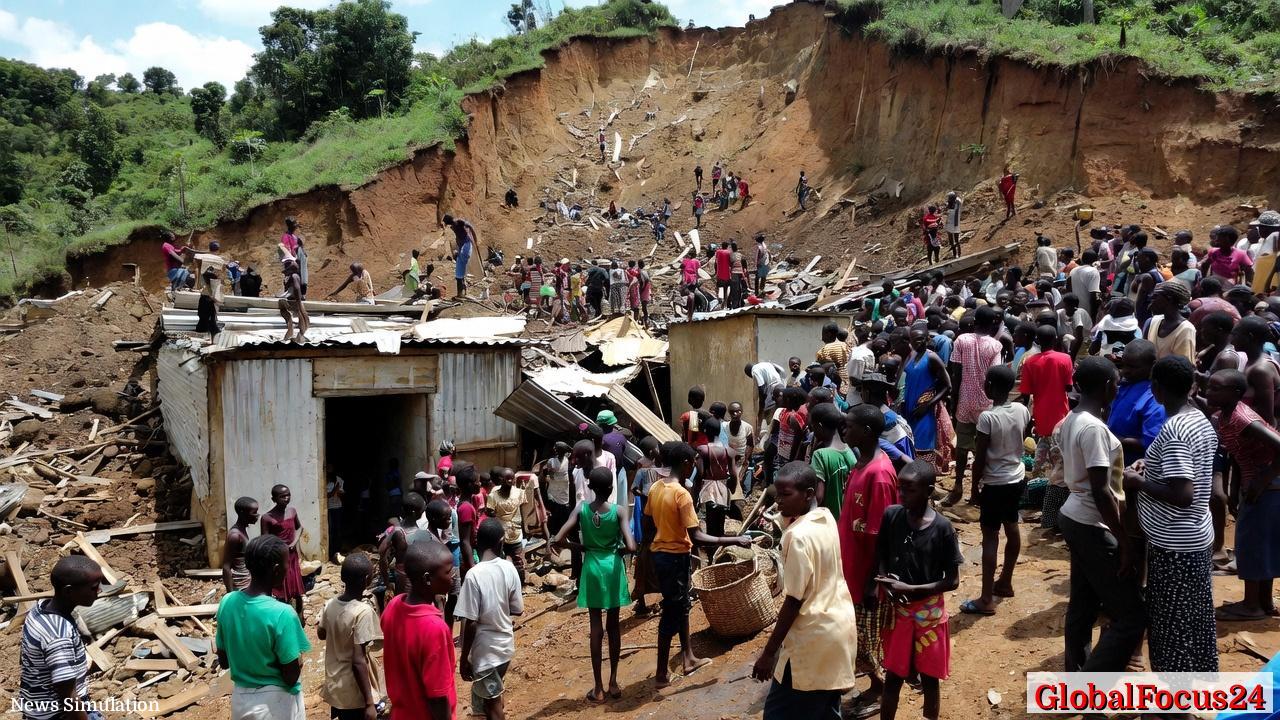
Eastern DR Congo mine collapse leaves more than 200 dead; regional response and economic implications unfold
A catastrophic mine collapse in the eastern Democratic Republic of Congo has claimed more than 200 lives, highlighting the perilous conditions surrounding artisanal mining and the broader global demand for strategic minerals. The disaster occurred in Rubaya, a mining town in North Kivu province, where heavy rains and unstable ground combined to bring an underground network of shallow pits crashing down. As investigators and aid agencies mobilize, the incident casts a harsh light on the risks faced by artisanal miners, the social and economic dynamics of the region, and the global supply chains that rely on coltan and its refined form, tantalum.
Historical context: artisanal mining and the Congo’s mineral map The eastern DRC has long been a focal point for mineral extraction, dating back to the colonial era and intensifying in the post-independence period. Coltan, a mineral ore containing tantalum and niobium, has been mined in informal and formal settings across the region for decades. Tantalum extracted from coltan plays a critical role in electronic components, including high-performance capacitors used in smartphones, laptops, and other devices. The Congo’s ore-rich soils sit at a crossroads of global supply chains, drawing interest from international buyers, smelters, and manufacturers while often operating outside formal regulatory frameworks. In Rubaya, the mine complex reportedly contains a significant share of the region’s coltan deposits, contributing to both local livelihoods and international semiconductor supply chains.
The shock of recent events has underscored a broader pattern: illegal or poorly regulated mining practices, limited safety oversight, and labor-intensive extraction methods characterize many sites in rural eastern Congo. Historically, periods of heavy rainfall, seasonal floods, and seismic-like soil shifts have intermittently intensified risk in artisanal mines, where manual digging and improvised support structures predominate. The current disaster is a somber reminder of the persistent vulnerability of miners, particularly women and children who participate in extraction to supplement household income in a region where formal employment opportunities are scarce.
Economic impact: regional livelihoods, global demand, and supply chain resilience The Rubaya incident reverberates through multiple layers of economic activity. Locally, artisanal mining serves as a key source of income for thousands of families, often providing the only viable means to secure food, housing, and education in a region with limited formal employment options. The collapse disrupts informal economies, trades, and daily subsistence activities, while stressing families already grappling with poverty and displacement associated with regional conflicts and instability.
Globally, coltan and tantalum remain essential inputs for electronic manufacturing, particularly in capacitors that stabilize power delivery in a wide range of devices. The Congo hosts a substantial portion of the world’s tantalum reserves, and Rubaya’s mines contribute to this critical supply chain. When disasters like the Rubaya collapse occur, they highlight the fragility of supply chains that rely on both informal and formal mining networks. While the immediate consequence is tragic loss of life, the longer-term economic impact includes potential shifts in mining activity, pricing pressures on tantalum, and renewed calls for safety reforms, improved oversight, and diversification of supply sources.
Regulatory and safety considerations: the tension between livelihoods and risk Authorities in the region have attributed the disaster to illegal mining practices that disregard safety standards. The government’s decision to ban mining operations in certain areas last year reflects an attempt to curb unsafe practices and environmental damage, though enforcement challenges persist. In many parts of eastern Congo, illegal mining persists alongside regulated activity, creating a patchwork of compliance that complicates rescue operations and post-disaster investigations. The incident underscores the urgent need for practical safety interventions that can protect workers without wiping out livelihoods overnight.
Historical parallels and regional comparisons Disasters of this type are not unique to Congo. In other mining regions around the world, urgent questions arise about the balance between poverty reduction through resource extraction and the human costs of unsafe work environments. Comparisons with other artisanal mining hubs reveal similar patterns: limited access to formal training, lack of protective equipment, and the use of improvised mining pits that can destabilize quickly under heavy rainfall or seismic activity. Regional responses in neighboring countries often focus on community-based safety training, better pit stabilization techniques, and formalization efforts to bring informal miners into regulated frameworks with safety nets and basic worker protections.
Rescue efforts, survivors, and community impact Reports indicate that around 20 survivors were receiving treatment in local hospitals as rescue teams combed the site for additional victims. The emotional toll on families and communities in Rubaya is profound. Relatives describe victims as devoted workers and providers, whose loss reverberates beyond individual households to entire villages that rely on mining to sustain daily life. Local authorities, including regional officials and social services, have mobilized to provide emergency aid, counseling, and temporary shelter for affected families. The regional governor’s presence at the site and in survivor briefings signals a coordinated government response, though the scale of the tragedy will require sustained support from national agencies and international partners.
Environmental and societal dimensions The environmental footprint of artisanal mining often includes soil destabilization, water contamination, and landscape alteration. In Rubaya, the fragile soil and the extensive network of pits across a broad area heighten the risk of collapse during heavy rains. Cleanup and rehabilitation of mined lands pose long-term challenges, including soil restoration, monitoring of groundwater quality, and reforestation where deforestation occurred to access ore. Socially, the disaster amplifies ongoing concerns about child labor and gender dynamics in mining communities. Women frequently participate in ore processing and transport, while men are typically involved in digging and extraction activities. The event thus raises questions about child protection, access to education, and gender-specific risks tied to artisanal mining.
Future outlook: safety reforms, investment, and community resilience Looking ahead, a multi-faceted approach can help reduce risk and support resilience in the region:
- Safety-focused formalization: Creating pathways for artisanal miners to operate within regulated structures that enforce safety standards, provide training, and supply protective equipment without erasing livelihoods.
- Pit stabilization and infrastructure: Implementing engineered pit designs, slope stabilization, weather monitoring, and rapid response protocols for heavy rainfall events that can destabilize mines.
- Environmental safeguards: Establishing environmental impact assessments and remediation plans to prevent long-term ecological damage and protect local water resources.
- Community support and education: Expanding access to education and alternative income opportunities to reduce economic dependence on high-risk mining activities, particularly for youth and women.
- International collaboration: Coordinating with global supply chain stakeholders to ensure responsible sourcing, traceability, and investments in local capacity building that align with safety and human rights standards.
The economic ripple effect across supply chains Producers of electronics and manufacturers seeking tantalum-based capacitors may monitor the situation for shifts in supply risk and price dynamics. If regional mining activity faces constraints due to heightened safety concerns or regulatory crackdowns, buyers could experience tighter supply conditions or seek alternative sources and proven suppliers. This could influence market prices for tantalum and coltan, potentially supporting higher prices in the near term while accelerating efforts to diversify supply sources and improve traceability. While the Rubaya collapse adds to the narrative of risk in artisanal mining regions, it also reinforces the imperative for responsible mining practices that protect workers and communities while maintaining essential mineral supply.
Regional comparisons: learning from neighboring contexts Nearby regions with similar mining profiles have pursued different strategies to balance economic needs with safety and regulation. In some countries, formalization programs that integrate artisanal miners into licensed cooperatives have yielded improved safety records, access to finance, and better health outcomes. Others have emphasized stronger enforcement of safety standards and environmental protections, though enforcement capacity remains a limiting factor. The message across these comparisons is clear: enduring progress depends on credible, well-supported governance that coordinates safety, livelihoods, and long-term economic development.
Human stories and the human face of the tragedy Beyond statistics, the incident is about families, communities, and aspirations cut short by a single collapse. A relative of one victim described him as a courageous and ambitious man who aspired to support a wife and two children. Such narratives underscore the personal stakes at play and the urgency of delivering both immediate relief and longer-term resilience. Public sentiment in Rubaya and surrounding towns reflects both grief and a call for reforms that prevent future tragedies without erasing the economic contributions of mining to local households.
Conclusion: a turning point for policy, safety, and global supply chains The Rubaya mine collapse stands as a stark reminder of the fragile balance between economic necessity and safety in artisanal mining regions. As investigators continue to determine the precise causes and circumstances, the broader implications for regional development, international supply chains, and humanitarian response become increasingly evident. The incident should catalyze sustained investment in safety education, formalization of artisanal mining activities, and robust emergency response mechanisms that can save lives in the future. For the people of eastern Congo, the challenge now is turning tragedy into lasting change—protecting workers, stabilizing communities, and ensuring that the minerals fueling global technology are extracted in a way that respects human life and dignity.