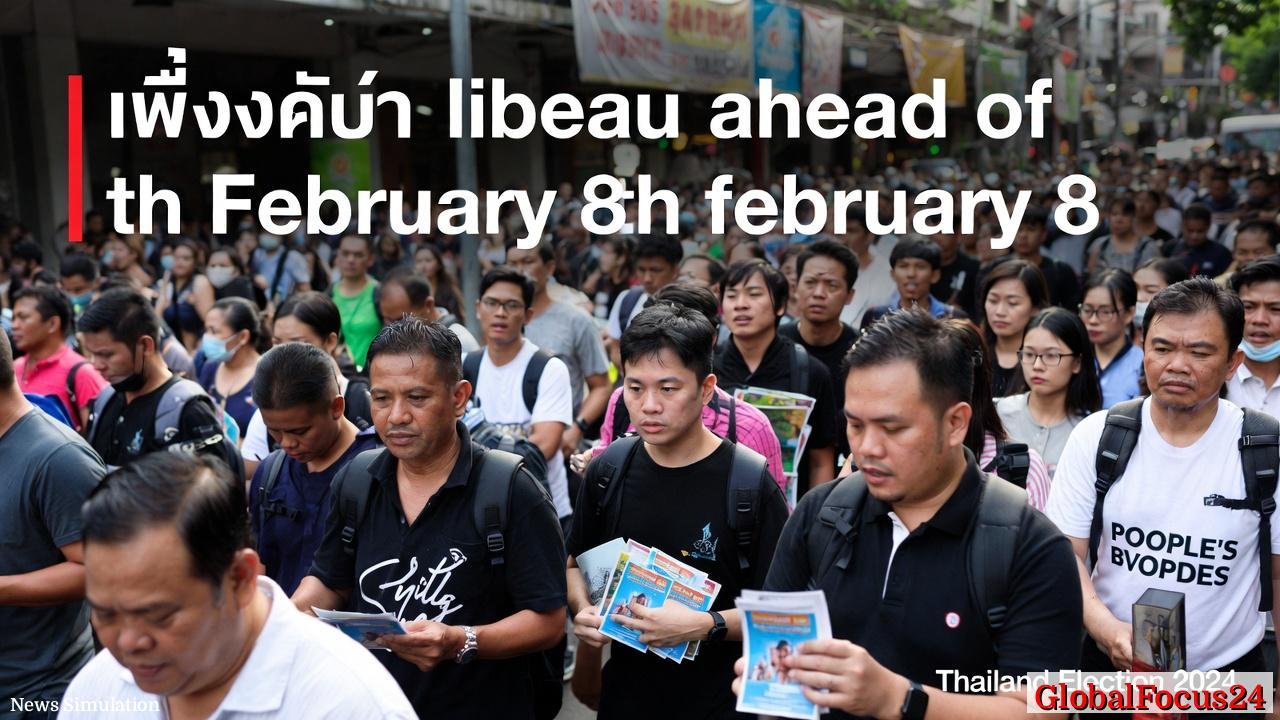
Thailand’s Liberal Momentum Faces Test Ahead of February Elections
Thailand’s liberal and progressive movement is navigating a delicate moment as the country prepares for a pivotal national election on February 8. While polls show a slump in support for the People’s Party, analysts caution that such surveys capture only a snapshot of a rapidly evolving political landscape. Historical patterns, voter mobilization, and regional dynamics will all play critical roles in shaping the final results.
Historical Context: A Century of Shifting Alignments
Thailand’s political scene has long been characterized by movements that push for reform and modernization, often in tension with entrenched establishment interests. From the early 20th century constitutional era to the vibrant reform-era debates of the 1990s and 2000s, successive waves of liberal energy have sought to redefine the balance between royal institutions, the military, business elites, and civil society.
The rise of parties labeled as liberal or reformist in recent years reflects a broader fatigue with status-quo governance and a demand for greater transparency, citizen participation, and economic modernization. Yet this energy has consistently contended with the structural realities of Thai politics: coalition-building that requires cross-regional appeal, the influence of local power brokers, and the sequencing of policy reform with social stability considerations. The current moment sits squarely within that ongoing struggle between reformist momentum and the institutional guardrails that shape political possibility.
Economic Context: Growth, Inequality, and Policy Ambitions
Thailand’s economy has experienced uneven growth, marked by strong manufacturing and export performance alongside persistent regional disparities. Urban centers have benefited from investment in digital infrastructure, services, and education, while rural areas have often faced slower progress. In this milieu, liberal platforms have emphasized policies aimed at boosting innovation, diversifying the economy, and expanding social safety nets. Proposals frequently focus on elevating competitiveness through investment in digital transformation, climate resilience, and human capital development, paired with efforts to improve governance and reduce corruption.
The economic calculus for voters also centers on employment prospects, wage growth, and the cost of living. In an environment where global supply chains are adapting to new realities and regional trade dynamics shift, regional complementarities—such as those between Bangkok’s service sectors and the broader tourism economy, or the northern and northeastern regions’ manufacturing and agriculture—present both opportunities and risks for policy agendas. The People’s Party’s economic messaging has gravitated toward inclusive growth, pragmatic regulation, and a more prominent role for technology-driven productivity, aiming to translate liberal ideals into tangible gains for everyday Thai households.
Regional Comparisons: Liberal Movements Across Southeast Asia
Thailand’s reformist currents sit alongside a broader Southeast Asian trend toward greater political participation and accountability in several neighboring countries. While many markets still rely on established ruling coalitions, voters are increasingly attuned to governance quality, public services, and climate resilience. In neighboring economies with robust manufacturing bases and expanding digital sectors, liberal parties have emphasized transparency, anti-corruption measures, and modernization of public institutions as pathways to sustainable growth.
In contrast to some regional peers where liberal parties face bifurcating coalitions or populist challenges, Thailand’s landscape remains uniquely shaped by the interplay between constitutional monarchic traditions and democratic aspirations. The People’s Party’s ability to translate liberal ideals into policy proposals that resonate with diverse provincial audiences will be a key differentiator in a region where voters increasingly weigh governance quality alongside economic performance.
Political Dynamics: Coalition Calculus and Electoral Realities
The electoral contest in Thailand is not simply a referendum on ideology; it is a test of coalition-building, messaging, and ground-game execution. The People’s Party has positioned itself as a vehicle for Progressive and liberal reform, seeking to attract urban voters, young demographics, and professionals who are seeking changes to bureaucratic processes and governance standards. However, the party must contend with established forces that command local loyalties, financial networks, and organizational depth.
Polls, while indicative, have limitations. They reflect snapshots of intentions at a given moment and are highly sensitive to late-stage campaigning, turnout strategies, and how undecided voters are mobilized. Analysts emphasize that the trajectory of the race can shift quickly if the party can energize its core supporters, broaden its appeal to swing voters, and respond effectively to emerging issues such as cost of living pressures, education reform, and climate-related investment needs.
Public Sentiment and Social Dynamics: Momentum, Voice, and Engagement
Public reaction to the liberal movement’s messaging has been colored by a mix of optimism about modernization and concern about stability. Proponents argue that reformist governance can unlock productivity, reduce red tape, and improve accountability. Critics raise questions about the pace of change, the sequencing of reforms, and the potential short-term disruptions that can accompany rapid transitions. In regions outside major urban centers, where livelihoods depend on traditional sectors, political messaging that promises inclusive growth and tangible improvements to public services resonates, but must be delivered with credible policy plans and credible fiscal stewardship.
The People’s Party’s core challenge is to translate momentum into a durable electoral coalition. A successful mobilization strategy would combine issue-based campaigning—emphasizing digital economy, education, healthcare, and governance reforms—with a robust field operation capable of reaching rural voters, first-time voters, and undecided independents. As with many reform-oriented movements, sustaining energy after the initial surge is critical to converting enthusiasm into consistent turnout on Election Day.
Policy Frameworks: What a Liberal Platform Might Encompass
- Economic modernization: Prioritize investment in digital infrastructure, innovation ecosystems, and targeted incentives for high-growth sectors while safeguarding social safety nets.
- Governance and anti-corruption: Implement transparent procurement processes, strengthen merit-based civil service reforms, and enhance oversight mechanisms.
- Education and workforce development: Expand access to quality education, vocational training, and apprenticeships aligned with evolving market needs.
- Climate resilience and energy transition: Invest in resilient infrastructure, renewable energy, and climate adaptation programs to support both economic and environmental objectives.
- Social equity and inclusion: Promote policies that reduce inequality, expand healthcare access, and improve housing affordability.
These areas reflect a pragmatic liberals’ approach—focused on steady, data-driven change, with an emphasis on long-term competitiveness and social cohesion. The challenge lies in crafting policy packages that are financially sustainable and politically credible across a diverse federation of provinces and constituencies.
Campaign Landscape: Messaging, Media, and Grassroots Organizing
To overcome the current downturn in polling, the People’s Party would benefit from a messaging strategy that clarifies its distinctive value proposition without alienating potential cross-cutting voters. Clear, issue-focused communication that links policy proposals to everyday experiences—such as job prospects, educational opportunities, and reliable public services—can help bridge urban-rural divides.
Grassroots organizing remains a decisive factor in Thai elections. A disciplined ground effort—door-to-door outreach, town-hall style forums, and community partnerships—can mobilize undecided voters who are receptive to reform but cautious about rapid change. Coordinated digital and traditional media campaigns should reinforce consistent narratives about governance, accountability, and practical improvements in people’s lives.
Economic Signals: How Markets and Investors View the Road Ahead
Investors and markets closely watch political stability and the credibility of reform agendas. A credible liberal program that combines prudent fiscal management with targeted public investments can bolster confidence, particularly in sectors poised for digital transformation and climate-related resilience. Policy clarity on public investment priorities, risk management, and social protections will be scrutinized by credit markets, rating agencies, and foreign investors seeking predictability in a volatile regional environment.
Regional economies benefit when reformist proposals align with ongoing modernization efforts in logistics, tourism, agriculture, and manufacturing. A stable path toward improved governance, coupled with concrete reforms, can help Thailand sustain its role as a regional hub for trade, technology, and cultural exchange.
Conclusion: Navigating Uncertainty with Steady Principles
As Thailand moves toward a February election, the fate of the liberal and reformist movement will hinge on its ability to maintain momentum, expand its appeal beyond its core base, and demonstrate concrete, fiscally responsible policies. Polls may show a downturn in the near term, but historical cycles suggest that public sentiment can shift in response to campaign dynamics, policy clarity, and effective mobilization.
The regional context underscores the importance of credible governance, transparent institutions, and practical reforms capable of delivering tangible benefits to citizens. For the People’s Party and its supporters, the path forward involves refining policy platforms, energizing grassroots networks, and communicating a coherent vision for modernizing Thailand’s economy and public institutions while preserving social stability and national cohesion.
In the weeks ahead, observers will watch how the party translates reformist zeal into broad-based support, how undecided voters respond to tailored policy messaging, and how regional differences influence turnout. The outcome will not only determine who governs but also signal how Thailand navigates the balance between reform and continuity in a rapidly evolving Southeast Asian landscape.