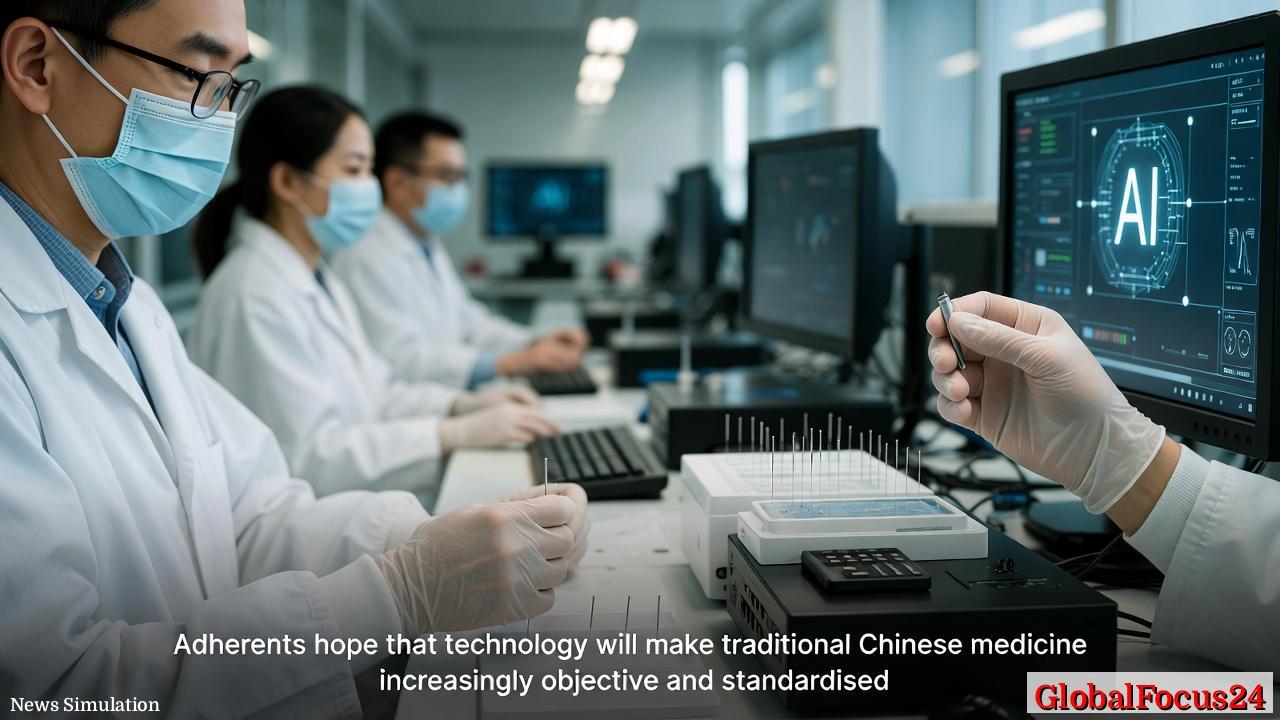
Technology and Tradition: The Push to Modernize Chinese Medicine Faces Need for Scientific Proof
For centuries, traditional Chinese medicine (TCM) has thrived on an intricate blend of observation, philosophy, and inherited wisdom. Now, in an era defined by artificial intelligence and data-driven healthcare, advocates hope technology will finally bring objectivity and reproducibility to practices such as acupuncture, herbal therapy, and pulse diagnosis. Yet underneath the optimism lies a central challenge: despite advancements in medical devices and analytical tools, the field’s progress toward scientific validation remains slow, constrained by a lack of rigorous clinical trials and standardized evidence.
The Roots of Traditional Chinese Medicine
Traditional Chinese medicine traces back more than 2,000 years to ancient dynasties, rooted in theories of balance between yin and yang and the vital energy known as qi. Practitioners rely on diagnostic methods such as tongue observation, pulse reading, and assessment of bodily imbalances. Treatments, whether acupuncture or herbal prescriptions, aim to restore harmony rather than target isolated symptoms. This philosophical foundation distinguishes TCM from Western biomedicine’s evidence-based model, which emphasizes measurable outcomes and randomized testing.
While these contrasting frameworks once coexisted without overlap, globalization and digital innovation have drawn them closer together. China’s government has invested heavily in integrating TCM with modern healthcare systems, promoting research centers, digitized pharmacopoeias, and AI-assisted diagnostic tools. The goal is ambitious: to give TCM a standardized, scientifically grounded basis that can expand its credibility both domestically and abroad.
Artificial Intelligence Meets Acupuncture
Among the most promising applications of technology in TCM is artificial intelligence. Machine learning models now analyze patient data, clinical notes, and imaging results to identify potential correlations between traditional diagnoses and biomedical metrics. In acupuncture, AI-assisted robots are being developed to deliver precise needle placements guided by anatomical mapping and sensor feedback. These tools can optimize consistency between practitioners, reducing the variation that often undermines the reliability of clinical results.
In major Chinese cities like Beijing and Shanghai, several hospitals have deployed AI-based platforms that recommend customized herbal formulas based on patient records, pulse characteristics captured by wearable sensors, and thermal imaging data. Proponents say such technologies not only enhance precision but also digitize diagnostic reasoning that was once reliant on personal intuition. However, without validated studies comparing these outcomes to conventional treatments, the transformation remains incomplete.
The Evidence Gap
The central difficulty facing TCM’s modernization lies not in technology but evidence. Large-scale, randomized controlled trials—the gold standard of medical research—are still rare in this field. Existing studies often suffer from small sample sizes, inconsistent methodologies, or lack of appropriate controls. As a result, claims about therapeutic efficacy remain contested in international journals and healthcare systems outside East Asia.
Take acupuncture, for instance. While some studies suggest it can alleviate pain, migraines, or nausea, meta-analyses frequently conclude that benefits beyond placebo are uncertain. The World Health Organization has recognized acupuncture for certain conditions, yet leading medical panels in the United States and Europe continue to call for more robust data. Without this scientific validation, even the most advanced technological tools risk enhancing procedural accuracy without addressing whether the treatments themselves deliver measurable, replicable benefits.
Economic Stakes and Global Market Demand
The economic implications of modernizing TCM are substantial. China’s domestic TCM market is valued in the hundreds of billions of yuan, with global exports of herbal products and patented remedies continuing to rise across Asia, Europe, and North America. Digitization presents an opportunity to strengthen trade, ensure quality control, and combat the counterfeiting that plagues herbal supply chains.
Artificial intelligence could further streamline the production and distribution of medicinal herbs by monitoring soil conditions, optimizing yield, and tracking chemical composition. Blockchain-based systems are already being explored to certify the origin of materials and guarantee safety for international exports. However, global regulatory agencies—especially in the European Union and the United States—demand stricter evidence and transparency. Products marketed as “traditional remedies” often face barriers to entry when scientific substantiation is thin.
Lessons from Japan and South Korea
Other East Asian countries offer instructive examples. Japan’s Kampo medicine, derived from ancient Chinese practices, underwent systematic evaluation during the 20th century. Today, Kampo formulations are integrated into the national healthcare system, supported by standardized manufacturing and limited insurance coverage. Similarly, South Korea has invested heavily in merging traditional Korean medicine with advanced imaging and molecular analysis, building a body of clinical trials that lend greater legitimacy to its complementary care model.
By comparison, China’s TCM sector, though vast, remains more fragmented. Regional variations in herbal composition, diagnostic criteria, and clinical training complicate efforts to create unified standards. AI systems promise to harmonize these inconsistencies, but their effectiveness depends on the quality and credibility of underlying datasets. Without cross-institutional cooperation and transparent publication of results, technology risks digitizing divergence rather than resolving it.
The Role of Clinical Trials and Data Transparency
For TCM to achieve genuine standardization, the path forward is clear: large, meticulously designed studies that meet international research standards. Randomized controlled trials, double-blinded when possible, must replace anecdotal and observational evidence. Digital health records and wearable sensors can assist by collecting structured, longitudinal patient data. Cloud-based analytics could then compare outcomes across regions and treatment types, pinpointing correlations between TCM metrics and measurable physiological changes.
Some independent institutions are beginning to take this direction. Universities in Hong Kong, Singapore, and the United Kingdom are establishing joint research projects linking herbal pharmacology with molecular biology, while AI startups specialize in predictive modeling to identify active compounds in ancient recipes. The combination of tradition, big data, and biomedical science could yield breakthroughs—if the studies meet transparent and reproducible standards.
Cultural Persistence and Public Perception
Despite skepticism from parts of the scientific community, public confidence in TCM remains strong, particularly within China and among overseas Chinese populations. Many patients view TCM as holistic, less invasive, and better suited for chronic conditions where Western medicine often emphasizes symptom management. This cultural dimension complicates the debate. Calls for stricter evidence do not necessarily dampen demand; instead, they highlight a dual reality in which belief and biomedicine coexist.
Technology’s appeal lies partly in its ability to bridge that divide. AI-driven tools project an image of modernization, suggesting progress toward quantification and objectivity. In practice, though, technology may serve more as an interpretive aid than a transformative force—translating traditional frameworks into data, but not necessarily proving their therapeutic validity.
Balancing Innovation with Integrity
If technology is to reshape TCM, its role must go beyond digitizing existing practices. It must help establish verifiable mechanisms for evaluating efficacy. This means incorporating double-blind trial designs, placebo controls, cross-disciplinary peer review, and international data sharing. Only then can the sector move from claims of ancient wisdom to demonstrable scientific substance.
Moreover, the integration of AI and biotechnology should not overshadow the cultural and philosophical roots that give TCM its distinct identity. Innovation that respects heritage while demanding proof offers the most sustainable way forward. The history of medicine—Eastern or Western—shows that progress arises when tradition meets evidence, not when one overwhelms the other.
The Unfinished Journey Toward Scientific Validation
The modernization of Chinese medicine stands at a crossroads. Artificial intelligence, digital diagnostics, and smart manufacturing hold immense promise for improving consistency and precision. Yet the question that has shadowed the field for centuries remains unresolved: does the evidence support the efficacy claimed by its practitioners? Without transparent, large-scale clinical research, technological advancement risks creating a sophisticated facade over fundamentally untested principles.
The future of traditional Chinese medicine in a data-driven age will therefore depend not on algorithms alone, but on how faithfully practitioners, scientists, and policymakers commit to objective inquiry. Standardization cannot emerge from software or sensors—it must grow from verified understanding. Only through rigorous testing can a practice built on centuries of tradition evolve into one validated by science, achieving both modern recognition and enduring credibility.