Tanzania Faces Turmoil After Historic Election Sparks Unprecedented Protests
A Nation in Turmoil After October’s Election
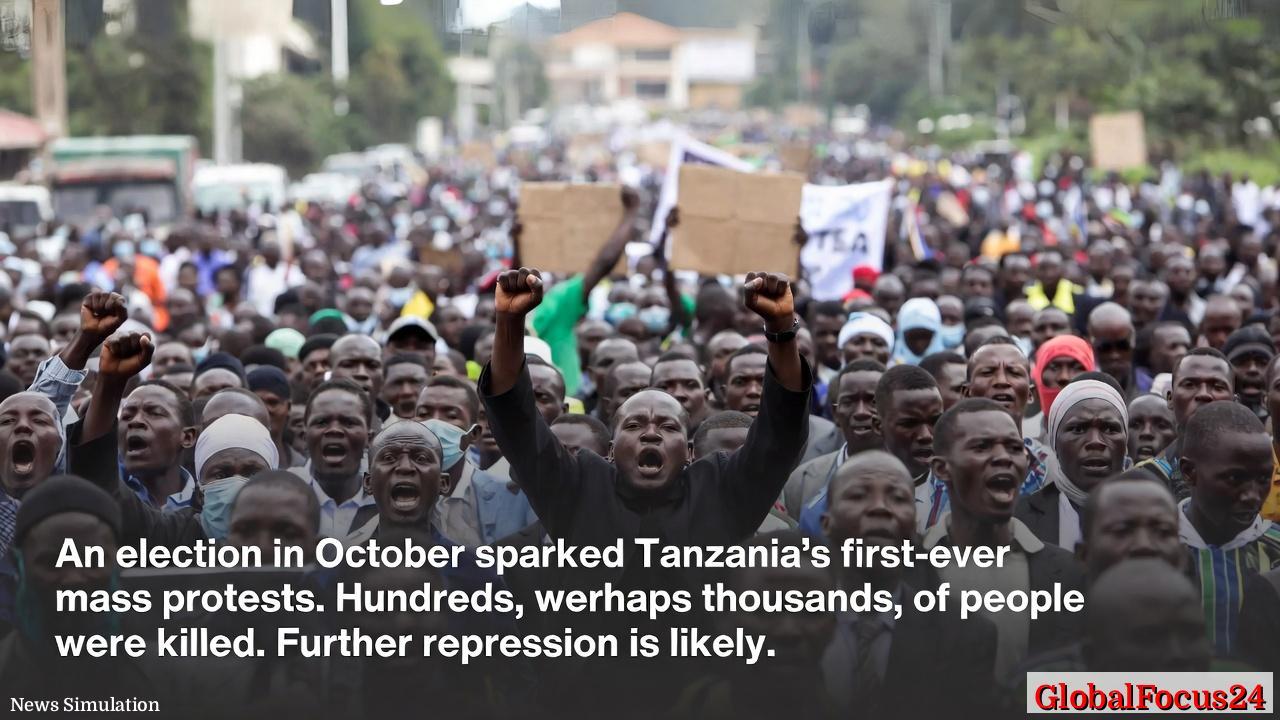
Tanzania is facing one of the most volatile moments in its post-independence history. Following October’s contentious national election, the country has been gripped by violent unrest unseen since the founding of the modern state in 1964. What began as scattered demonstrations over alleged irregularities at the ballot box has surged into a wave of nationwide protests, leading to hundreds—and possibly thousands—of deaths. The government’s severe crackdown has deepened an already fragile political climate, igniting fears of further repression and long-term instability.
The crisis has sent shockwaves across East Africa, a region where Tanzania has long been viewed as an anchor of peace and stability. For decades, the nation stood apart from its neighbors’ upheavals, managing orderly transitions and consistent economic growth. Now, the streets of Dar es Salaam, Dodoma, and Mwanza echo with chants calling for justice and reform, punctuated by the crack of tear gas canisters and the sirens of ambulances.
The Election That Shattered Trust
The October election, meant to reaffirm Tanzania’s democratic continuity, instead became a flashpoint of national discord. Reports soon emerged of restricted media access, internet blackouts, and the detention of opposition observers during the vote count. Civil society groups claimed that ballot boxes were tampered with and local electoral commissions, historically independent, faced unprecedented pressure from state authorities.
Officially, the incumbent president was declared the winner by a broad margin. Opposition leaders quickly rejected the result, alleging systematic manipulation and voter suppression, particularly in Zanzibar and the Lake Zone regions where dissent had been strongest. Within hours, demonstrations erupted. What began as rallies demanding recounts and transparency quickly transformed into a nationwide movement against what many Tanzanians saw as a betrayal of democratic principles.
A Violent Crackdown and Rising Casualties
Eyewitnesses and human rights organizations report that security forces responded with live ammunition, mass arrests, and widespread curfews in several key cities. Hospitals in the coastal region of Tanga and the northern city of Arusha have been overwhelmed. Civil society estimates suggest that the true death toll may exceed official government figures, which remain undisclosed.
Local leaders describe a climate of fear as soldiers and police patrol residential neighborhoods. Journalists have faced harassment and restrictions, with some prominent editors detained for “incitement.” Internet access remains intermittent, complicating verification of on-the-ground reports. International humanitarian groups have called for independent investigations and safe passage for the wounded, but the government has yet to grant such access.
Historical Context: A Departure from Stability
For much of the 20th and early 21st centuries, Tanzania stood out in East Africa for its relative calm. Following independence under Julius Nyerere, the country adopted a one-party socialist model emphasizing unity over division. Although its economy lagged behind some neighbors, Tanzania’s politics were notably less volatile, with transfers of power largely peaceful since multiparty democracy was restored in the 1990s.
Analysts now say that the erosion of democratic norms in recent years set the stage for this crisis. Tightened restrictions on opposition parties, curbs on civil society organizations, and press censorship gradually narrowed the space for dissent. The October election therefore became not just a test of leadership but a referendum on Tanzania’s political trajectory. The result—and the bloodshed that followed—has upended decades of careful nation-building.
Economic Repercussions
The unrest is delivering a harsh blow to Tanzania’s economy, one of the fastest-growing in East Africa before the current turmoil. The country’s transport and logistics hub at the port of Dar es Salaam has slowed as shipping companies reroute cargo through neighboring Kenya and Mozambique. Tourism, which accounts for a significant share of foreign currency earnings, has collapsed amid travel advisories issued by multiple governments.
Foreign investors, previously drawn by Tanzania’s expanding energy and infrastructure sectors, are expressing hesitation. Several projects in the oil and gas corridor near Mtwara have been delayed as companies reassess security conditions. The shilling has weakened sharply against the U.S. dollar, and fuel shortages have been reported in interior regions as supply chains falter. Analysts warn that continued instability could reverse years of economic gains and drive inflation higher, hitting consumers already burdened by rising food prices.
The agricultural sector, a mainstay for much of the population, faces further strain as transportation disruptions hinder exports of coffee, cashews, and cotton. Local markets have seen price spikes, and farmers in the southern highlands report difficulties accessing buyers.
Regional Comparisons and Implications
Tanzania’s turmoil carries implications far beyond its borders. Neighboring Kenya and Uganda, both with their own histories of post-election unrest, are closely monitoring developments. The East African Community (EAC), of which Tanzania is a founding member, has called for dialogue and restraint, fearing that instability could spill across borders or weaken regional trade links.
In contrast to Kenya’s post-election reconciliation efforts in 2008, Tanzania’s current unrest appears less structured, lacking mediating figures or an institutional roadmap for political compromise. Rwanda and Burundi, nations that share deep historical ties and trade routes with Tanzania, have increased border security and suspended some cross-border commerce.
The crisis also threatens regional infrastructure projects, such as the Central Corridor rail line and the planned pipeline connecting Ugandan oil fields to Tanzanian ports. Financing for these initiatives depended on the perception of Tanzania as a stable investment destination. That confidence is now wavering.
The Human Toll and International Response
The humanitarian situation is worsening as displacement rises and aid access remains limited. Local churches and mosques have opened their doors to families fleeing violence, particularly in Mwanza and Dodoma. Food shortages are becoming acute in areas under prolonged curfew, where stores remain shuttered and transport is blocked.
Internationally, global organizations have expressed grave concern. Calls for independent investigations have come from human rights watchdogs and several Western governments, but so far no external mediators have been invited. Aid agencies warn that any escalation could mirror the trajectory of past African crises where political violence led to long-term instability and refugee displacement.
The African Union has urged calm and proposed sending an observer mission. While some regional powers advocate quiet diplomacy, others argue that stronger measures—including conditional aid—may be necessary to pressure authorities to halt the crackdown.
Public Sentiment and Media Blackout
Across Tanzania, a charged mix of anger, grief, and fear hangs in the air. Despite government restrictions, footage and testimonies circulate through encrypted messaging platforms. Artists, students, and clergy have emerged as unexpected voices of protest, calling for nonviolence and reform.
Independent radio and online outlets, once robust, have been hampered by licensing suspensions and confiscations of broadcasting equipment. As information channels constrict, rumor and misinformation flourish, complicating efforts to maintain unified messaging among demonstrators.
Older Tanzanians recall the unifying ethos of Nyerere’s ujamaa—a time when the idea of national harmony held sacred weight. Many view the current bloodshed as a betrayal of that legacy. For younger citizens, who have known only relative peace, the violence brings a sense of disillusionment about the nation’s future.
Possible Paths Forward
Whether Tanzania can pull back from the brink remains uncertain. Some analysts see potential in a negotiated dialogue, perhaps facilitated by regional institutions or respected elder statesmen. However, such efforts depend on the government’s willingness to engage opposition figures who remain in hiding or exile.
Restoring public trust will likely require more than electoral reform. Transparency within the judiciary, freedom for the press, and renewed space for civil society are essential components of any lasting resolution. A truth and reconciliation framework, similar to those employed in Kenya and South Africa, has been suggested by some policy experts.
A Nation at a Crossroads
As dusk falls on cities once filled with the bustle of commerce and conversation, Tanzania stands at a historic crossroads. The country that once symbolized unity and calm in a turbulent region now faces a test that will define its political identity for generations.
The struggle unfolding on its streets is not simply about one election, but about the future character of Tanzanian democracy itself. Whether through repression or reform, the choices made in the coming months will decide whether the nation restores its legacy of peace—or slides into a cycle of fear and division from which it may take decades to recover.