Taiwan’s Opposition Leader Stalls Defense Spending Amid Rising Cross-Strait Tensions
In a developing political moment for Taiwan, Cheng Li-wun, newly named leader of the island’s opposition party, has stepped into a pivotal role as cross-strait relations intensify. Her stance, which emphasizes a measured approach to defense priorities and a broader dialogue with Beijing, is drawing broad scrutiny from domestic stakeholders and regional observers who monitor the balance between security, economic stability, and political consensus in Taiwan. The situation carries implications not only for Taiwan’s deterrence posture but also for regional supply chains, investment confidence, and the broader narrative around Taiwan’s future status.
Historical context shapes the current landscape. Taiwan’s security calculus has long balanced deterrence with diplomacy, a pattern set during episodes of heightened tension in the late 20th and early 21st centuries. The island’s strategic importance — geographically close to major manufacturing hubs, and home to a sophisticated semiconductor ecosystem — has made defense planning a central political topic across administrations. In recent years, China’s military activities around Taiwan have intensified, prompting sustained debates about defense spending, reserve mobilization, and modernization of the armed forces. The political tug-of-war over how to respond to these pressures is not new, but the dynamics have gained renewed urgency as regional powers reassess their security postures in light of rapidly evolving technologies and geopolitical competition.
Cheng Li-wun’s leadership signals a potential shift in how Taiwan frames its national defense strategy. By advocating for a path that prioritizes reconciliation and dialogue with Beijing, she contends that a more nuanced relationship with China could reduce the perceived need for rapid and expansive military modernization. Her approach envisions leveraging economic interdependence, cultural exchanges, and diplomatic engagement as means to stabilize cross-strait affairs. Proponents argue that such a strategy could ease public anxiety about conflict scenarios and sustain a favorable environment for trade and investment. Critics, however, caution that deferring robust defense enhancements may raise risk exposure if deterrence is perceived as weaker or if Beijing continues to test the island’s resolve through exercises near Taiwan’s airspace and maritime approaches.
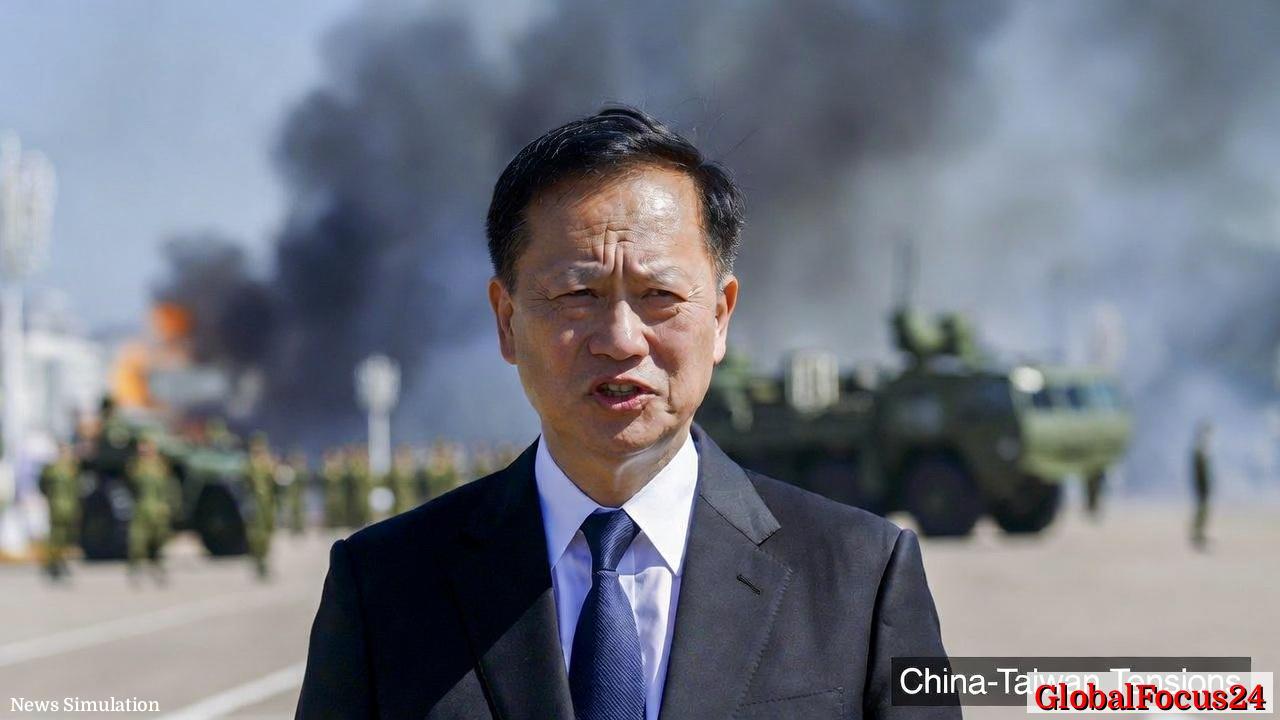
The current context features a surge of Chinese drills around Taiwan, a display of military capacity that has reverberated across regional markets and consumer confidence. For many business leaders and policymakers, the drills underscore a reminder: security and economic resilience are deeply interconnected. Taiwan’s economy, a global backbone for electronics manufacturing, relies on stable access to markets, uninterrupted supply chains, and predictable policy signals. Any perception of vulnerability can ripple through investment decisions, currency stability, and corporate capital allocation. In this environment, the tempo and scale of defense spending often become a proxy for broader strategic commitments, signaling how seriously a government views deterrence, readiness, and regional commitments to allies.
Economic implications of the defense spending debate extend beyond the arms budget. A measured or reduced pace of modernization can have a multi-layered impact:
- Short-term capital allocation: Funds directed toward advanced weapon systems, training, and cyber defense can influence other critical sectors, such as infrastructure, technology research and development, and social programs. Nations balancing budgets may face hard choices about prioritizing security versus public services or economic stimulus.
- Trade and investment sentiment: Firms evaluating risk may adjust long-term investments in an environment perceived as less predictable if political debates over defense spending become contentious or if cross-strait tensions appear to escalate.
- Regional supply chains: Taiwan’s role in global manufacturing means any disruption or perceived instability can affect supplier reliability, prompting regional partners to diversify sourcing and create redundancies that carry their own costs.
- Currency and finance: Market perceptions of risk can influence exchange rates and borrowing costs, with potential knock-on effects for domestic households and firms financing expansion or innovation.
Regional comparisons illuminate how different governance approaches to defense spending interact with broader economic health. In several nearby economies facing similar security concerns, defense budgets have tended to rise in tandem with modernization programs, coupled with assurances of civil resilience and disaster preparedness. Others have pursued more cautious trajectories, coupling openness to dialogue with targeted investments in critical defense capabilities, including asymmetric warfare tools, space-enabled surveillance, and cyber defense infrastructure. The balance between deterrence and diplomacy remains a nuanced policy line, with each country tailoring its approach to its strategic environment, economic capacity, and political culture.
Public reaction to Cheng Li-wun’s stance reflects a spectrum of perspectives. Across urban centers and regional towns, citizens voice concern about potential vulnerabilities in the face of unpredictable drills and regional pressure. Business associations emphasize the importance of a stable business climate that can withstand geopolitical fluctuations. Academics and think tanks contribute nuanced analyses about the most effective defense postures under budget constraints, weighing the costs and benefits of modernization versus resilience-building and diplomacy. Community leaders highlight the importance of safeguarding livelihoods and ensuring that security measures do not stifle innovation, research, or cross-border collaboration that underpins Taiwan’s competitive economy.
Strategic durability in Taiwan encompasses more than military expenditure. It includes civil defense readiness, disaster response frameworks, cyber resilience, and how the government communicates risk and preparedness to the public. In the wake of intensified military exercises in the surrounding seas and airspaces, authorities have emphasized continuous improvement across multiple layers of national security. This includes intelligence sharing with allies, modernization of logistics networks, and investment in next-generation defense technologies such as precision strike capabilities, unmanned systems, and integrated command-and-control systems. While Cheng Li-wun’s emphasis on dialogue aims to reduce escalation risk, the country’s planners must simultaneously ensure that deterrence remains credible and that the public feels secure.
Economic resilience also hinges on diversification and adaptability. Taiwan’s leadership has long sought to safeguard its role in global supply chains by maintaining robust semiconductor production, expanding high-value manufacturing capabilities, and strengthening ties with regional partners. In this framework, the defense spending discussion intersects with economic strategy. To mitigate supply chain vulnerabilities, policymakers may prioritize not only legitimate defense needs but also the protection of critical infrastructure, cyber safeguards for industrial networks, and risk mitigation for key export channels. A stable security environment, paired with predictable policy signals, helps sustain private-sector confidence and supports long-term strategic investments.
Historical context reinforces the complexity of the current moment. Taiwan’s development arc—from postwar recovery to a thriving tech hub—has always been inseparable from its security environment. The island’s political evolution includes periods of Taiwanization and democratization, followed by ongoing debates about identity, sovereignty, and cross-strait engagement. Each of these chapters has influenced defense policy, economic planning, and regional diplomacy. The present moment sits at the crossroads of legacy policies and future ambitions, where leadership choices about defense spending, diplomacy, and national identity will shape Taiwan’s trajectory for years to come.
In regional terms, Taiwan’s defense posture and political leadership are watched closely by neighbors and allies. The wider Indo-Pacific region has seen a shift toward strategic clarity, with many economies strengthening collective-security mechanisms, diversifying defense partnerships, and investing in technology-driven deterrence. For Taiwan, maintaining a credible deterrent while pursuing strategic dialogue requires careful balance. The international community often emphasizes the importance of de-escalation and confidence-building measures, while recognizing that sovereign nations must defend themselves and safeguard economic vitality. In this context, the stance of the opposition leadership on defense spending contributes to the broader regional narrative about stability, economic growth, and the prospects for peaceful coexistence in a contested strategic theater.
Looking ahead, several scenarios merit consideration as Taiwan navigates the defense funding debate and cross-strait relations:
- Continuation of cautious spending with emphasis on modernizing critical capabilities: This approach could preserve budgetary flexibility while enhancing deterrence and resilience, potentially reassuring markets and partners.
- Accelerated defense investment paired with robust diplomacy: A strong modernization push could signal resolve and deter aggression, while sustained diplomatic engagement may offset escalation and maintain investor confidence.
- Recalibrated policy emphasizing reconciliation: If the opposition-led strategy gains traction, Taiwan could pursue a long-term framework of engagement with Beijing, coupled with enhanced civil-defense readiness and targeted security investments designed to avoid overextension.
- Regional cooperation enhancements: Regardless of domestic spending choices, deeper security cooperation with allies and partners in the Indo-Pacific could bolster deterrence and crisis management without placing undue strain on domestic budgets.
Public communication will play a pivotal role as policy directions solidify. Clear messaging about security objectives, risk management, and the rationale behind defense investments helps build public trust and reduces misunderstanding during periods of heightened tension. Transparent reporting on budget allocations, procurement timelines, and performance outcomes can strengthen accountability and ensure that resources are directed toward high-priority needs.
In summary, the current moment presents Taiwan with a defining choice: how to balance the imperative of credible defense with the goals of economic vitality and political reconciliation. Cheng Li-wun’s leadership embodies a philosophy that seeks to pursue dialogue and consensus while recognizing that security remains a fundamental prerequisite for sustainable growth and social stability. The outcome of this debate will influence not only Taiwan’s internal politics but also the degree to which the island can navigate a complex regional landscape — maintaining open channels for economic collaboration, safeguarding critical industries, and ensuring that its security posture remains capable of deterring and deterring aggression in a tense maritime environment. The evolving narrative will continue to shape investor sentiment, regional diplomacy, and the daily lives of citizens who rely on stability to pursue opportunity.
Note: This analysis provides historical context, economic considerations, and regional comparison to frame the defense spending debate without taking a political stance. It reflects the multidimensional considerations that accompany security policy in a highly interconnected economy and a challenging regional security environment.