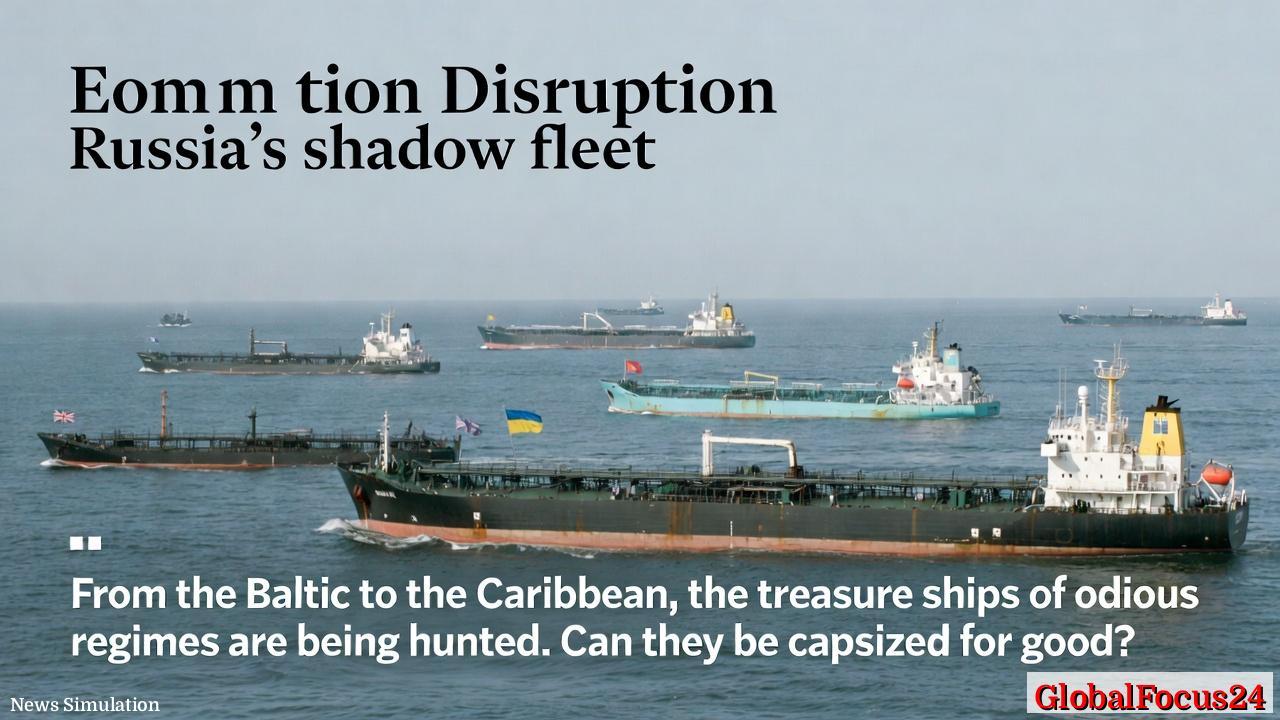
Western Efforts Target Russia’s Shadow Oil Fleet Amid Sanctions Pressure
The long-running effort to disrupt Russia’s shadow fleet of oil tankers has intensified in recent months, as Western nations and allied partners pursue a broader strategy to choke revenue streams that finance the Kremlin's activities. From the Baltic approaches to the Caribbean, vessels operating under opaque ownership and deceptive routing have served as a critical channel for Moscow to move crude oil around sanctions. Authorities say the coordinated actions—ranging from enhanced vessel tracing to targeted sanctions, asset freezes, and interdiction exercises—aim not only to curb Russia’s oil exports but also to deter subterfuge that undermines the integrity of international energy markets.
Historical context: how a hidden fleet emerged The emergence of a shadow fleet is tied to a sequence of post-Soviet market reforms, shifting shipping practices, and the evolving web of sanctions imposed since 2014 and escalated after 2022. As Western governments expanded their sanction regimes, Russia and its trading partners increasingly exploited complex ownership chains, freight forwarders, and flagged registries to obscure ownership and destination details. The practice allowed certain tankers to continue loading Russian crude, sometimes after crude had languished offloaded at intermediary ports or rebranded for resale. Over time, specialized shipping brokers and financial structures layered in additional anonymity, enabling these vessels to operate with reduced price signals from traditional market discipline.
In parallel, technological advances in ship-tracking, satellite imagery, and data analytics have made it harder to hide movements entirely. Investigators and industry analysts now cross-check port calls, cargo manifests, and shipment stylings against public registries and private databases. The result is a growing ability to map the true flow of Russian crude, even when ships attempt to mask their origin or end destination. This transparency push has created a modern cat-and-mouse dynamic, with enforcement agencies, financial institutions, and sanctions committees exchanging information to close loopholes.
Economic impact: effects on price, supply chains, and global markets The shadow fleet carries implications well beyond maritime borders. By enabling continued exports of Russian crude, these ships sustain a portion of the revenue that the Russian state relies upon for defense, domestic subsidies, and strategic investments. Analysts say every successful evasion tactic chips away at the effectiveness of sanctions but also introduces new costs—higher risk premiums, insurance scrutiny, and longer lead times as operators adjust routes to avoid monitoring networks. In some cases, the re-routing of shipments has contributed to volatility in regional markets, particularly where capacity constraints or geopolitical tensions intersect with supply uncertainties.
To global buyers, the presence of a shadow fleet can influence pricing benchmarks and cargo quality assessments. When cargoes pass through opaque intermediaries, the risk of mislabeling or inconsistent quality increases, potentially requiring buyers to conduct additional due diligence. Consequently, logistics providers and energy traders face elevated compliance costs as they work to verify origin, track routes, and ensure conformity with sanctions regimes. While some buyers seek to diversify supply sources to mitigate risk, others rely on established relationships that can be strained by heightened scrutiny and regulatory changes.
Regional comparisons: how different markets respond
- Europe: European authorities have sharpened port-state controls, expanded crime-fighting capabilities for maritime fraud, and increased cooperation with international partners to trace vessel movements. The emphasis is on timely intelligence-sharing and joint interdiction exercises, with a focus on financial flows surrounding tanker operations and cargo documentation. The goal is to raise the effective cost of illicit shipping while preserving legitimate trade channels for compliant energy markets.
- North America: In North American waters, agencies have prioritized vessel tracing, sanctions enforcement, and risk-based screening of shipments crossing transatlantic corridors. Financial institutions operating in the region have tightened screening standards to identify sanctioned destinations and ownership layers, reducing the likelihood that illicit cargoes can be financed quietly.
- Asia-Pacific: The Asia-Pacific region presents a complex mix of compliance regimes, given its dense shipping lanes and mixed ownership structures. Collaboration among ASEAN member states, major regional economies, and global regulators has intensified, with emphasis on real-time data sharing and harmonized reporting to deter shadow-fleet activities.
- Middle East and Africa corridors: In these corridors, the focus is on strengthening port inspections and ensuring cargo integrity as crude moves toward global markets. Regional partners stress the importance of legitimate trade facilitation while maintaining rigorous controls against illicit shipments.
Operational steps and tracking methods
- Enhanced vessel screening: Authorities combine public AIS data, port call histories, shipping manifests, and ownership registries to identify discrepancies between reported and actual cargo movements.
- Financial sanctions and asset freezes: Targeted measures against companies, individuals, and financial networks involved in the shadow fleet aim to disrupt funding streams and complicate illicit transactions.
- Interdiction and seizure operations: When feasible, authorities seize vessels, cargoes, or associated assets to deter future evasion and to signal resolve against illicit oil trading practices.
- Intelligence-sharing collaborations: Multinational task forces and interoperability agreements enable faster cross-border sharing of intelligence on shipping patterns, illicit actors, and financing channels.
- Due diligence and compliance enhancements: Banks, insurers, and trading houses engage in stricter know-your-customer (KYC) procedures, cargo origin verification, and risk assessment protocols to minimize exposure to sanctioned trades.
Regional public reaction and economic signaling Public sentiment toward sanctions and enforcement varies by region, but a common thread is a sense of urgency about maintaining energy security while upholding the rule of law. In many consuming markets, stakeholders emphasize the need for transparent, predictable rules and reliable supply chains. Energy-intensive industries seek clarity on how enforcement actions could affect pricing and availability, while everyday consumers weigh the potential trade-offs between price stability and geopolitical risk. Public commentary often centers on the balance between punitive measures and the risk of unintended consequences, such as supply disruptions or tariff escalations, underscoring the need for carefully calibrated policy execution.
Sustainability considerations and environmental risks The shadow fleet dynamics intersect with environmental considerations, as vessel age, maintenance standards, and routing practices influence fuel efficiency and emissions. Increased scrutiny can incentivize operators to adopt better compliance and maintenance practices, which may yield ancillary environmental benefits. Conversely, if enforcement prompts abrupt rerouting or congested ports, emissions patterns could shift in ways that require ongoing monitoring. Regulators and industry groups are increasingly integrating environmental risk assessments into sanction frameworks, recognizing that responsible stewardship remains a core component of energy security.
What lies ahead: can the network be permanently dismantled? Experts question whether a complete, permanent dismantling of the shadow fleet is feasible. The complexity of global shipping networks, combined with the adaptability of illicit actors, suggests that sanctions enforcement will need to be sustained, scaling in both scope and sophistication. Some analysts argue that even with significant disruption, residual activity could persist through opportunistic routes or smaller operators less visible in data systems. Others caution that persistent collective action—combining intelligence, finance, legal frameworks, and diplomatic pressure—can raise the cost of evasion beyond the point of profitability for many actors.
Strategic implications for policy and industry
- For policymakers: The emphasis is on comprehensive, enforceable standards that close gaps in ownership transparency, cargo tracing, and financial flows. Long-term success hinges on continued international cooperation, real-time data analytics, and the regular updating of sanctions to reflect evolving shipping practices.
- For industry players: Compliance remains paramount. Firms across shipping, insurance, finance, and trading must invest in robust due diligence, transparent documentation, and resilient supply chains. Industry associations stress the importance of predictable regulatory environments that reduce risk while preserving legitimate commerce.
- For researchers and observers: Ongoing studies are essential to measure the efficacy of enforcement actions, assess unintended outcomes, and refine methods for tracing illicit movement. Data-driven analyses can illuminate which interventions yield the greatest reductions in illicit shipments and why certain tactics succeed or fail.
Case studies and illustrative incidents
- A high-profile interdiction in a major port facility demonstrated how coordinated enforcement could disrupt a multi-ship operation that relied on layered ownership structures. Investigators traced ownership through several corporate entities and shell arrangements, ultimately freezing assets linked to the scheme and seizing the related cargo.
- In another instance, a logistics consortium adjusted routes to avoid hot spots identified by trackers. While this increased transit times and insurance costs, the group maintained access to essential crude supplies by leveraging alternative corridors with enhanced scrutiny.
- A regional regulator published a joint advisory detailing best practices for KYC and cargo verification, drawing on recent seizures and seizures’ outcomes to guide industry compliance programs.
Conclusion: sustaining momentum and public trust The fight against the shadow fleet is as much about public confidence as it is about economic calculations. By pursuing tighter oversight, sharper data integration, and cross-border cooperation, authorities aim to deprive illicit operators of the cover they rely on. The path forward will require patience and precision: dismantling a deeply entwined network takes time, coordination, and a clear-eyed assessment of where risk remains highest. As markets adjust to stricter rules, regulators, industry participants, and the public will watch closely how enforcement evolves, whether operational gaps reemerge, and how regional dynamics shape the next phase of this ongoing effort.