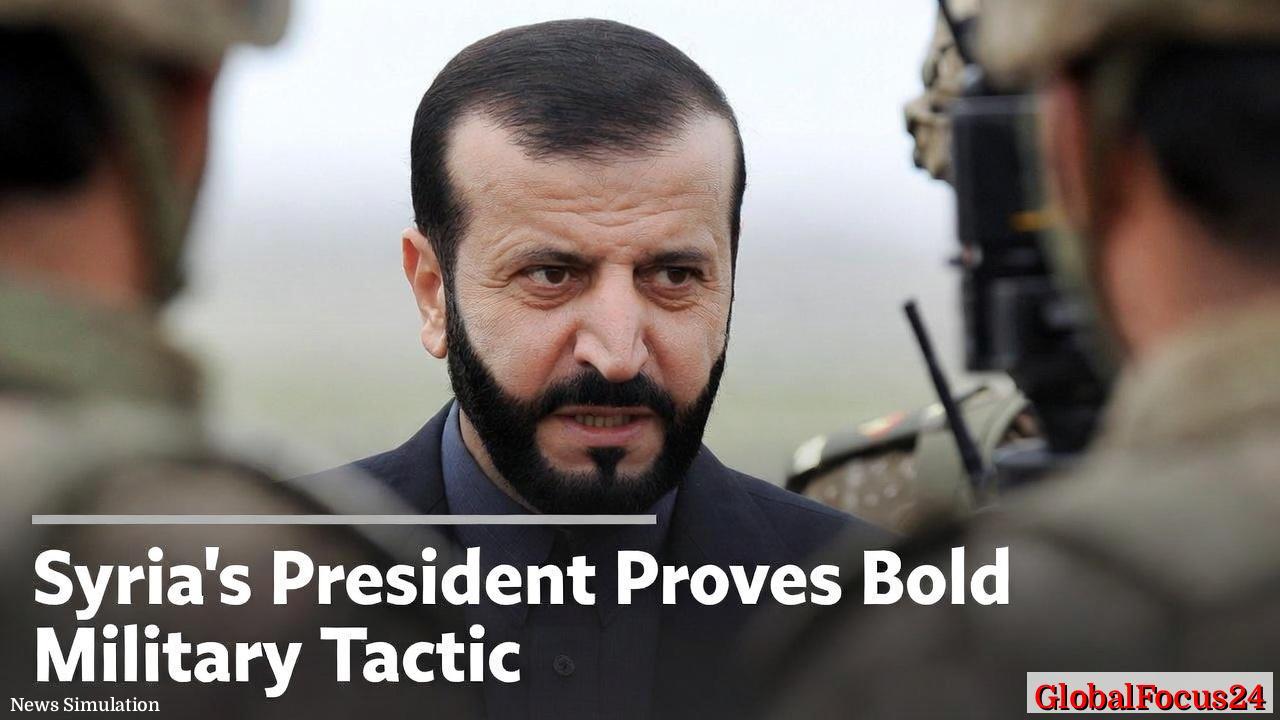
)Syria’s Bold Military Moves Reshape Regional Security Dynamics and Global Oil Markets
In the midst of a continually evolving Middle East security landscape, Syria’s current leadership has demonstrated a willingness to pursue aggressive military action that could recalibrate regional power balances and ripple through global energy markets. The latest developments underscore a pattern of calculated brinkmanship that blends rapid tempo offensives with a strategic calculus about alliances, especially with Western stakeholders and regional partners.
Historical Context and Strategic Trajectory Syria’s military and political posture over the past decade has been shaped by a complex interplay of internal security concerns, external pressures, and shifting alliances across the Levant and beyond. The current approach builds on a longer history of asymmetric tactics, where conventional and irregular forces are employed to constrain opposition movements while preserving regime survivability. This historical lens helps explain why leadership has repeatedly opted for audacious, high-stakes operations as a means to signal resolve, deter adversaries, and shape bargaining leverage without triggering uncontrollable escalation.
From a regional perspective, Syria sits at a crossroads of competing security architectures, including Russian, Iranian, and Lebanese group alignments, alongside fluctuating U.S. and European policy positions. The present moment reflects a broader trend in which state actors test the boundaries of cross-border operations to influence battlefield dynamics, disrupt opposition planning, and degrade adversaries’ operational tempo. Understanding this pattern helps policymakers assess the likelihood of further incursions, the potential for escalation, and the possible transformation of the Syrian theater into a more fragmented or consolidated security space depending on actor behavior and external incentives.
Economic Impact and Energy Market Implications Military actions in Syria—especially those involving cross-border offensives—tosterate heightened risk for regional stability and can influence energy supply routes and pricing in neighboring markets. Although Syria’s direct crude output is modest compared with major oil-producing countries, the country’s geopolitical position affects trade corridors, shipping lanes, and the reliability of routes through and around the Eastern Mediterranean. Market participants monitor such moves closely because any disruption to maritime traffic or increased military activity near chokepoints can prompt broader risk premia, impacting crude benchmarks and refined product prices.
Beyond immediate price swings, the broader economic reverberations touch several layers:
- Insurance and shipping costs for vessels transiting the Eastern Mediterranean may rise temporarily as risk assessments adjust to perceived threats, potentially increasing freight expenses for regional energy and commodity flows.
- Regional exporters and traders may recalibrate contract terms, seeking premiums for perceived safety or shifting volumes to more secure routes, with downstream effects on regional inflation and import costs.
- Domestic economies within Syria’s sphere of influence and neighboring countries could experience shifts in investment sentiment, affecting development projects, reconstruction funding, and currency stability in affected markets.
Regional Comparisons and Lessons When weighing Syria’s actions against similar episodes in neighboring regions, notable patterns emerge:
- Escalatory signaling is a common feature, where a state uses high-tempo military moves to maximize diplomatic leverage. In comparable cases, such signaling has produced short-term shifts in alignments but often led to extended bargaining cycles or negotiations that seek to deconflict rival interests.
- The interplay between external sponsors and local actors can determine both the duration and intensity of conflict. Regions with diversified external backing may experience deeper, protracted engagements, while those with limited external leverage might see quicker stalemates or redrawn lines of control.
- Economic resilience and energy security depend on diversification of routes and redundancy in supply chains. Regions that maintain multiple trading corridors and robust maritime infrastructure tend to weather abrupt security shocks more effectively than those reliant on a single chokepoint.
Public Reaction and Policy Implications In host communities and the wider international arena, public reaction to rapid military developments in and around Syria is often shaped by perceived threats, humanitarian concerns, and the potential for displacement. Civil society groups frequently call for increased humanitarian access, accountability for civilian harm, and robust mechanisms to prevent inadvertent spillover into neighboring states. Policymakers, meanwhile, face the challenge of balancing deterrence with diplomacy, ensuring that strategic objectives do not come at the expense of broader regional stability or unintended escalation.
From a policy standpoint, several considerations are central:
- Deterrence strategies must account for both conventional military capacity and the broader deterrent effect of alliance networks. A credible mix of defense, diplomacy, and sanctions can help manage risk without triggering uncompromising confrontations.
- Diplomatic engagement remains essential to prevent misperceptions and to foster channels for crisis de-escalation, particularly with regional partners and major powers whose interests intersect with Syria’s security environment.
- Humanitarian and stabilization priorities should be integrated into policy workflows to mitigate civilian harm and support post-conflict recovery, even as military objectives are pursued.
Technical and Operational Aspects The tactical dimension of the latest developments offers insight into how modern conflicts unfold on the ground. Rapid, coordinated maneuvers across multiple fronts, if employed, require sophisticated intelligence, surveillance, and reconnaissance capabilities, as well as robust logistics to sustain momentum. Operational tempo, coupled with the risk of counterstrikes from dispersed or hybrid forces, compels neighboring countries to reinforce border security, bolster early warning systems, and calibrate rapid-response readiness.
Additionally, the role of cyber and information operations in contemporary conflicts cannot be overlooked. Propaganda, misinformation, and strategic messaging influence international opinion and domestic sentiment, shaping the perceived legitimacy of actions and the international community’s response. This dimension adds a layer of complexity for analysts who must parse fact from fiction while assessing the long-term consequences of such campaigns.
Historical Milestones and Case Comparisons To contextualize current events, it helps to recall historical milestones in the region where security dynamics have similarly pivoted on bold military actions:
- A pattern of rapid offensives followed by negotiated pauses has recurred in several regional conflicts, often leading to a temporary rearrangement of frontlines before longer-term settlements or continued stalemate.
- The involvement of external powers in regional conflicts has frequently determined both the scale of interventions and the prospects for durable peace, with outcomes varying widely depending on alliance cohesion and geopolitical calculations.
- The economic backdrop—ranging from oil price volatility to currency fluctuations—frequently accompanies heightened conflict, underscoring the interdependence between military and economic dimensions in the modern era.
Implications for Investors and Global Markets For investors and financial markets, the Syrian theater remains one of several interconnected risk factors in the broader Middle East and Mediterranean region. While the direct exposure of global energy markets to Syrian events may be limited in the near term, spillover effects can influence risk premiums, currency trajectories, and asset valuations across related markets. Portfolio managers often monitor regional stability indicators, supply chain disruption risks, and policy responses from major economies to gauge potential knock-on effects on commodities, equities, and fixed income.
In Santa Clara and Silicon Valley, the connection to regional tech and energy sectors is indirect but meaningful. Local firms with exposure to global supply chains, semiconductor materials, and energy technologies may experience ripples from regional security developments through shifts in investment sentiment, trade policy, and commodity costs. Businesses focused on resilience planning can benefit from scenario analyses that consider supply chain disruptions and energy price volatility arising from geopolitical tensions.
Conclusion: A Complex, Fluid Security Landscape The latest military developments in Syria illuminate a broader pattern of calculated risk-taking by regional actors seeking strategic advantage in a highly layered security environment. The interplay of historical context, economic impact, and regional comparisons underscores the need for careful analysis that avoids simplistic judgments while acknowledging the real-world consequences for civilians, markets, and governance. As the region’s security dynamics continue to evolve, stakeholders—from policymakers to investors to humanitarian organizations—will be watching closely how escalation risks are managed, how diplomacy progresses, and how the international community can support stability and resilience in a volatile but pivotal corridor linking Europe, the Middle East, and North Africa.