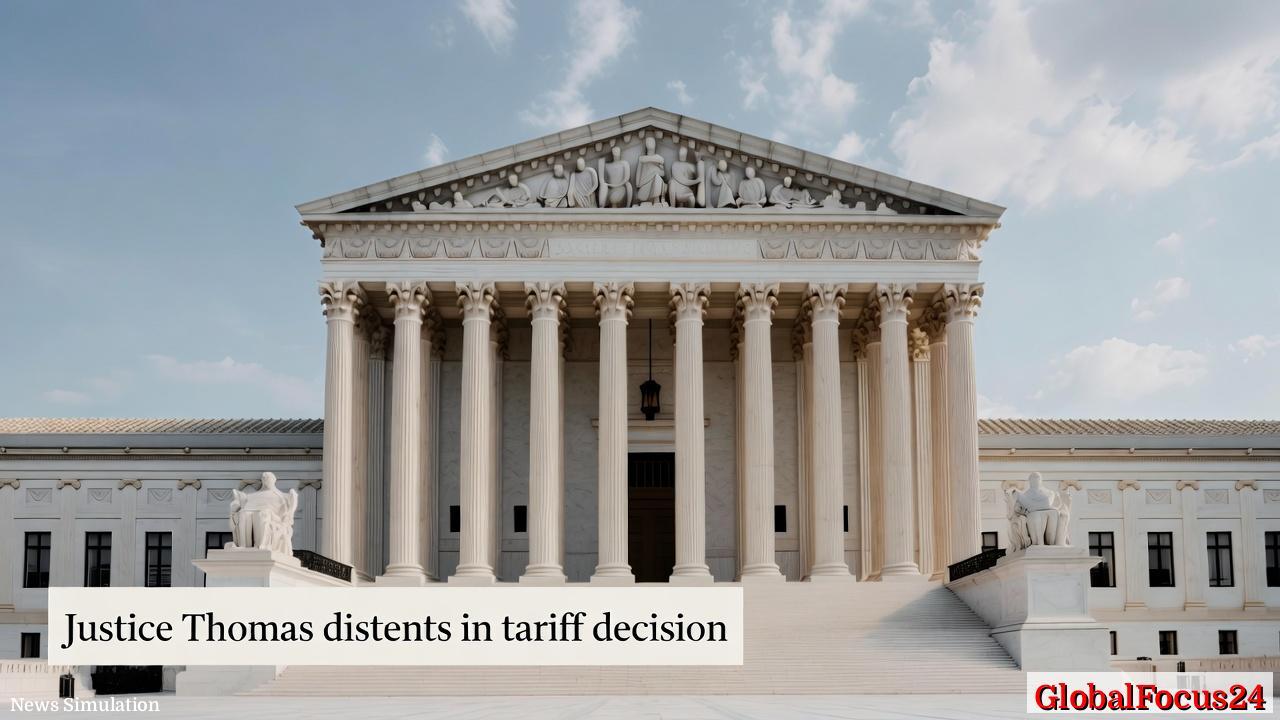
Newswire Brief: Supreme Court Limits IEEPA Authority on Tariffs
In a landmark decision released February 20, 2026, the Supreme Court held that the International Emergency Economic Powers Act (IEEPA) does not authorize the President to impose tariffs. The ruling, delivered by Chief Justice John Roberts, resolves a long-running dispute surrounding the executive branch’s authority to regulate imports through tariff measures and clarifies the constitutional boundary between presidential emergency powers and congressional taxing authority.
Context and Case Background The consolidated cases at the center of the decision involve Donald J. Trump, then-President of the United States, along with other government officials, versus V.O.S. Selections, Inc., and related parties. The Court’s majority opinion emphasizes a narrow interpretation of IEEPA’s text. Specifically, the Justices concluded that the statute grants the President authority to regulate certain aspects of international commerce in times of declared national emergency, but it does not extend to imposing duties or tariffs on imported goods. The decision aligns with a traditional separation-of-powers approach, underscoring that tariffs are generally viewed as a form of taxation, a prerogative reserved to Congress under the legislative branch.
Legal reasoning and implications
- Statutory interpretation: The Court’s analysis focused on the statutory language of IEEPA, reading “regulate imports” to exclude the imposition of duties. The majority did not find implicit or explicit authorization for tariff-based measures within the act’s framework, thereby restricting presidential action in this domain.
- Taxing power vs. emergency powers: By distinguishing tariffs from emergency controls, the Court reinforced the view that the power to levy taxes is constitutionally vested in Congress. While IEEPA allows action in foreign economic policy during emergencies, the majority concluded that tariff imposition exceeds those emergency powers.
- Checks and balances: The ruling reinforces a system in which significant fiscal instruments—like tariffs—remain under legislative oversight. This interpretation reduces the likelihood of rapid, unilateral tariff changes by the executive branch in future emergencies.
Dissenting viewpoints and nuance
- Concurring opinions offered by Justices Gorsuch and Barrett provided alternative angles on how the historical record and statutory context should be read, with emphasis on different interpretive methods. Justice Kavanaugh, joined by Justice Alito in dissent, argued that historical practice and precedent support a broader interpretation of “regulate importation” to encompass duties, citing post-enactment tariff practices and existing precedents as support for a broader reading.
- The dissenting positions highlight ongoing debate about how emergency authorities should intersect with economic tools traditionally controlled by Congress, suggesting potential for future litigation or legislative clarifications.
Economic impact and regional considerations
- Near-term market reactions: Financial markets tend to weigh policy clarity and predictability. The ruling reduces the likelihood of sweeping executive tariff actions in the immediate future, contributing to a degree of steadiness for import-dependent sectors.
- Trade and supply chains: Industries reliant on imported inputs—such as manufacturing, technology, and agriculture—may experience renewed focus on supply chain resilience and diversification, given the heightened scrutiny of unilateral tariff powers.
- Regional contrasts: The decision’s effects may vary by region and sector. Regions with robust export-driven economies or heavy reliance on imported components could adjust strategy to mitigate potential tariff-related volatility. Conversely, areas with diversified supply chains and strong domestic alternatives may experience limited short-term disruption.
Historical context and ongoing relevance
- Legislative history: The IEEPA was enacted in the 1970s amid geopolitical tensions and evolving executive foreign policy tools. The court’s interpretation in this decision reflects a long-standing legal framework that tends to reserve broad fiscal instruments for Congress, while granting some leeway to the President to respond to emergencies through targeted economic actions.
- Comparisons to prior eras: Historically, tariff authority has hovered between executive actions during crises and congressional control through legislation. The current ruling solidifies a particular constitutional reading consistent with contemporary debates about executive powers and fiscal sovereignty.
What this means for policymakers
- For lawmakers: The decision underscores the importance of explicit statutory authorization when considering new tariff or tax-related authorities. If Congress intends to empower the President to deploy duties in emergencies, it would require precise drafting and clear legislative language.
- For the administration: The decision narrows one potential tool in the executive’s emergency toolkit. Officials may pivot toward other forms of emergency economic policy, such as targeted sanctions, export controls, or broader regulatory measures that do not amount to tariffs.
- For businesses: Companies should anticipate a longer-term emphasis on legislative certainty. Strategic planning may involve engaging with policymakers on potential tariff reforms, trade adjustment assistance, or resilience investments to mitigate exposure to future policy shifts.
Historical context within the broader legal landscape
- The decision sits within a continuum of jurisprudence addressing the scope of presidential power in economic affairs. It contrasts with areas where the executive has broader latitude during declared emergencies, yet remains consistent with an overarching view that substantial fiscal tools require legislative action.
- Beyond tariffs, the ruling may influence how courts evaluate the reach of emergency powers in other economic domains, such as sanctions regimes, export controls, and import restrictions that intersect with federal taxation powers.
Public reaction and societal implications
- Public discourse around the ruling has centered on the balance between national security, economic sovereignty, and consumer pricing. While some stakeholders welcome greater congressional oversight, others express concern about potential vulnerability to foreign policy shocks if the executive lacks rapid-response options.
- Journalists and analysts continue to monitor the potential for legislative responses that align with the Court’s interpretation, including proposed statutes that clarify or redefine the boundary between emergency powers and fiscal measures.
Regional comparisons and international perspective
- Domestic comparison: Regions with active manufacturing clusters and import-dependent industries may focus on resilience planning, supplier diversification, and domestic alternatives. States with large export sectors might closely watch for regulatory shifts that could affect global demand.
- Global context: The ruling aligns the U.S. approach with a broader international trend that emphasizes legislative authorization for major fiscal tools. While other nations employ executive instruments in economic policy, the U.S. framework remains anchored in constitutional checks and balances that require legislative action for tariffs.
What comes next
- Legislative pathway:Lawmakers seeking to preserve or adjust tariff capabilities will likely consider targeted amendments to IEEPA or new trade legislation that clarifies the scope of executive power during emergencies.
- Judicial landscape: The decision may influence future challenges involving economic sanctions, import restrictions, or other trade measures, prompting lower courts to carefully parse statutory text and historical practice in similar contexts.
Conclusion The Supreme Court’s February 2026 ruling marks a defining moment in the intersection of emergency powers and fiscal policy. By holding that IEEPA does not authorize the President to impose tariffs, the Court reinforces Congress’s central role in determining the nation’s tax- and tariff-related policy. As economic conditions evolve and global trade dynamics shift, the balance between swift executive action and deliberate legislative oversight will continue to shape the U.S. approach to import regulation, with tangible implications for businesses, workers, and consumers nationwide.