Republican-Led States Tighten University Curricula, Redefining Academic Boundaries
A broad wave of policy reforms in Republican-led states is reshaping higher education by restricting the content taught in college classrooms, prompting debates over academic freedom, public accountability, and the role of state oversight in shaping curricula. From Texas to Texas A&M University, administrators and faculty members are navigating new guidelines that limit discussions on topics previously deemed central to core humanities and social science offerings. The net effect is a reorientation of higher education toward clearly defined, job-focused outcomes while critics warn of chilling effects that could narrow intellectual inquiry.
Historical Context: A Century of Shifting Curricula and State Involvement
Higher education in the United States has long operated at the intersection of academic autonomy and public stewardship. The Morrill Land-Grant Acts of the 19th century expanded access to higher education, especially in science and engineering, with a federal and state emphasis on practical outcomes. In the postwar era, universities embraced a broader liberal arts mission, balancing inquiry with civic responsibility. Yet, state governments have intermittently asserted influence through accreditation standards, legislative oversight, and funding conditions. The current wave represents a renewed, concerted push by several states to formalize constraints on what can be taught, particularly around sensitive topics such as race, gender, sexuality, and political ideology.
Economic Impact: Aligning Higher Education with Labor Market Demands
Advocates of the reforms argue that tightening curricula ensures graduates possess job-ready skills and aligns academic programs with workforce needs. The rationale is that universities should produce talent that can adapt to regional industries, boost economic competitiveness, and attract investment. In practice, several states have linked funding or program approvals to compliance with content guidelines, incentivizing institutions to reframe course offerings toward demonstrable outcomes, measurable competencies, and transparency in pedagogy. For employers and regional economies, the changes may translate into more standardized pathways—certifications, micro-credentials, and targeted curricula—that reflect the needs of local industries such as energy, technology, healthcare, and manufacturing.
Regional Comparisons: How Policies Vary Across the South, Plains, and Southwest
- Texas: The state has emerged as a focal point for content-limitation policies. Institutions are instructed to review syllabi for restricted topics, with potential consequences for noncompliance. This environment has produced a twofold effect: some departments pivot to emphasize foundational knowledge and offer alternative framing of controversial subjects, while others push back through faculty-led governance structures and academic-freedom committees.
- University of Texas at Austin, Texas A&M University: Reports indicate substantial curricular adjustments and heightened scrutiny. Surveys show a notable fraction of faculty altering syllabi to meet new guidelines, alongside structural changes in student organizations and speaker policies. The dynamics at flagship campuses highlight a broader trend toward formalizing boundaries around what may be discussed in class or at campus events.
- Other Republican-led states: A swath of states has introduced bills to regulate higher education content, with several laws enacted in the past year. While some measures have faced judicial challenges, the aggregate effect is a larger population of students exposed to standardized expectations about what constitutes appropriate classroom conversation.
- Regional contrasts: In practice, coastal and urban campuses in more diverse states may experience different pressure levels compared with more conservative regions. Institutions with strong research missions and larger endowments may deploy more robust legal and academic-freedom defenses, while smaller public universities may rely more on centralized state guidance and administrative enforcement.
Case Study: The College Campus Experience Under Review
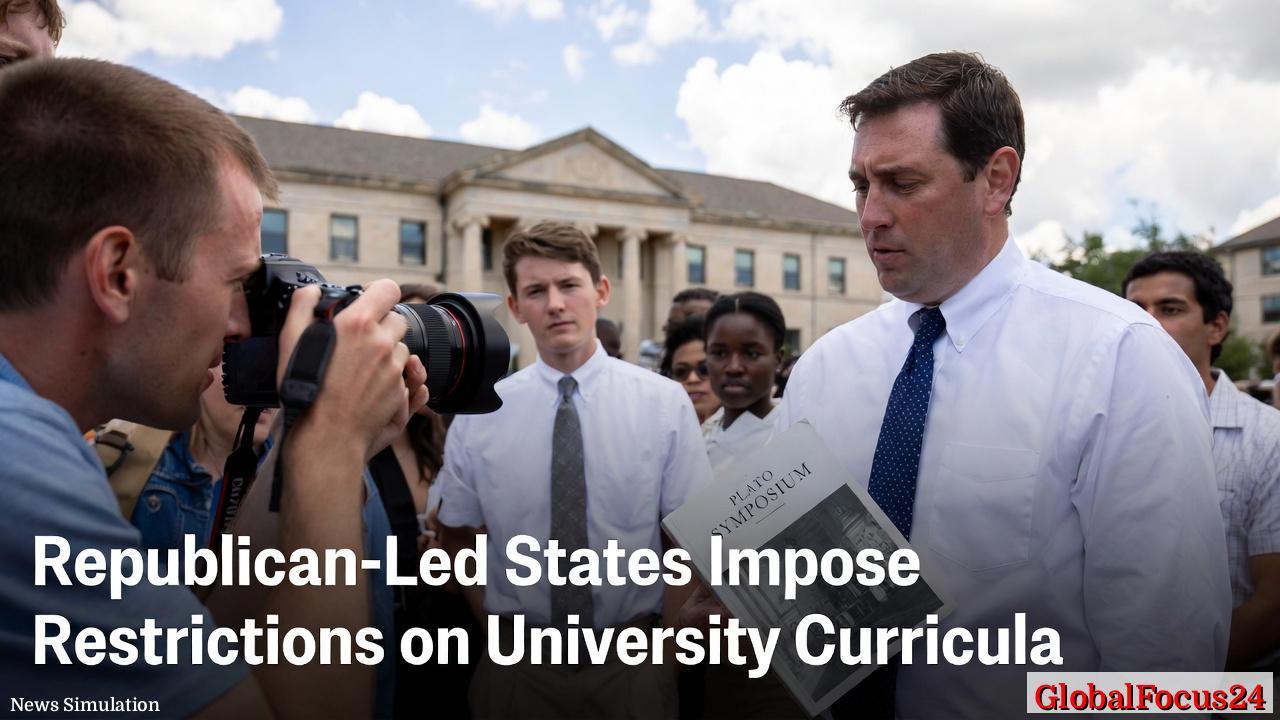
At large public universities with tens of thousands of students, the shift is tangible. A philosophy professor at a major state university faced a mandate to excise a foundational text from the introductory syllabus due to its engagement with themes now framed as restricted. In parallel, instruction on gender or race-related topics faced administrative review, with some courses canceled or postponed to comply with newly interpreted rules. The changes extend beyond single courses to the broader curriculum, as departments rework degree requirements, required readings, and assessment methods.
Faculty governance groups are playing a critical role in mediating tensions between policy compliance and scholarly freedom. On some campuses, ethics and philosophy programs are exploring alternative modules that teach critical thinking, rhetoric, and analytic reasoning using materials deemed permissible, while explicitly avoiding prohibited topics. In other instances, faculty are advocating for transparent, evidence-based criteria for content decisions and seeking avenues to document the educational value of courses, risks to academic integrity, and potential impacts on student outcomes.
Student experiences and public reaction also reflect the complex balance between policy aims and educational value. Some student groups express concern about reduced exposure to diverse perspectives, while others applaud curricular clarity and predictable pathways toward degrees and credentials. Public sentiment often centers on whether higher education should operate more like a marketplace of skills or a forum for contested ideas. The reality, however, is that state-imposed standards are changing the texture of campus life, including speaker policies, meeting formats, and grievance procedures.
Legal and Policy Landscape: Courts, Compliance, and Constitutional Questions
Legal challenges to higher-education content restrictions have intensified as courts weigh constitutional protections, including academic freedom and freedom of speech. Several lawsuits have contested the constitutionality of state-imposed limitations, arguing that they infringe on scholarly inquiry, academic autonomy, and the right of universities to equip students with broad, critical perspectives. In some cases, courts have issued injunctions or stayed enforcement while considering the implications for the First Amendment and academic liberty. The evolving jurisprudence suggests a delicate balance: states seek to protect public interests such as civics education and non-discrimination, while courts emphasize the essential role of universities as forums for inquiry and intellectual exploration.
Institutional Responses: Governance, Transparency, and Accountability
Universities are responding with a mix of internal governance mechanisms and external compliance measures. Some institutions have expanded transparency initiatives, publishing syllabi-review results, course-change rationales, and policy interpretations to reassure students, faculty, and the public that curricula remain rigorous and academically sound. Others are investing in professional development for faculty and administrators to navigate legal requirements, avoid unintended biases, and safeguard the integrity of the educational mission. Additionally, there is growing emphasis on documenting student learning outcomes, aligning courses with degree competencies, and ensuring that assessment methods accurately reflect knowledge and analytical skills.
Regional Comparisons: A Global Perspective on Higher Education Reform
Beyond the United States, several higher education systems grapple with similar debates about curriculum control, academic freedom, and public accountability. Some nations emphasize national curricula and government oversight to ensure consistency in workforce readiness, while others underscore institutional autonomy and scholarly merit as keystones of higher education. The tension between standardization and intellectual diversity is a recurring theme in international education policy, influencing cross-border collaboration, research funding, and student mobility.
Implications for Students: Access, Affordability, and Career Pathways
For students, the policy shifts carry practical implications. Access to a broad, inquiry-driven education may depend on a university’s ability to interpret and implement guidelines in ways that preserve academic rigor. Students pursuing degrees with strong liberal-arts components may face more constrained reading lists, while those seeking professional tracks could benefit from clearer, skill-based curricula, though not without concerns about breadth and critical thinking. Financial considerations also come into play, as funding models tied to compliance may influence tuition, scholarship availability, and program expansion or contraction.
Economic Outlook: Regional Growth and Talent Pipelines
In regions where universities align more closely with local industry needs, there is potential for stronger talent pipelines, faster time-to-degree, and improved graduate employability. Public institutions that integrate workforce analytics, industry partnerships, and applied research can contribute to regional competitiveness by cultivating graduates who can contribute to high-demand sectors. However, the costs of compliance, legal risk, and potential reductions in scholarly diversity could offset some economic benefits if institutions over-prioritize short-term metrics at the expense of long-term innovation and critical inquiry.
Historical Echoes: Recalling Past Debates Over Curriculum Control
Historically, debates over curriculum content have often mirrored broader political and cultural shifts. The balance between safeguarding public values and preserving academic freedom has long been a central challenge in higher education governance. Past eras show that ignoring the complexity of scholarly discourse can lead to unintended consequences, including reduced student preparedness for diverse workplaces, diminished research productivity, and a less adaptable economy. The current moment, while driven by contemporary policy considerations, echoes a longer arc of negotiation between state authority, institutional autonomy, and the overarching mission of higher education to cultivate critical thinking and societal advancement.
Public Reaction: Voices from Campuses and Communities
Campus communities are reacting with a mix of concern, resilience, and pragmatism. Faculty members emphasize the importance of maintaining rigorous standards, transparent decision-making, and robust professional judgment when selecting course materials. Students voice a spectrum of perspectives, from those who see curricular clarity as beneficial to those who view it as a suppression of debate. Local businesses and civic organizations watch closely, recognizing the link between higher education quality and regional economic vitality. Media coverage and public discourse reflect ongoing tension, highlighting the need for policies that uphold both accountability and intellectual freedom.
Conclusion: Navigating a New Era for Higher Education
The adoption of content-restrictive policies in several states signals a significant shift in how higher education is regulated and perceived. Universities respond by reinforcing governance structures, prioritizing transparency, and emphasizing the alignment of curricula with measurable outcomes while safeguarding core academic freedoms. As lawmakers, educators, students, and communities adapt, the enduring question remains: how can higher education balance accountability with intellectual curiosity, ensuring that graduates emerge equipped for the complexities of an ever-evolving economy and a pluralistic society? The answer will likely hinge on ongoing dialogue, careful policy design, and a steadfast commitment to preserving the essential functions of universities as engines of knowledge, opportunity, and public trust.