Seven Muslim-Majority Nations Condemn Israeli Blockade Restricting Access to Jerusalem’s Holy Sites
Regional Leaders Unite in Condemnation
Seven predominantly Muslim countries—Qatar, Egypt, Jordan, Turkey, Pakistan, Indonesia, and Saudi Arabia—released a joint statement Monday condemning Israel’s ongoing blockade that has restricted Muslim and Christian worshippers from accessing several of Jerusalem’s most sacred sites. The coordinated declaration marks one of the most unified multinational responses in recent months concerning tensions surrounding the city’s religious sanctuaries, particularly Al-Aqsa Mosque and the Church of the Holy Sepulchre.
In their statement, the nations called the blockade a “violation of religious freedom and international humanitarian law,” urging Israel to lift all restrictions immediately. They emphasized the sanctity of Jerusalem as a city of faith shared by multiple religions and warned that Israel’s actions risk exacerbating regional instability.
Tensions Rise Amid Ongoing Restrictions
According to reports from regional officials, Israeli security forces have maintained heightened restrictions at major entry points to Jerusalem’s Old City for several weeks, citing security threats following a wave of recent clashes. These measures have reportedly barred thousands of Palestinian Muslims from reaching the Al-Aqsa compound for prayers during the current religious season and have also limited Christian pilgrimages to Easter services at the Church of the Holy Sepulchre.
The restrictions have generated widespread frustration among Palestinians, who view the measures as collective punishment and part of a larger effort to assert Israeli control over East Jerusalem—a territory Palestinians claim as the capital of a future state. Israeli authorities, however, maintain that the restrictions are temporary and necessary to prevent potential unrest.
Calls for International Action
In the joint declaration, the seven nations appealed to the United Nations and the Organization of Islamic Cooperation (OIC) to take immediate diplomatic steps to address the situation. They also called on “all peace-loving nations” to ensure that Jerusalem remains accessible to believers of every faith.
Jordan, which serves as the official custodian of Jerusalem’s Islamic and Christian holy sites, expressed particular alarm at what it called “unprecedented interference” in religious affairs. The Jordanian Foreign Ministry stated that Israel’s actions “violate historical and legal status quo arrangements” dating back decades, under which Jordan retains administrative oversight over Muslim and Christian holy sites in the city.
Historical Context: A Flashpoint for Decades
Jerusalem has long been at the center of regional and religious conflict. After Israel captured East Jerusalem from Jordan during the 1967 Six-Day War, it annexed the territory in a move not recognized internationally. Ever since, control over the city’s holy sites has remained one of the most sensitive and contested issues in the Israeli-Palestinian conflict.
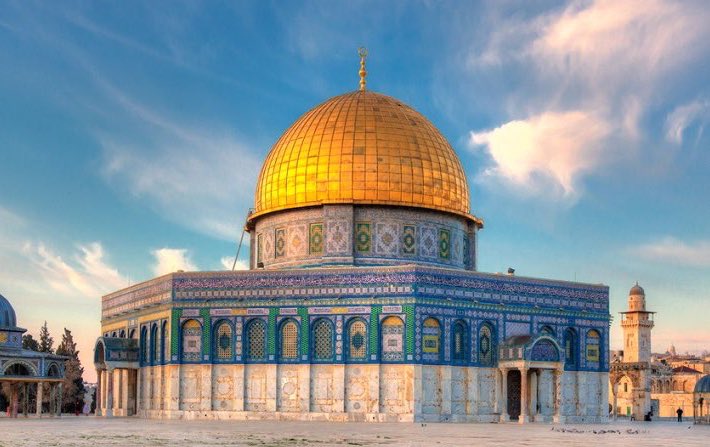
The Al-Aqsa Mosque, located on the Haram al-Sharif (known to Jews as the Temple Mount), is the third-holiest site in Islam and holds immense symbolic importance throughout the Muslim world. Similarly, the Church of the Holy Sepulchre is among the most sacred places in Christianity, believed to be the site of Jesus’ crucifixion and resurrection. Disruptions to access at either site often provoke strong emotional and political reactions across the region.
Past confrontations around the mosque compound have sparked larger waves of violence, including during Ramadan in 2021, when clashes between Israeli police and Palestinian worshippers ignited an 11-day conflict between Israel and Hamas in Gaza. Many observers fear that current restrictions could lead to a similar escalation.
Diplomatic Ramifications for the Region
The rare, shared statement from seven influential Muslim-majority nations underscores growing frustration toward Israeli policy in Jerusalem and signals potential diplomatic strain across the Middle East. Each of the participating countries maintains different levels of engagement with Israel—some have peace agreements or emerging economic ties, while others have no formal diplomatic relations.
Saudi Arabia’s inclusion is particularly notable. Although the kingdom and Israel have no official diplomatic relationship, both nations were reportedly approaching normalization talks in late 2023 before the eruption of renewed violence in Gaza halted progress. Riyadh’s participation in the statement suggests a firm stance on issues tied to Jerusalem, possibly recalibrating the pace of dialogue with Tel Aviv.
Turkey’s government also echoed strong criticism, with its foreign ministry calling the restrictions “an attack on freedom of worship and a provocation that deepens the divide.” Egypt, the first Arab nation to sign a peace deal with Israel in 1979, said the measures “undermine all regional efforts toward de-escalation.”
Economic and Humanitarian Impact
Beyond the immediate religious implications, the blockade has also affected local commerce and tourism—two of Jerusalem’s most vital economic sectors. Shopkeepers and vendors in the Old City report steep declines in revenue as fewer visitors are allowed entry. Pilgrimage seasons typically provide critical income for residents, many of whom depend on tourism and hospitality for their livelihoods.
International economic observers note that prolonged restrictions could further destabilize an already fragile local economy. The World Bank has previously estimated that disruptions to movement in the occupied territories cost hundreds of millions in potential economic activity annually. For Jerusalem’s mixed communities, access not only to religious sites but also to basic infrastructure—schools, markets, hospitals—remains an enduring challenge shaped by checkpoints, permits, and security zones.
Comparisons Across the Region
Restrictions on religious access are not unique to Israel and the Palestinian territories, but Jerusalem’s status amplifies their global resonance. By contrast, other multi-faith cities such as Istanbul or Cairo, while occasionally witnessing tensions, maintain broadly open access to places of worship under government supervision. Turkey, for instance, has sought to present itself as a model of religious coexistence, restoring historic Christian churches while preserving its Islamic heritage sites.
In Jordan, where religious tourism to sites such as the Baptism Site of Jesus on the Jordan River remains open, authorities often highlight the coexistence of faiths as central to the kingdom’s identity. Many regional observers argue that similar approaches could serve as a model for Jerusalem if political and security conditions allowed.
Global Reaction and Calls for Restraint
The statement by the seven nations has sparked renewed attention from international diplomatic circles. Officials from the European Union, the United States, and the Vatican have reportedly expressed concern over the escalating restrictions and urged all sides to protect religious freedom and avoid confrontation.
The United Nations Special Coordinator for the Middle East Peace Process reiterated appeals for “full respect of the historical status quo at the holy sites.” While many Western nations have stopped short of directly condemning Israeli policy, they have called for “restraint” and “unfettered access” for worshippers during religious observances.
Meanwhile, faith-based organizations across the Muslim and Christian worlds have held vigils and public demonstrations in solidarity with those prevented from visiting Jerusalem. Social media platforms have amplified footage showing empty courtyards near Al-Aqsa where thousands normally gather for prayers.
Prospects for De-escalation
Efforts to calm tensions appear to be underway, though progress remains uncertain. Diplomatic sources indicate that Jordan and Egypt are mediating indirect talks between Israeli and Palestinian representatives to restore full access to the Old City’s religious sites ahead of upcoming religious holidays. However, tangible breakthroughs remain elusive as both sides maintain entrenched positions on issues of security and sovereignty.
Analysts say that with rising political pressure domestically and abroad, Israel faces a delicate balance between ensuring safety and avoiding further alienation from regional partners. For the seven nations that issued the condemnation, the unified stance may strengthen their collective influence in future international deliberations concerning Jerusalem’s status.
An Unresolved Struggle for Access and Dignity
For many residents of Jerusalem and worshippers across the world, the core issue is not merely politics but the right to spiritual connection. Every closure or checkpoint becomes a symbol of broader displacement and control—an echo of a conflict that has lasted generations.
As the seven nations press their call for unfettered access to the city’s sacred spaces, global attention turns again to Jerusalem, a city sacred to three faiths yet shared in constant tension. Whether diplomacy, pressure, or persistence can preserve its openness remains one of the enduring tests of peace and coexistence in the modern Middle East.