How Scientists Can Captivate Audiences by Adopting Techniques from Performers
The Growing Importance of Communication in Science
In an era defined by rapid scientific progress and an abundance of information, the ability to communicate clearly and engagingly has become as essential to research as the discoveries themselves. Scientists, long associated with precise data and cautious language, are increasingly recognizing that communication skills can determine whether their message reaches beyond the lab and resonates with the public.
From climate scientists discussing global warming to medical researchers unveiling breakthrough therapies, effective communication has a tangible impact on public understanding, policy decisions, and funding opportunities. While technical rigor remains paramount, experts now agree that delivery — the how of science communication — plays an equally critical role in shaping how research is received and remembered.
Lessons from the Stage: What Performers Can Teach Scientists
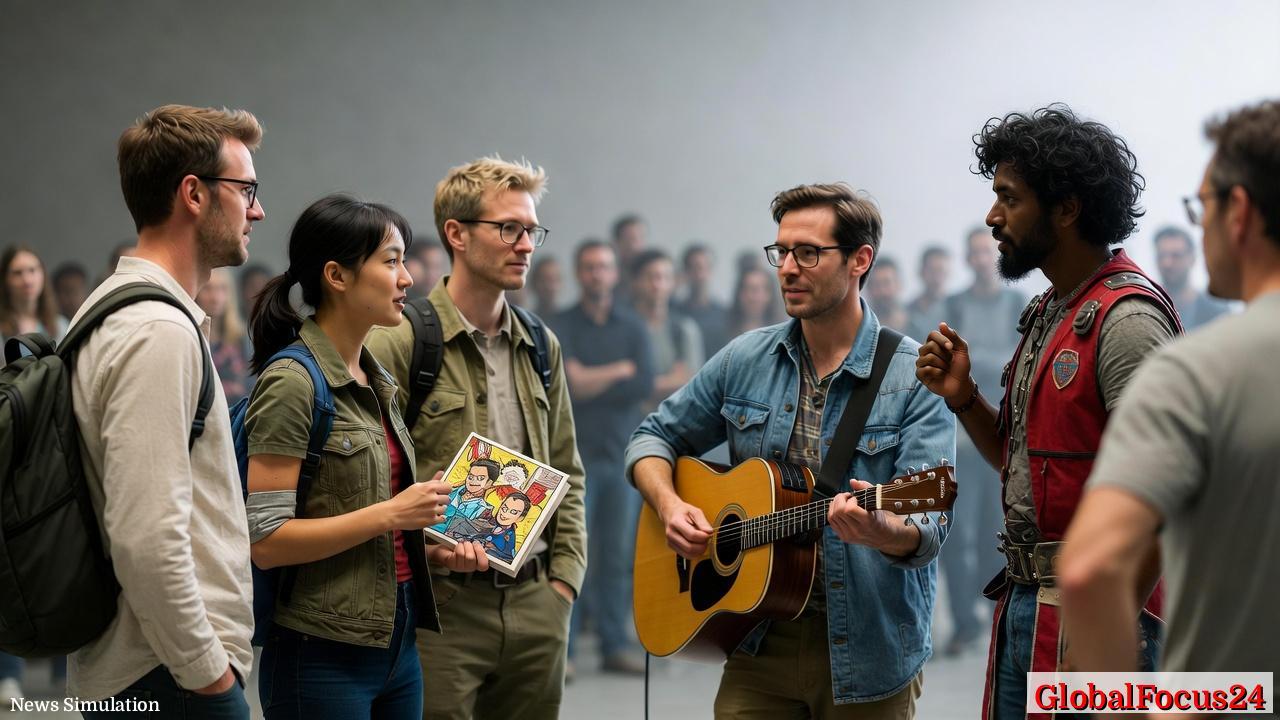
Artists, comedians, and musicians have long mastered the art of holding an audience’s attention. These performers rely on timing, emotion, and storytelling to connect deeply with their listeners. Public-speaking experts argue that scientists can achieve similar results by borrowing key performance techniques without sacrificing intellectual credibility.
Actors, for instance, use controlled body language and vocal modulation to emphasize key messages. Comedians, on the other hand, rely on timing and rhythm — knowing when to pause, when to surprise, and when to deliver a punchline. Musicians understand the balance of tension and release, pacing their performances to mirror natural patterns of human attention.
When scientists apply these strategies, their talks and presentations shift from dense information sessions to narrative experiences. Rather than simply listing data, they take audiences on a journey — one that unfolds with curiosity, conflict, and resolution.
The Power of Storytelling in Scientific Communication
Storytelling remains one of the most effective tools for engagement across cultures and disciplines. It transforms complex scientific information into relatable narratives by connecting data to human experiences. For example, instead of beginning a presentation with a chart of rising carbon dioxide levels, a climate researcher might begin with a vivid description of a glacier retreating over time. This approach frames data within a tangible, emotional context.
Cognitive scientists have found that stories activate more areas of the brain than facts alone. They stimulate empathy, imagination, and memory, making information more enduring. A well-constructed narrative arc — introduction, conflict, challenge, and resolution — mirrors how humans naturally process information. For scientists, storytelling doesn’t mean simplifying or sensationalizing research; it means structuring explanations so that they connect logically and emotionally with the audience.
Timing and Rhythm: The Science of Capturing Attention
Performance teaches that pauses can be as powerful as words. A strategic pause allows the audience to process a point, anticipate what comes next, and sustain attention. Comedians often perfect this rhythm through repeated practice, sensing when a beat of silence heightens impact. Scientists can use similar techniques during lectures, presentations, or interviews.
Vocal variation also contributes significantly to listener engagement. Monotone delivery, however accurate the content, tends to lose audiences quickly. By adjusting tone, pace, and inflection, presenters can signal importance and maintain variety. Neuroscience supports these methods: variability in speech and deliberate pauses trigger renewed attention, while monotony leads to cognitive drift.
Emotional Delivery and Authentic Connection
Performers understand that emotion drives connection. For scientists, expressing enthusiasm or personal investment in their work can transform a technical presentation into a meaningful exchange. Passion communicates confidence and invites curiosity. Researchers who allow themselves to show excitement about a discovery — or even frustration about a challenge — create authenticity that audiences respond to instinctively.
One striking example comes from astrophysicists who share their awe for the universe during public talks. Their emotional tone captures the wonder inherent in scientific exploration, bridging the gap between abstract data and human fascination. Social psychologists note that such moments humanize scientists, breaking the stereotype of detached intellectualism and fostering trust with non-expert audiences.
Using Body Language to Reinforce Clarity
Body language serves as a silent amplifier of spoken words. Performers rely on gestures, eye contact, and posture to convey presence and confidence. Scientists, too, can benefit from mindful non-verbal communication. Standing tall, maintaining eye contact, and avoiding repetitive or closed gestures enhance credibility and engagement.
In contrast, reading verbatim from slides or notes can signal disengagement. Effective speakers use open gestures that invite participation and reflect transparency. In classrooms, conferences, or media interviews, subtle physical cues often determine whether audiences perceive the speaker as approachable and trustworthy.
The Role of Analogies and Relatable Imagery
Analogies function as bridges between complex theories and everyday understanding. A musician comparing sound waves to ripples in a pond or a physicist describing gravitational waves as cosmic vibrations allows unfamiliar concepts to take familiar form. Well-crafted analogies give audiences mental scaffolding to grasp abstract ideas.
The key lies in choosing comparisons that are both accurate and accessible. Public communication specialists advise against clichés or oversimplification but encourage vivid, specific metaphors grounded in everyday experience. For example, describing DNA replication as a mechanical assembly line helps visualize precision and repetition without distorting scientific truth.
Historical Context: From Lecture Halls to Global Platforms
The tension between scholarly restraint and public engagement is not new. In the 19th century, figures like Michael Faraday and Carl Sagan transformed how science reached the masses. Faraday’s Christmas Lectures at the Royal Institution captivated Victorian audiences with theatrical demonstrations, while Sagan’s “Cosmos” series in the 20th century brought astrophysics to television viewers worldwide.
Today, the challenge has expanded across digital platforms. Scientists share their findings through podcasts, social media threads, and virtual conferences — formats that reward engagement, brevity, and charisma. The most successful science communicators, such as astrophysicist Neil deGrasse Tyson and neuroscientist Mayim Bialik, seamlessly merge expertise with entertainment, embodying the performer’s instinct for connection.
Regional Comparison: Shifting Communication Cultures
Approaches to scientific communication vary across regions. In Europe, public science festivals and open lectures have become platforms where researchers experiment with informal presentation styles, blending theatre and multimedia. The United States emphasizes storytelling workshops and communication training integrated into doctoral programs, reflecting a growing recognition that scientific literacy depends on relatable delivery.
In Asia, particularly in Japan and South Korea, universities are investing in outreach initiatives where scientists learn from television hosts and performing artists. These programs aim to make advanced research accessible to younger audiences. Together, these efforts reflect a global movement: acknowledging that engagement is not optional but integral to scientific progress.
Economic and Institutional Impact
The shift toward engaging communication has measurable economic consequences. Institutions that invest in communication training and outreach tend to attract more funding, partnerships, and media coverage. Grants and philanthropic agencies increasingly consider a project’s potential for public engagement when allocating resources.
Moreover, scientists who communicate effectively can influence innovation adoption rates. Studies show that when research findings are explained clearly to policymakers or industry leaders, the time from discovery to application shortens significantly. This impacts fields such as renewable energy, healthcare, and biotechnology, where understanding complex data shapes public policy and market growth.
The economic ripple effect extends to media and education. Demand for science communication professionals has expanded, creating new career paths bridging academia, journalism, and entertainment. Universities are adding courses that combine stagecraft with scientific literacy, investing in skills once considered peripheral to research.
Building the Future of Scientific Storytelling
As global challenges like pandemics, climate change, and artificial intelligence reshape public discourse, the need for clear and engaging science communication is more urgent than ever. Scientists who embrace elements of performance can bridge the gap between knowledge and understanding, turning skepticism into curiosity and data into inspiration.
The modern scientist is no longer confined to laboratories and journals. Instead, they stand — often literally — before audiences eager to learn, armed not only with data but with presence, pacing, and passion. By blending the analytical precision of science with the expressive tools of performance, researchers can ensure their ideas resonate far beyond the confines of academia, inspiring the next generation to see science not as remote or abstract, but as a living, breathing part of human culture and society.