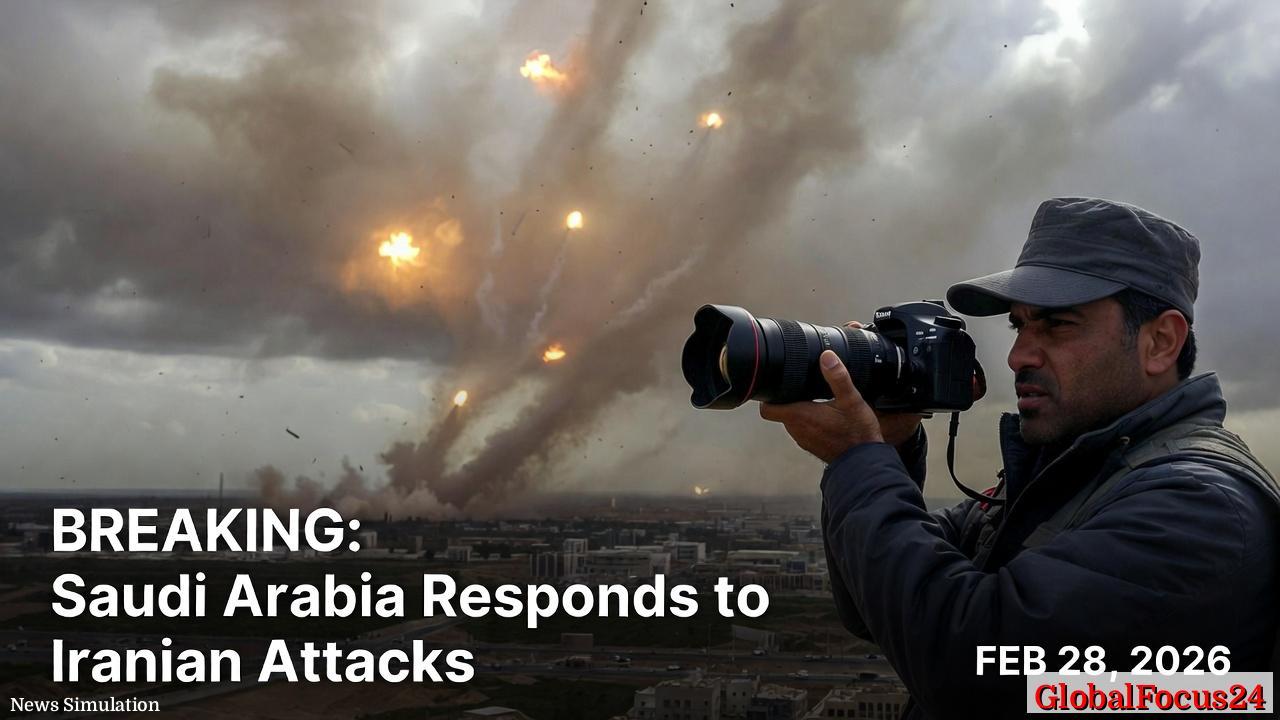
Saudi Arabia Condemns Iranian Missile Attacks, Vows Strong Response After Interceptions Over Riyadh and Eastern Province
Saudi Arabia Denounces “Blatant and Cowardly” Strikes
The Kingdom of Saudi Arabia issued a forceful condemnation on Friday following a series of Iranian attacks that targeted the Riyadh region and the Eastern Province. The Ministry of Foreign Affairs confirmed that all incoming projectiles were intercepted by Saudi defense systems before they could reach their targets, preventing casualties and major damage.
In an official statement released on February 28, 2026, the Kingdom characterized the attacks as “blatant and cowardly,” asserting that they represented a grave violation of international law and regional security. The ministry underscored that such aggression “cannot be justified under any pretext or circumstance,” describing it as a dangerous escalation amid existing regional tensions.
The statement further emphasized that Saudi Arabia’s airspace and territory had not been, nor would be, used to carry out offensive operations against Iran. This clarification appeared aimed at countering any suggestion that the Kingdom’s territory might have played a role in facilitating hostilities involving third parties.
Interception Systems Showcase Defensive Readiness
Reports from Riyadh indicated that the Kingdom’s defense forces successfully engaged and destroyed several ballistic missiles and drones launched from Iranian territory. The interception, described by defense officials as “highly coordinated and effective,” relied on an integrated network of radar systems and surface-to-air missile batteries designed to protect population centers and energy infrastructure.
Residents in parts of Riyadh and Dammam reported hearing loud booms late Thursday night, followed by visible streaks in the sky as the projectiles were neutralized mid-air. Civil defense teams were deployed to assess debris impact sites, though authorities reported no injuries or significant property loss. Officials credited the swift response of Saudi defense crews and the efficiency of the country’s missile shield for minimizing potential harm.
The successful interceptions reinforce confidence in Saudi Arabia’s expanding air defense network, which has steadily advanced since the mid-2010s amid repeated cross-border drone and missile incidents. The system, encompassing U.S.-made Patriot and THAAD platforms together with indigenous radar technologies, has become a core asset in the Kingdom’s national security architecture.
Growing Tensions in Gulf Security Landscape
The incident comes at a time when the Gulf region is witnessing renewed tensions linked to maritime disputes, energy diplomacy, and ongoing proxy conflicts in several Middle Eastern theaters. Analysts note that Iran’s recent assertive posture follows months of heightened rhetoric, particularly after international negotiations on its nuclear and missile programs stalled in late 2025.
For Saudi Arabia, this latest aggression marks one of the most direct Iranian attempts to target the Kingdom’s mainland in recent years. It echoes earlier missile barrages and drone incursions, such as the 2019 attack on Aramco oil facilities that temporarily disrupted global oil supplies and exposed vulnerabilities in regional air defense coordination.
Riyadh’s prompt condemnation and defensive success serve both as deterrence and as reassurance to its citizens and allies, reaffirming the Kingdom’s commitment to maintaining stability across the Arabian Peninsula. Regional observers say the fact that all projectiles were intercepted demonstrates both improved defense integration and crucial intelligence coordination with international partners.
Historical Context of Iran–Saudi Rivalry
The confrontation between Saudi Arabia and Iran has deep historical roots rooted in ideological divergence, regional leadership rivalry, and conflicting visions of security architecture in the Gulf. The two nations have often found themselves on opposing sides of regional conflicts, from Yemen to Syria and Lebanon.
Since the resumption of diplomatic relations in 2023 under a China-mediated framework, there had been cautious optimism that both countries might gradually shift toward de-escalation and economic cooperation. That optimism, however, has repeatedly been tested by recurrent clashes involving proxy forces and maritime incidents in the Strait of Hormuz.
According to regional analysts, the February 2026 attacks may represent a severe setback for the limited rapprochement efforts seen over the past three years. By directly targeting Saudi territory, Tehran risks undoing confidence-building measures that had begun to yield tangible gains in diplomatic dialogue and trade discussions.
Economic and Energy Implications
Although no damage was reported to the Kingdom’s critical infrastructure, the immediate impact of the incident rippled through energy markets. Brent crude prices spiked nearly 3 percent in early trading as investors reacted to fears of further escalation between two of the region’s most influential oil producers.
The global energy market has long exhibited sensitivity to any perceived threat to Gulf security. The Riyadh region hosts numerous command centers and industrial zones, while the Eastern Province encompasses major oil fields and export terminals vital to international supply chains. A successful strike on these facilities could have significant implications for production and global energy prices.
Economists note that Saudi Arabia’s rapid containment of the threat and public reassurance of operational continuity helped calm markets by midday trading. Despite the temporary volatility, international analysts view the incident as a test of the Kingdom’s emergency preparedness rather than a lasting shock to its energy output.
Regional Comparisons and Strategic Dimensions
The Gulf Cooperation Council (GCC) states swiftly expressed solidarity with Saudi Arabia, emphasizing a collective stance against aggression targeting any member state. The United Arab Emirates, Bahrain, and Kuwait released statements underscoring the importance of unity in confronting threats to regional stability and energy infrastructure.
These responses mirror the coordinated defense postures seen in previous crises, such as the 2022 and 2024 missile flare-ups involving Yemen-based groups. Unlike those earlier attacks, however, the February 2026 incident originates directly from Iran—raising concerns of a broader regional confrontation if such actions continue.
Comparatively, other Gulf nations have invested heavily in comprehensive air defense networks following past attacks. The UAE’s iron dome–style systems and Qatar’s early warning radar collaborations with U.S. forces parallel Saudi Arabia’s ongoing modernization of its Integrated Air and Missile Defense Program (IAMDP). Together, these measures signify a shared recognition of the evolving threat landscape in the Gulf.
Saudi Arabia’s Assertive Warning
The Ministry of Foreign Affairs concluded its statement by affirming that Saudi Arabia “will take all necessary measures” to protect its security, sovereignty, and the safety of its citizens and residents. The language was notably firm, signaling that Riyadh reserves the right to respond “at a time and in a manner it deems appropriate.”
While the statement did not specify what form such measures might take, policy experts interpret it as leaving room for both military and diplomatic responses. Potential avenues include coordinated security consultations with allies, cyber defense enhancements, or limited retaliatory measures designed to deter further aggression without triggering a full-scale confrontation.
Saudi security sources emphasize that Riyadh remains committed to avoiding unnecessary escalation but will act decisively against any continued violations. The government’s handling of this incident aligns with a broader strategy of deterrence—projecting readiness while working to preserve stability in regional and international markets.
Global Response and Calls for Restraint
The international community responded swiftly, with several countries and organizations calling for restraint and warning against actions that could destabilize the Middle East. Early statements from Washington, London, and Brussels condemned the attacks and reiterated support for Saudi Arabia’s right to self-defense in accordance with international law.
The United Nations urged both nations to prioritize diplomacy and avoid military escalation. Analysts view such appeals as critical to maintaining open channels of communication amid an increasingly volatile environment. Meanwhile, defense experts cautioned that even limited exchanges could spiral quickly given the proximity of military assets and oil infrastructure across the Gulf.
Public Sentiment and Domestic Resilience
Across Saudi cities, the mood on Friday was a mix of vigilance and confidence. Citizens expressed solidarity with defense forces through social media, praising the effectiveness of the Kingdom’s missile interception systems. Local media coverage highlighted the absence of casualties and framed the quick response as evidence of national resilience.
Residents in Riyadh reported returning to normal daily activities within hours of the incident, reflecting the population’s growing trust in civil defense protocols. The government has prioritized civilian preparedness and crisis communication since past missile incidents, ensuring that emergency alerts and protective guidance are rapidly disseminated.
Looking Ahead
The February 28 attacks underscore the fragile balance underpinning Gulf security in 2026. As Saudi Arabia continues to modernize its military and strengthen diplomatic ties with global partners, maintaining stability will remain at the heart of its national strategy.
The Kingdom’s immediate challenge will be navigating the aftermath—asserting deterrence without escalating hostilities, reinforcing defense capabilities while preserving diplomatic channels, and safeguarding its energy infrastructure against evolving threats.
Whether these attacks mark a turning point in the long and complex Saudi–Iranian relationship remains to be seen. For now, Riyadh’s message is unequivocal: its territory and people will be defended with complete readiness, and acts of aggression will not go unanswered.