Anthropic Talks Signal Shift in Pentagon AI Strategy Amid Ethical Debates
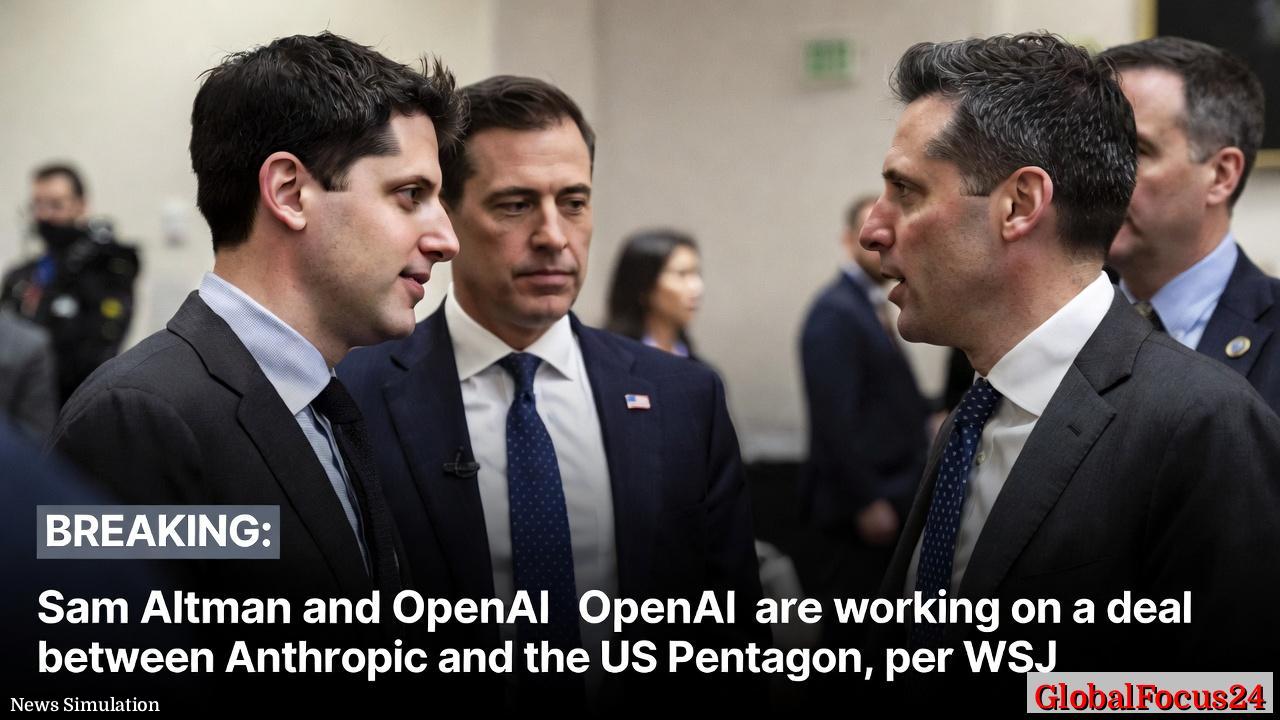
A high-stakes negotiation involving leading artificial intelligence developers and the U.S. Department of Defense is drawing significant attention from policymakers, industry observers, and regional tech hubs. In recent weeks, Sam Altman and OpenAI have emerged as facilitators in discussions aimed at bridging divergent positions between Anthropic and the Pentagon. The emergence of this mediation reflects both the urgency to harness advanced AI capabilities for national security and the ongoing ethical, legal, and operational questions that accompany such power.
Historical context: a decade of rapid AI ascent and security implications The AI landscape has evolved at breakneck speed since the early 2010s, transitioning from research prototypes to integrated systems that influence commerce, health care, transportation, and defense. Anthropic, founded in 2021 by former OpenAI researchers, positioned itself as a company prioritizing safety and alignment, emphasizing guardrails, interpretability, and risk-aware design. The Pentagon’s interest in advanced AI spans intelligence analysis, logistics optimization, autonomous systems, and mission planning. Throughout the 2010s and 2020s, multiple projects sought to balance capability with accountability, leading to a patchwork of regulatory, ethical, and procurement norms that businesses and public institutions are still refining.
The current moment reflects a convergence of capabilities and concerns at a national scale. AI platforms that can parse vast streams of data, generate actionable insights, and potentially operate autonomously raise questions about civilian privacy, civilian harm, and the control of automated decision processes. In this milieu, Anthropic’s emphasis on safety and red-teaming aligns with a sector-wide push to ensure that advanced systems behave predictably, transparently, and within defined ethical boundaries.
Key issues shaping the negotiation
- Ethical guardrails and civilian protections: Anthropic has consistently argued that AI systems must avoid facilitating mass surveillance of citizens or enabling autonomous weapons without robust oversight, risk assessment, and human-in-the-loop controls. The Pentagon, meanwhile, seeks access to reliable, scalable AI tools that can augment decision-making and provide operational advantages. The tension centers on whether and how AI capabilities can be deployed responsibly while meeting strategic imperatives.
- Access and interoperability: A central point of debate is whether the defense ecosystem can integrate externally developed AI platforms with existing command, control, and data infrastructure. Interoperability matters for mission effectiveness, but it also introduces considerations about data handling, model updates, and system hardening against adversarial manipulation.
- Safety versus speed of deployment: The defense sector often requires rapid procurement and fielding cycles to adapt to evolving threats. At the same time, safety-by-design principles advocate for thorough testing, red-teaming, and contingency planning. The mediation efforts acknowledge that a balance must be struck to avoid compromising safety in the pursuit of tactical advantages.
- Oversight, governance, and accountability: Transparent governance mechanisms—such as independent audits, external risk assessments, and clearly defined responsibilities for misuse—are increasingly prioritized in both industry and government circles. The discussions are likely to address who bears liability for AI-driven outcomes and how accountability is demonstrated to the public and to lawmakers.
- Economic implications for the AI ecosystem: A potential agreement could influence procurement norms, supply chains, and the competitive landscape for AI startups and established players. Depending on terms, the deal might affect capital flows, research priorities, and regional innovation dynamics in tech corridors across the United States.
Regional comparisons: how similar efforts unfold in major tech hubs
- Silicon Valley and the Bay Area: Historically the hub of private-sector AI innovation, this region emphasizes rapid experimentation, venture funding, and strong collaboration with industry leaders. Any engagement with the Pentagon often seeks to preserve the region’s innovation tempo while incorporating stringent safety and export controls. The mediation effort here aligns with broader industry calls for clearer standards, public-private dialogue, and predictable procurement frameworks.
- Austin, Texas, and the Southwest: With a growing AI talent pool and favorable business conditions, this region emphasizes cost-effective scalability and resilient supply chains. Should the negotiations yield a framework that allows secure, well-regulated access to advanced AI tools, regional ecosystems could accelerate program development while maintaining a steady emphasis on ethical guardrails.
- The Northeast’s research corridors: Universities and national labs drive foundational research and allied technology transfer. Any partnership with defense customers complements academic collaboration by translating theoretical advances into deployable systems, under rigorous oversight. This regional ecosystem benefits from cross-pollination between safety research, policy analysis, and practical defense applications.
- Midwest manufacturing and logistics hubs: The potential operational implications of AI-enabled logistics and decision support could echo through industrial bases reliant on automation. A mediation outcome favoring interoperable, secure AI platforms may bolster regional productivity, while ensuring compliance with privacy and civil liberties standards.
Economic impact: what a mediated agreement could mean for stakeholders
- For defense budgets and procurement practices: A negotiated framework that governs AI usage could influence how funds are allocated, with emphasis on risk management, software as a service models, and lifecycle costs. Predictable procurement pathways help military planners budget for maintenance, updates, and security audits.
- For AI developers and startups: Clear standards and framework agreements can reduce uncertainty, encourage investment, and clarify boundaries around export controls, data usage, and safety testing. Companies with robust safety certifications may gain a competitive edge in defense-related opportunities.
- For regional economies and job markets: A successful agreement could catalyze tech workforce development, with increased demand for researchers, software engineers, safety evaluators, and compliance specialists. Local universities might see expanded partnerships, grants, and internship pipelines designed to sustain a pipeline of talent.
- For consumers and civil society: While the immediate beneficiaries are defense-oriented stakeholders, the broader diffusion of safety-centric AI practices could spill over into civilian applications. The emphasis on risk-aware design might push the industry toward safer tools in healthcare, finance, and critical infrastructure.
Operational realities and logistical considerations
- Data stewardship and privacy: Any collaboration involving sensitive data requires stringent data governance, access controls, and audit trails. The parties will likely discuss restrictions on data sharing, anonymization standards, and retention policies to protect civil liberties.
- Safety testing and evaluation: Independent red teams, third-party validators, and post-deployment monitoring can help ensure that AI systems remain aligned with stated safety goals. Such mechanisms are often central in negotiations to reassure regulators and the public.
- Transparency and public accountability: A balanced approach could include periodic reporting about system performance, safety incidents, and corrective actions, while safeguarding national security interests. Public communication strategies help maintain trust without compromising operational security.
- Talent and workforce development: Expanding collaborations with universities and research institutes can strengthen the talent pipeline. Training programs focused on ethics, safety, and system design may become standard components of defense-related AI initiatives.
Regional and international context: comparing to global trends Internationally, several nations are advancing national AI strategies that combine military-readiness with ethical guardrails. A mediated U.S. agreement could set benchmarks that influence allied collaborations and export-control policies. Other countries emphasize robust oversight regimes, human-in-the-loop requirements, and clear lines between civilian and military AI deployments. The United States’ approach, if codified through an agreed framework, could shape interoperability standards and bilateral partnerships across North America, Europe, and Asia-Pacific regions.
Public reaction and societal implications The prospect of enhanced AI capabilities within national security contexts often triggers a spectrum of public responses. Supporters emphasize improved safety, rapid crisis response, and deterrence against existential threats. Critics caution against unintended escalations, civil liberties concerns, and the risk of overreliance on autonomous decision-making. The mediation process, by foregrounding safety and governance, seeks to address these tensions with transparent processes and accountable oversight.
Looking ahead: what to watch for in the coming months
- A formal framework or memorandum of understanding: If negotiations progress, a public-facing outline may emerge detailing safety standards, data governance, and oversight mechanisms.
- Independent validation requirements: Expect proposals for external audits, red-team assessments, and ongoing monitoring to verify adherence to safety commitments.
- Procurement pilots and sandbox environments: To test interoperability, pilots may unfold in controlled environments, enabling iterative refinement before broader deployment.
- Industry collaborations and academic partnerships: The mediation could spur new partnerships that align research agendas with defense needs while preserving ethical safeguards.
Conclusion: navigating a complex crossroads of capability and responsibility The mediation between Anthropic and the Pentagon, facilitated by prominent industry leaders, marks a pivotal moment in the intersection of national security and responsible AI development. It underscores a broader trend toward collaborative governance where safety, transparency, and strategic necessity must coexist. As regional tech ecosystems, economic interests, and public trust converge, the path forward will hinge on clear governance, rigorous safety practices, and a shared commitment to advancing AI in ways that safeguard both security and civil liberties. The coming months will reveal how these forces balance, and what the resulting framework means for the future of AI in defense, industry, and everyday life.