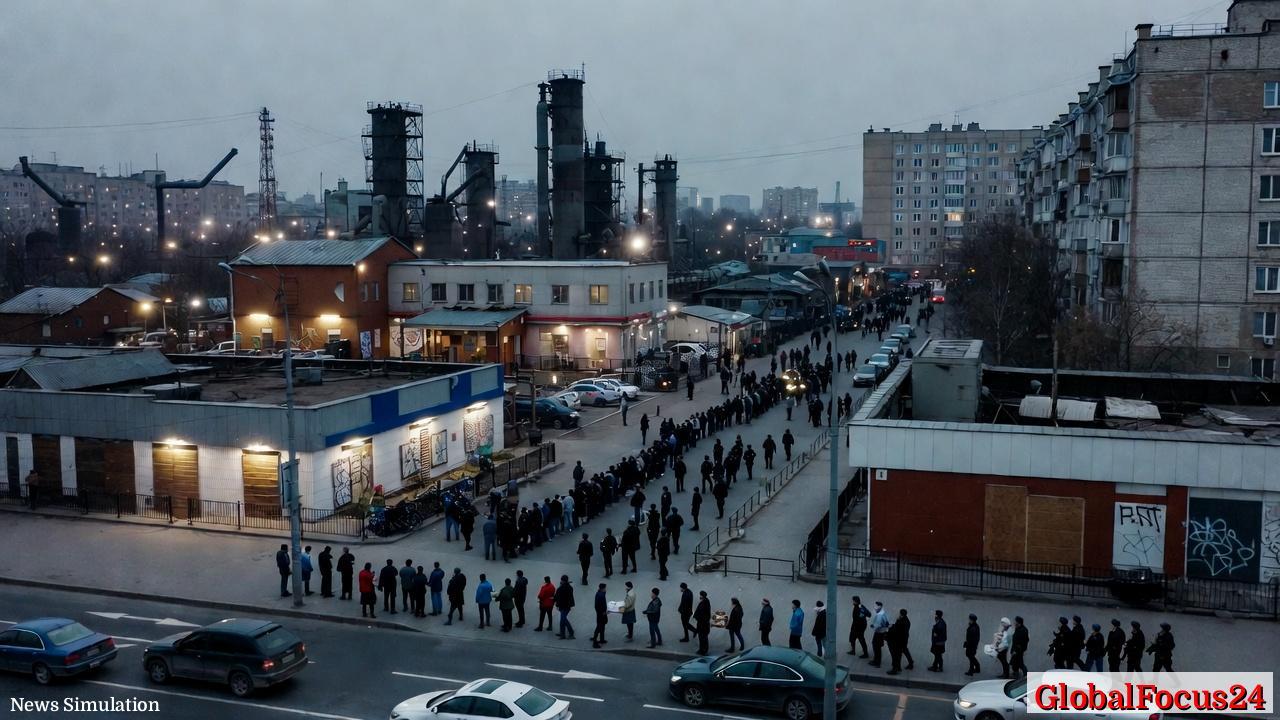
Russia’s Fourth Year of War: Economic Strain, Social Shifts, and the Long-Term Horizon
Moscow — As the conflict in Ukraine enters its fourth year, the everyday life of Russia has been reshaped in ways that extend beyond battlefield maps. Across cities and towns, residents navigate a transformed economic landscape, tighter social controls, and a broader recalibration of priorities that will influence the country for years to come. While official rhetoric emphasizes resilience and stability, independent observers note a more nuanced picture — one of sustained pressure in households, industries retooled for defense needs, and a public increasingly accustomed to living with uncertainty.
Historical Context: From Post-Soviet Transitions to a War Economy To understand the present, it helps to recall the longer arc of Russia’s economic and social development since the dissolution of the Soviet Union. The nation has repeatedly faced external shocks — sanctions, capital flight, commodity-price swings, and currency volatility — that tested policy responses and public tolerance. The current conflict has intensified that testing period, pushing Russia toward a wartime economy in which defense procurement, domestic production, and supply-chain realignments take precedence over consumer-focused growth strategies.
Economic Framework: Some Sectors Adapt, Others Struggle
- Defense-led manufacturing and industrial hubs have become engines of employment and local GDP in several regions. Factories devoted to weapons, components, and related logistics have extended operating hours, contributing to near-term gains in employment and supplier activity in cities like Yekaterinburg and surrounding regions.
- The redirection of resources has, however, diminished supply for consumer goods and non-defense sectors. Shortages and higher prices for everyday items have become more common in many markets, altering household budgeting and shopper behavior.
- Inflation has remained a persistent concern. Utilities, rents, and transportation costs contribute to ongoing cost-of-living pressures for families. In response, households often adjust spending patterns, prioritizing essential goods and services while delaying discretionary purchases.
- Fiscal measures have shifted to sustain the war effort. Tax policy tweaks and targeted subsidies aim to stabilize the budget and maintain social programs, but the broader macroeconomic outlook remains sensitive to trajectories of sanctions, commodity prices, and the pace of military activities.
Regional Comparisons: Industrial Russia vs. Consumer-Centric Regions
- Industrial belts near major steel mills, machine plants, and defense clusters show relatively stronger activity, with material flows and employment reflecting a spillover from wartime production.
- Regions with robust service sectors or heavy reliance on imports for consumer goods have faced sharper price adjustments and more pronounced shortages, highlighting the uneven regional impact of the war and sanctions.
- Urban centers with diversified economies have managed to sustain essential services and public administration better than rural or monostructured areas, where dependence on a single industry amplified vulnerability to shocks.
Social and Civic Life: Censorship, Control, and Public Adaptation
- Information flows have become more constrained. The state has intensified surveillance and tightened messaging around the conflict, contributing to a climate of caution in public discourse and online expression.
- Civil liberties in some domains have tightened, with authorities emphasizing stability and security as overarching goals. Public gatherings and political activism that challenge official narratives have faced closer scrutiny.
- The societal impact extends beyond politics. Everyday routines—education, healthcare access, and communal life—are increasingly aligned with wartime priorities, influencing how communities plan for the near future.
Human Toll and Demographics: Lives Affected and Population Shifts
- The human cost remains profound. Verified combat-related fatalities, along with wounded veterans, have created enduring grief across families and communities.
- Demographic patterns have shifted. Outflows of skilled workers during the early years of the conflict contributed to a degree of brain drain, while some populations have seen increased mobility as households seek opportunities elsewhere or return home after displacement.
- The long-term demographic effects will depend on migration trends, birth rates, and social support for veterans and families, all of which interact with policy choices on healthcare, housing, and labor markets.
International Dynamics: Dependencies, Sanctions, and Partnerships
- Russia’s economic and operational dependencies have evolved. Access to certain technologies, components, and expertise remains critical to sustaining military and civilian activities, even as sanctions reconfigure global supply chains.
- External partnerships provide selective support in areas like defense equipment, logistics, and specialized labor, underscoring a complex web of cooperation that can both ease short-term pressures and reveal vulnerabilities to greater economic isolation.
- Energy and commodity dynamics continue to shape the broader economic environment. Oil, gas, and related industries face ongoing challenges from international policy shifts, climate considerations, and market demand.
Energy and Utilities: Everyday Realities for Households
- Energy reliability remains a core concern in many regions. Localized disruptions and maintenance cycles have translated into periodic blackouts or rolling outages in parts of the country, affecting households and small businesses alike.
- Utility costs have risen, influencing household budgeting and consumer behavior. Families prioritize essential services, often adjusting consumption to manage monthly bills more effectively.
Military and Security Outlook: Strategic Considerations for the Medium Term
- Military operations and logistics exert a persistent influence on the economy and regional planning. The continuity of defense staffing, equipment maintenance, and supply-chain integrity remains central to ongoing operations.
- Naval, air, and ground capabilities face testing conditions as strategic objectives unfold. The long-term implications for regional security dynamics will hinge on the evolution of the conflict, allied responses, and domestic resilience measures.
Public Reaction and Sentiment: A Society in Flux
- Public mood exhibits a blend of resilience and fatigue. Some citizens express pride in national endurance, while others voice concern about the economic squeeze and long-term prospects.
- Community networks, remittances, and informal support systems often bolster households navigating hardship, illustrating how families adapt through practical means even when official narratives stress stability.
Long-Term Implications: What the Fourth Year Portends
- Economic resilience is likely to persist in limited sectors tied to defense and production, but broad-based growth will depend on external factors, including sanctions relief, access to global markets, and the pace of normalization in international trade.
- Demographic and social shifts will shape policy debates for years, influencing priorities in housing, healthcare, education, and labor markets as the country grapples with an aging population and the need to retain skilled workers.
- Regional disparities will continue to define economic and social outcomes. Policymakers may increasingly tailor interventions to support vulnerable communities while leveraging strengths in diversified urban economies.
Public Health, Education, and Cultural Life: Indirect Effects
- The prolonged state of emergency exerts indirect effects on public health campaigns, preventative care, and mental health services. Communities adapt by expanding informal support networks and leveraging digital platforms for information and services.
- Educational institutions face ongoing adjustments to curricula and assessment methods, balancing in-person instruction with remote or hybrid formats where necessary. The emphasis on core competencies and vocational training remains critical as the job market evolves.
Economic Outlook: Navigating Uncertainty
- Near-term forecasts suggest continued pressure on household budgets, with inflationary tendencies and import restrictions influencing price levels and consumer behavior.
- Investment patterns may favor state-led projects and defense-related industries, potentially crowding out some private-sector growth but stabilizing employment in key regions.
- External developments, including diplomatic breakthroughs or intensified sanctions, will be pivotal in determining the trajectory of growth, inflation, and public confidence.
Conclusion: A Nation Recalibrated by War The fourth year of conflict marks a period of recalibration for Russia. Some sectors have found opportunities within a wartime economy, while households and communities grapple with rising costs and constrained choices. The social fabric bears the imprint of tightened controls and the enduring toll of conflict on families and veterans. As policymakers balance the demands of national security with the needs of everyday life, the long arc of this crisis will reveal whether resilience can translate into sustainable progress or whether the costs will redefine Russia’s development path for generations to come. In regions far from the front lines and in the heart of industrial hubs alike, the story remains one of adaptation, caution, and a nation planning for an uncertain horizon.