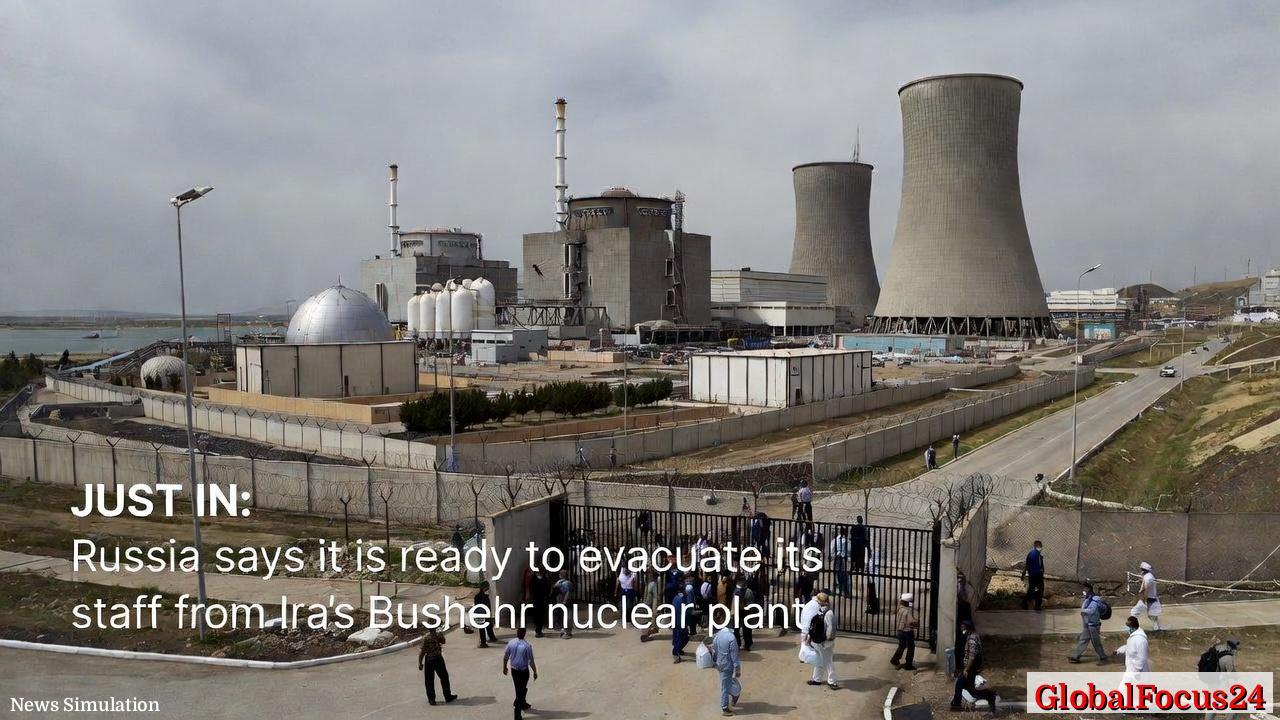
Russia Readies Evacuation Plans for Bushehr Nuclear Plant Staff Amid Regional Tensions
In a high-stakes signal of possible escalation in the Middle East, Russia has disclosed contingency plans to evacuate personnel from Iran’s Bushehr nuclear power plant should regional tensions threaten the safety of its staff. Rosatom, the Russian state nuclear corporation, confirmed that evacuation protocols are prepared, even as operations at the station continue uninterrupted. The disclosure underscores the delicate balance between diplomacy, energy security, and the strategic footprint Russia maintains in Iran through nuclear infrastructure projects.
Historical Context: Bushehr’s Long Arc of Nuclear Cooperation Bushehr’s history traces back to the late 1990s, when Iran’s pursuit of a civilian nuclear program intersected with international skepticism about broader military ambitions. The plant—completed with Russian assistance and expertise—emerged as a symbolic cornerstone of bilateral cooperation between Moscow and Tehran. Over the years, the site has grown from a symbol of cooperative energy development to a tangible asset in a wider geopolitical puzzle. Russia’s involvement has included not only design and construction but ongoing refueling, technical support, and the planned expansion of the facility with additional reactors. This arrangement reflects a broader pattern of energy and strategic collaboration that Moscow has cultivated in the region, leveraging technical know-how to maintain influence while aligning with regional partners.
Operational Significance: Bushehr as Iran’s Nuclear Backbone Bushehr remains Iran’s sole operational nuclear power facility, a critical component of the country’s energy mix as it seeks to diversify beyond fossil fuels. The plant’s continued operation is essential for supplying electricity, stabilizing regional energy markets, and signaling Iran’s capacity to manage its civilian nuclear program with international partners. Russia’s role in maintenance, safety oversight, and expansion projects at Bushehr emphasizes a long-standing model in which Russian expertise underpins the country’s nuclear infrastructure. The prospect of staff evacuations introduces a practical dimension to this model, highlighting how geopolitical volatility can intersect with energy security plans that rely on multinational cooperation.
Economic Impact: Implications for Energy Markets and Regional Trade The potential evacuation of Russian personnel at Bushehr could have ripple effects across several domains:
- Energy supply stability: Bushehr’s operational continuity affects Iran’s electricity generation and, by extension, the regional grid. Any disruption to staffing could acutely impact plant performance, though officials emphasize that current operations are unaffected.
- Russian nuclear services market: Rosatom’s involvement at Bushehr is part of a broader portfolio of international projects. contingency planning signals sustained demand for specialized personnel and maintenance capabilities, which can influence pricing dynamics and contract negotiations for similar facilities worldwide.
- Regional energy pricing: Iran’s energy exports and domestic electricity pricing can be sensitive to plant reliability. A perceived threat to staff safety may feed heightened risk premiums into electricity markets and industrial energy costs in neighboring regions.
- Foreign direct investment climate: Investors monitor how well a country can maintain critical infrastructure under pressure. The Bushehr situation could inform risk assessments for other multinational energy projects in geopolitically sensitive corridors.
Regional Comparisons: Bushehr in Context with Global Nuclear Projects To understand the stakes, consider how Bushehr fits into the landscape of international nuclear energy projects:
- Safety and staffing resilience: Nuclear plants in regions prone to conflict often deploy robust contingency planning, including coordinated evacuation drills, secure command-and-control protocols, and emergency supply chains for essential personnel. Bushehr’s readiness mirrors best practices in operational risk management for critical infrastructure.
- International cooperation models: Russia’s ongoing involvement in Bushehr parallels other cross-border partnerships where technology transfer and long-term service agreements anchor regional energy policy. For example, collaborative frameworks in some European and Asian nuclear programs emphasize shared safety standards, mutual personnel exchange, and joint emergency response planning.
- Geopolitical risk versus energy security: The Bushehr case illustrates how energy ambitions can be entangled with strategic rivalry. While nuclear power offers a relatively low-emission electricity source, the security calculus—staff safety, facility integrity, and operator visibility—remains central to sustaining confidence among domestic populations and international partners.
Security and Safety Considerations: What Evacuation Preparedness Entails Contingency plans for evacuations typically encompass several components:
- Clear decision thresholds: A defined set of scenarios that would trigger staff withdrawal, balancing risk to personnel with operational continuity.
- Evacuation routes and transportation: Pre-approved corridors, transport arrangements, and coordination with local authorities to ensure expeditious movement away from danger zones.
- Medical readiness and family protection: Arrangements to safeguard personnel families, with medical teams and temporary housing as needed.
- Communications discipline: Redundant channels to maintain safety alerts, status updates, and coordination with host-country authorities and multinational partners.
- Post-evacuation continuity: Alternative staffing arrangements, remote support, and secured transfer of critical tasks to ensure that essential plant functions can resume or be maintained remotely if possible.
Public Reaction: Community and Industry Perspectives Public sentiment in regions connected to Bushehr’s operations often reflects a mix of reassurance and concern. Local communities and regional businesses watch for signals about plant safety and the implications for electricity reliability. Within the broader energy sector, industry observers focus on the resilience of multinational partnerships that sustain nuclear operations and the potential for shifts in regional energy supply dynamics should personnel movements become necessary. The transparent acknowledgment of evacuation readiness can strengthen trust among international partners, demonstrating a proactive approach to risk management even as geopolitical tensions evolve.
Policy Implications: Navigating International Norms and Compliance The situation at Bushehr sits at the intersection of international regulatory frameworks, nonproliferation commitments, and regional security dynamics. While the current discussion centers on safety and operational continuity, it also touches on how countries balance transparency with strategic interests. Multilateral dialogues around nuclear safety norms, export controls, and confidence-building measures are a backdrop to contingency planning. Analysts will likely monitor whether this incident influences future negotiations or the pace of ongoing nuclear cooperation projects in the broader region.
Operational Continuity: Keeping Bushehr Functioning Despite the focus on evacuation readiness, authorities emphasize that Bushehr continues to operate as planned. The plant’s day-to-day activities—refueling cycles, safety inspections, and routine maintenance—rely on the expertise of a highly skilled workforce drawn from both Russian and Iranian teams. The collaboration model at Bushehr not only sustains electricity generation but also demonstrates the practical realities of managing complex, high-stakes infrastructure across borders. Maintaining this operational tempo is essential for energy stability in Iran and for the regional power grid that supports neighboring economies.
Historical Lessons: Resilience in Nuclear Projects Abroad History offers several lessons on how multinational nuclear projects weather periods of strain:
- Preparedness pays dividends: Facilities with explicit evacuation and continuity plans can reduce risk during crises, preserving human life and preserving asset integrity.
- Clear governance helps: Joint operating agreements that delineate roles, responsibilities, and decision-making authority facilitate rapid, coordinated responses when tensions rise.
- Local partnerships matter: Engaging with host-country agencies, emergency responders, and communities builds trust and improves response times, reducing potential disruption to operations.
Conclusion: A Moment of Prudence Rather Than Panic The readiness to evacuate personnel from Bushehr, while not signaling an imminent drawdown, serves as a reminder of the fragile balance that underpins international energy infrastructure. Russia’s stated contingency plan illustrates prudent risk management in a landscape where regional tensions can shift rapidly. As Bushehr continues to generate electricity and support Iran’s energy strategy, observers will watch how Moscow and Tehran navigate cooperation amid global pressures, and how the broader international community interprets the resilience of critical infrastructure under threat.
In the coming months, analysts will assess the operational data from Bushehr, any shifts in staffing patterns, and the responses of energy markets across the region. The plant’s ability to maintain steady supply, even as evacuation protocols exist in reserve, will be a focal point for energy security discussions, trade considerations, and regional stability assessments. The broader takeaway is clear: the maintenance of safe and reliable nuclear operations requires constant vigilance, transparent communication, and a readiness to act decisively when circumstances demand it, all while preserving the essential goal of providing affordable, stable power to populations that rely on it.