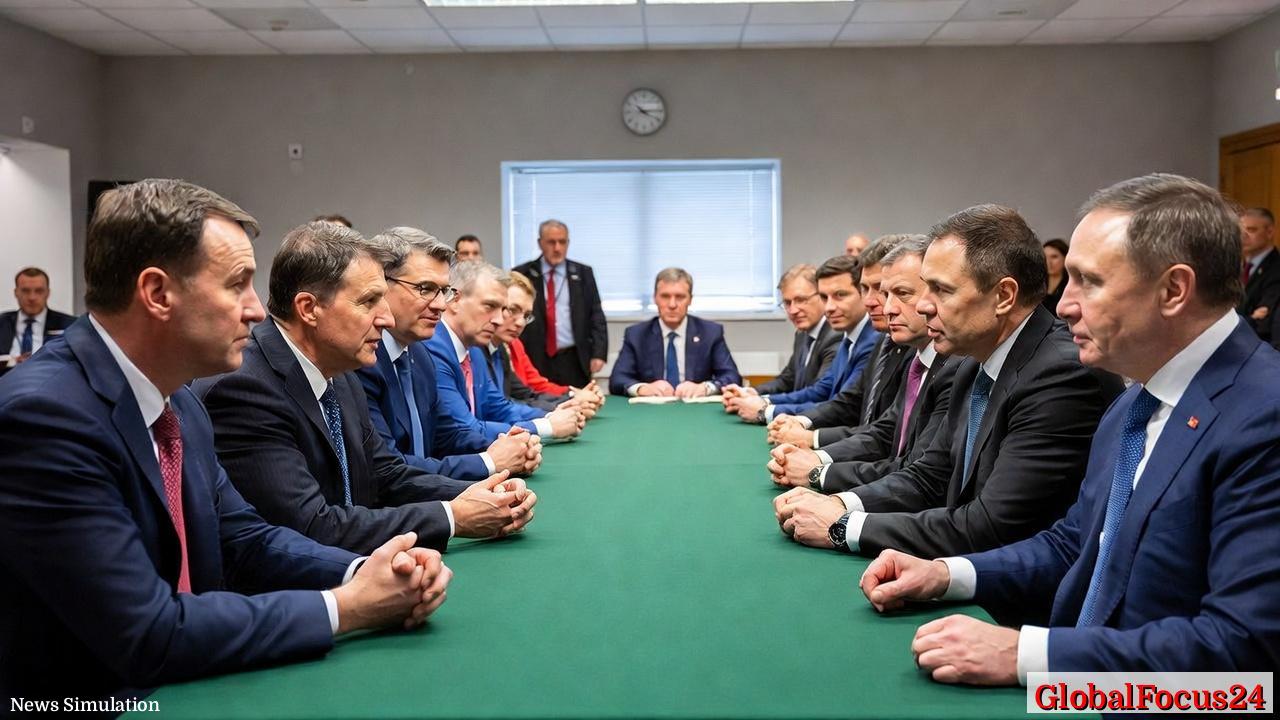
Russia Proposes $12 Trillion Economic Deal to the U.S. Amid Push to Ease Sanctions
A Bold Economic Overture from Moscow
In what analysts describe as one of the largest proposed economic overtures of the post-Cold War era, Russia has reportedly offered the United States a sweeping $12 trillion package of trade and investment deals in exchange for lifting sanctions. The initiative, reflecting Moscow’s effort to normalize relations with Washington, includes long-term partnerships in energy, raw materials, aviation, and advanced manufacturing.
The overture, which comes amid Russia’s ongoing economic isolation following the Ukraine conflict, would represent an unprecedented realignment of U.S.–Russia economic relations if realized. According to officials familiar with the proposal, the offer seeks to restore commercial ties severed by sanctions while presenting both nations with opportunities in vital industrial and technological sectors.
Economic Context: Moscow’s Push for Reintegration
Russia’s economy, valued at roughly $2.5 trillion, has undergone profound shifts since 2022. Sanctions targeting its banking system, energy exports, and technology imports led to a period of contraction and forced diversification toward Asia. Yet Moscow has managed to sustain domestic stability through alternative export routes and energy partnerships with China, India, and Middle Eastern nations.
The proposed deal signals Russia’s intention to break out of this constrained network and re-establish a role in the global trading system dominated by the United States and its Western allies. Analysts note that Russia’s offer hinges on one fundamental calculation: that global energy security and access to natural resources remain priority concerns for Western economies, despite ongoing political tensions.
Key Sectors in Focus: Energy and Critical Materials
At the heart of the proposal lies energy cooperation. Russian officials have reportedly offered extensive joint ventures in natural gas, liquefied natural gas (LNG), and offshore oil exploration, particularly in the Arctic and Far East. The country’s vast reserves of oil, natural gas, and coal—among the largest in the world—remain its most valuable diplomatic leverage.
In addition to fossil fuels, the deal encompasses critical raw materials and rare earth elements essential to the global transition toward renewable energy and advanced electronics. Russia holds extensive reserves of nickel, palladium, and uranium, which are vital for electric vehicle batteries, semiconductors, and civilian nuclear power generation. By opening access to these resources, Russia aims to attract American investment and technological cooperation that could modernize its industrial base while providing the U.S. with alternative sources for strategic materials.
The Aviation and High-Technology Component
Beyond commodities, Moscow’s proposal reportedly includes collaboration in aviation and advanced engineering sectors. Russian aerospace entities, long-established in both civil and defense manufacturing, seek partnerships to regain global competitiveness after years of restricted access to Western components and financing.
Industry observers believe this component could appeal to certain U.S. companies facing global supply chain bottlenecks and seeking new sources of high-grade metals and manufacturing capacity. However, any such cooperation would require significant easing of current export controls—an outcome that remains uncertain in the current political climate.
Historical Comparison: Echoes of Earlier Economic Détente
For historians, this proposed deal recalls earlier efforts at economic rapprochement between the U.S. and Russia (or the former Soviet Union). During the 1970s, the policy of détente led to joint energy projects and pipeline negotiations that symbolized a thaw in East–West relations. Later, in the 1990s, the two nations explored large-scale trade arrangements as Russia transitioned to a market economy.
Yet no prior proposal matches the scale of the $12 trillion figure now on the table. By comparison, the entire U.S.–China trade relationship—one of the world’s largest bilateral economic exchanges—reached roughly $575 billion in total goods trade in 2023. The magnitude of Moscow’s offer, if accurate, underscores both the ambition and urgency of Russia’s attempt to rebuild a pathway to Western markets.
U.S. Reaction and Strategic Calculations
In Washington, the reported offer has spurred cautious deliberation. According to economic analysts, any deal would face significant political and legal hurdles, including multiple layers of sanctions legislated by Congress and coordinated with European allies. The existing sanctions regime targets hundreds of Russian entities, banking institutions, and energy companies, many of which are critical to the sectors covered in the offer.
Still, some observers note that the scale of the proposal demonstrates a strategic recognition by Moscow that sanctions relief cannot be obtained through diplomatic channels alone. Instead, Russia appears to be leveraging its considerable natural resources and industrial capacity as economic incentives—casting itself not as an adversary, but as a potential partner in global stability and energy supply.
Global Economic Impact and Energy Markets
The mere suggestion of such a multitrillion-dollar deal has already sparked discussion among global commodity traders and energy experts. Should even a fraction of the proposal be enacted, it could alter energy flows, commodity pricing, and long-term investment strategies across Europe, Asia, and North America.
Oil and gas markets, already adapting to shifting supply from Russia to Asia, could see new volatility. If re-integrated into Western energy frameworks, Russian exports could moderate prices and diversify energy sources for U.S. and European consumers. Conversely, competitors in the Middle East and North America might face tighter margins as global production realignment occurs.
In the context of critical minerals, expanded U.S.–Russia cooperation could reduce dependence on Chinese supply chains for key inputs to renewable energy infrastructure and defense technologies. This dynamic, while economically compelling, carries substantial geopolitical implications, as deeper material integration could challenge existing alliances and regulatory frameworks.
Regional and Global Comparisons
Regionally, Russia’s economic outreach mirrors strategies employed by sanctioned or semi-isolated economies that later sought reintegration through energy diplomacy. Iran, for example, used similar methods during its intermittent sanction relief periods, offering energy partnerships in exchange for access to foreign markets.
However, Russia’s capacity is far larger and more diversified than most energy exporters. With a GDP nearly an order of magnitude greater than Iran’s and a vast industrial base stretching from petrochemicals to aerospace, Moscow possesses the scale to influence global markets in ways reminiscent of its Cold War-era resource diplomacy.
Compared with China’s economic model—based on manufacturing exports and global supply chain integration—Russia’s approach emphasizes raw materials and strategic industries. Analysts suggest that while Beijing builds economic influence through investment and infrastructure, Moscow’s strategy relies on resource access, energy flows, and selective technological partnership.
Obstacles to Implementation
Despite its potential, the proposed $12 trillion framework faces steep challenges. Sanctions relief is unlikely to occur without substantial policy shifts regarding the Ukraine conflict and other global security issues. The U.S. government, along with European allies, remains committed to maintaining pressure until specific political conditions are met.
Moreover, U.S. companies face legal risks associated with engaging sanctioned Russian entities. Even if partial exemptions were granted, re-establishing trust and compliance mechanisms would require months—if not years—of negotiation. Currency exchange mechanisms, contract enforcement, and technology transfer restrictions present additional obstacles.
Economic Significance and Strategic Outlook
From a macroeconomic standpoint, the proposal underscores two converging realities: Russia’s search for economic normalization and the West’s increasing recognition of energy interdependence. For the United States, with its focus on reshoring industries and securing critical mineral supplies, the offer exposes both opportunity and risk.
A potential easing of sanctions could unleash significant investment in resource development, industrial technology, and energy infrastructure—but could also provoke political backlash from allies and domestic constituencies wary of appearing conciliatory.
In Russia, the stakes are equally high. Access to U.S. capital and technology would revive sectors constrained by import substitution and limited innovation flow. Yet, failure to secure such a deal could cement Moscow’s economic pivot toward Asia for the foreseeable future, deepening its reliance on Chinese markets.
Looking Ahead
Experts believe that the months ahead may see discreet diplomatic exchanges assessing the feasibility of select components of the offer rather than the entire $12 trillion package. Areas such as nuclear energy cooperation, rare earth sourcing, and LNG infrastructure could serve as test cases for limited engagement under strict oversight.
Whether this overture becomes a blueprint for renewed U.S.–Russia economic dialogue or remains a symbolic gesture of economic diplomacy will depend on the global political climate in 2026. For now, the sheer scale of Russia’s proposal marks a striking reminder of the enduring role that energy and resources play in shaping international relations—and the high price nations are willing to pay to reshape them.